
Can You Add Water to Paint? When It Helps and When It Hurts
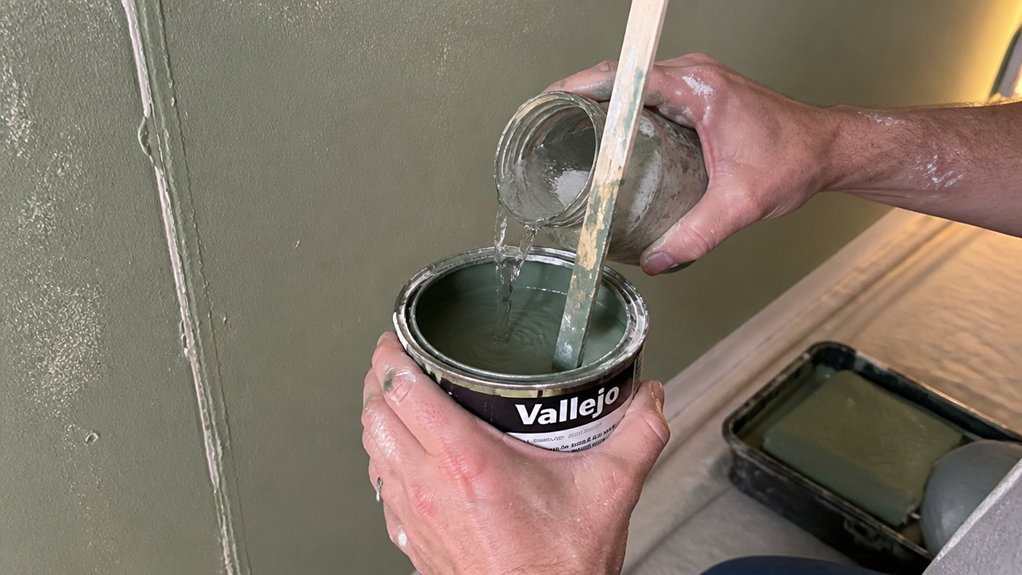
Adding water to paint can feel like a quick fix, but it can also ruin your entire project. You might be tempted to thin out thick acrylics for a smoother finish, yet the wrong ratio leaves a chalky, cracked film. The trick is knowing exactly when water helps and when the binder breaks down for good. I will show you the safe 1:20 limit for flat glazes and why vertical surfaces need a different plan.
For a stronger flow without losing durability, acrylic medium is your best swap instead of water. That simple switch keeps your coats intact and your drying time consistent across tricky spots.
Next, we will cover how surface prep and primer change the rules for thinning paint. Then I will break down the best ratios for brushes, rollers, and sprayers in your upcoming steps.
Quick Answer
- Thin acrylics with water for flat-surface glazing; avoid on verticals to prevent drips.
- A 1:20 paint-to-water hard limit preserves binder strength and durable film formation.
- Over-dilution weakens paint film, causing cracking, lifting, or chalky residue.
- Repair over-thinned paint by stirring in acrylic medium, not more water.
- Use flow medium or retarder instead of water for better flow and open time.
Which Applications Justify Thinning Acrylic Paint With Water?
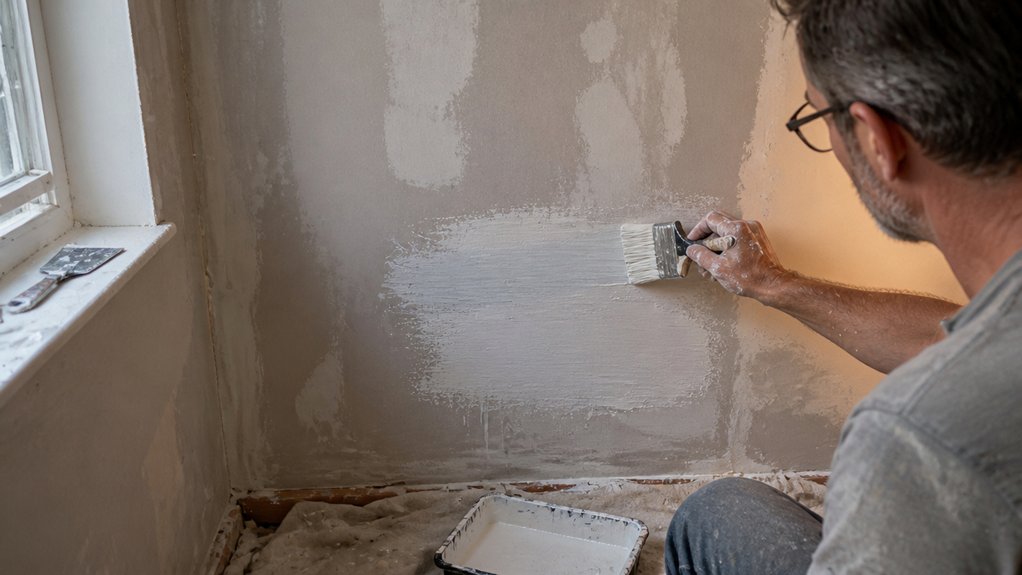
A splash of water won’t ruin your paint, but you shouldn’t add it just because the tube feels stiff. I only thin acrylics when the job clearly calls for it, like flat surface glazing.
Adding water won’t ruin your paint, but only thin it when the job clearly calls for it, like glazing.
For glazing, a 1:4 water-to-paint ratio lets me lay down translucent layers that dry smooth without brush strokes. That gives you subtle color shifts without the mess.
For vertical surfaces, thin paint runs like a scared cat and leaves drips you didn’t ask for. On an upright canvas, keep the wash nearly dry and work in thin passes to control the flow.
Use thinned paint for controlled, flat work, but skip it for vertical walls. Always test on scrap first, and remember that a matte or satin topcoat can hide minor sins once the paint cures. If you need more working time for blending or wet-in-wet layers, an acrylic retarder can extend open time without the runniness that water introduces.
Know the 1:20 Paint-to-Water Safety Limit for Film Strength
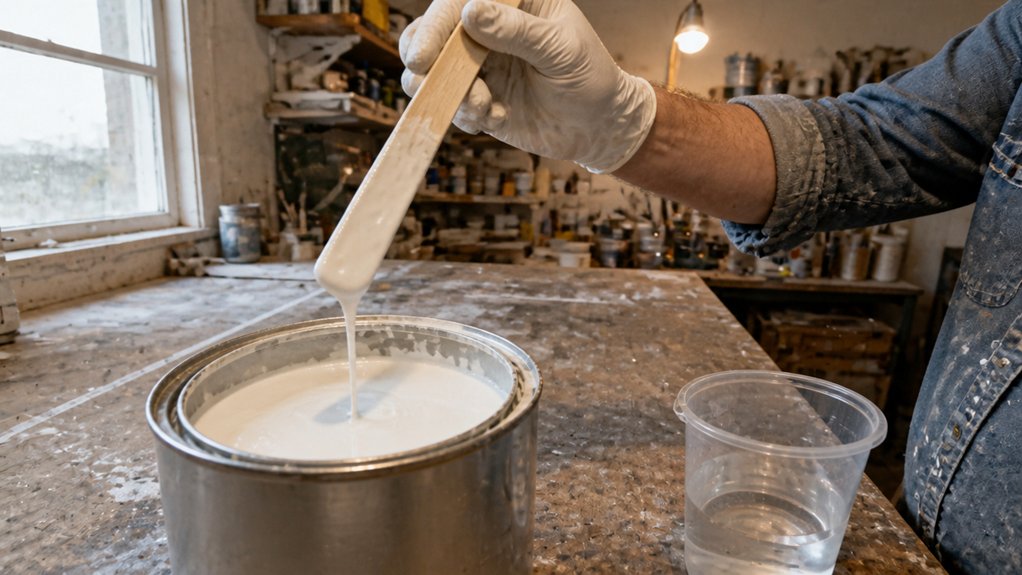
Stick to a 1:20 paint-to-water ratio as your hard limit for thinning acrylics. That keeps the binder strong enough to form a durable film when the paint dries.
Push past 1:20 and you dilute the polymer emulsion too much, so the paint film turns fragile and porous. It will lift easily, crack, or chalk off, especially over a primer or under a topcoat.
A 1:20 mix is fine for a quick wash or a soft glaze, but don’t treat it as a suggestion. If you need more flow, add a flow medium instead of extra water.
That keeps the paint tough without the chalky breakdown, and you avoid muddying the sheen. For wood finishing, this matters most when you’re sealing a stain or varnish before the final coat.
Respect the ratio and your dry film will hold up to sanding, cleaning, and recoating. Break it, and you’ll be stripping back a ruined finish.
Over-Diluted Acrylic? Add Medium Instead of More Water
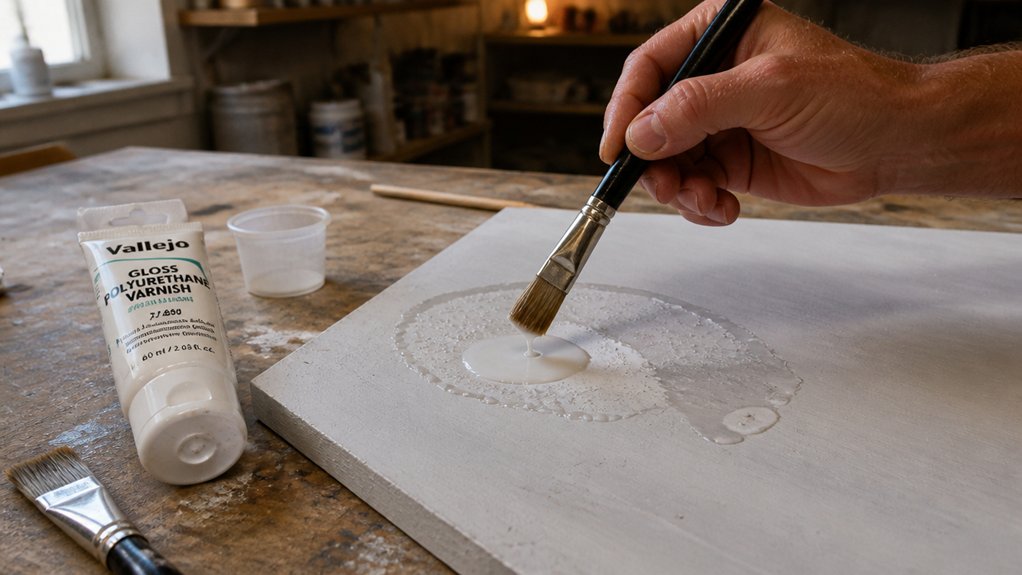
When you over-thin acrylics, adding more water only makes the problem worse. Past that 1:20 limit, the binder breaks down, leaving a chalky, fragile film once dry.
Your fix is to stir in acrylic medium, like gloss, matte, or gel, instead of water. The medium puts back the polymer binder that water washed out, restoring adhesion and flexibility.
> Stir in acrylic medium, not water. It restores the polymer binder, bringing back adhesion and flexibility.
For a wash, add about one part medium to every ten parts of water you used, and bump that ratio up if the paint is already soupy. After drying, you will see richer color and a tougher surface that holds up better to handling.
Wet edge and lap marks stay more manageable with medium, and you avoid the sheen problems that come from over-dilution. Skip the extra H2O and reach for the medium to save the batch.
Your painting’s durability depends on that binder, so treat it like a topcoat over a primer: build the film properly from the start. Viscosity cups help you measure the correct paint thickness before you begin, ensuring your mix stays within safe limits. Grab a drop cloth, get your painter’s tape ready, and finish with confidence.
Frequently Asked Questions
What Happens if I Accidentally Add Too Much Water?
Adding too much water drastically thins the paint, wrecking its viscosity and causing pigment overload on the surface. This creates a weak, porous film that lacks proper adhesion and offers little to no protection against moisture or wear.
For example, even a few extra ounces per gallon can force you to apply three or more coats instead of two, and the finish will still look patchy. You might also notice flashing or uneven sheen once it dries, which is a clear sign that the binder has been diluted beyond its limits.
If you’ve already mixed it, let the paint sit for 15 minutes and test it on a scrap board; if it runs or feels watery, do not use it. Instead, start over with fresh paint, because trying to salvage it with thickeners or extra coats only prolongs the frustration and wastes more material. Checking the paint-to-water ratio on the label is your best defense before pouring anything into your tray.
Can I Use Warm Water to Thin Cold Acrylic Paint?
Yes, you can use warm water to thin cold acrylic paint, but it is a workaround rather than a first choice. Warm water reduces the paint’s viscosity faster than cold water, yet it can destabilize the binder if you exceed about 20% water by volume.
Thinning acrylics with water beyond that ratio risks a brittle, less adhesive film once dry. A safer practice is to warm the paint container in a bowl of hot tap water for five minutes before mixing, which lowers viscosity without diluting strength. Use warm water only for small touch-ups, and test on scrap first to confirm color and flow. For heavy body paints, a flow medium or acrylic thinner is a better related search term, since those additives preserve gloss and flexibility. Keep total water under 10% for two or more coats, and stir gently to avoid air bubbles that weaken the finish.
Does Over-Thinning Affect Paint’s Adhesion on Canvas?
Over-thinning does affect paint’s adhesion on canvas, but it primarily weakens the film rather than peeling it from the weave. You lose mechanical keying as the binder spreads too thin, so the paint sits more like a brittle skin than a flexible layer.
Think of an overstretched taffy: it snaps under stress. Uneven pigment dispersion also leaves blotchy, patchy coverage, especially if you add more than 10% water or medium by volume.
Test before committing. Brush out a sample strip on scrap canvas, let it dry for 48 hours, then bend the corner sharply. If it cracks, you’ve crossed the line.
For safer flow, use a gloss medium instead of water; it keeps adhesion and flexibility intact. Also, search for “film integrity” to learn more about binder-to-pigment ratios.
How Long Does Diluted Acrylic Paint Stay Water-Sensitive?
Diluted acrylic paint can stay water-sensitive for days or even weeks, depending on how much water you added and the surrounding humidity. A heavy dilution, say more than 30% water, will leave the binder weak enough that a damp cloth can reactivate it long after it feels dry.
For a practical test, wait a full seven days before you assume any thin wash is stable, then gently rub a wet fingertip on an inconspicuous spot. If paint transfers, the film hasn’t cured, so apply a light mist of isopropyl alcohol or a thin sealing varnish to lock it down.
To speed things up, keep the room warm and dry with good airflow, but never use heat guns or hair dryers, which can trap moisture. You can also build up two or three thin coats instead of one watery flood, as that reduces sensitivity while keeping brushwork smooth.
Can I Fix an Over-Thinned Batch With Acrylic Medium Later?
Yes, you can fix an over-thinned batch with acrylic medium later, though it is a salvage job rather than a true restoration. Blend in a matte or gloss acrylic medium slowly, about one part medium to four parts thinned paint, and stir thoroughly to avoid clumps.
Test the mixture on scrap first, because medium will improve durability but won’t fully rebuild film strength or hide previous over-dilution. Apply two thin coats over a primed board, letting each dry for at least 30 minutes, and sand lightly with 220 grit between coats for adhesion.
For a related approach, search for “acrylic paint binder ratio” if you need deeper math. Expect a slightly softer finish, so add a drop of retarder to slow drying if you’re working in heat, but don’t chase perfection. The fix is workable, not invisible.
Rounding Up
Can you add water to paint? Yes, you can, but only when you respect the limits of thinning.
Treat water like a finishing tool, not a fix. Check your ratio first: keep it to one part water for every twenty parts paint, nothing hotter.
Test a small swipe on scrap before you commit. If the film looks dusty or weak after drying, you overdid it.
Use water for base coats only, where flow matters more than edge sharpness. Skip it entirely for detail work, where body and control win.
Grab a glazing medium instead for smoother brushwork. It costs around eight dollars and protects your film’s strength.
Your canvas will hold up better. Read next about choosing the right brush for acrylic blends.


