11 Best Concrete Sealers for 2026 (Weatherproof Your Driveway)
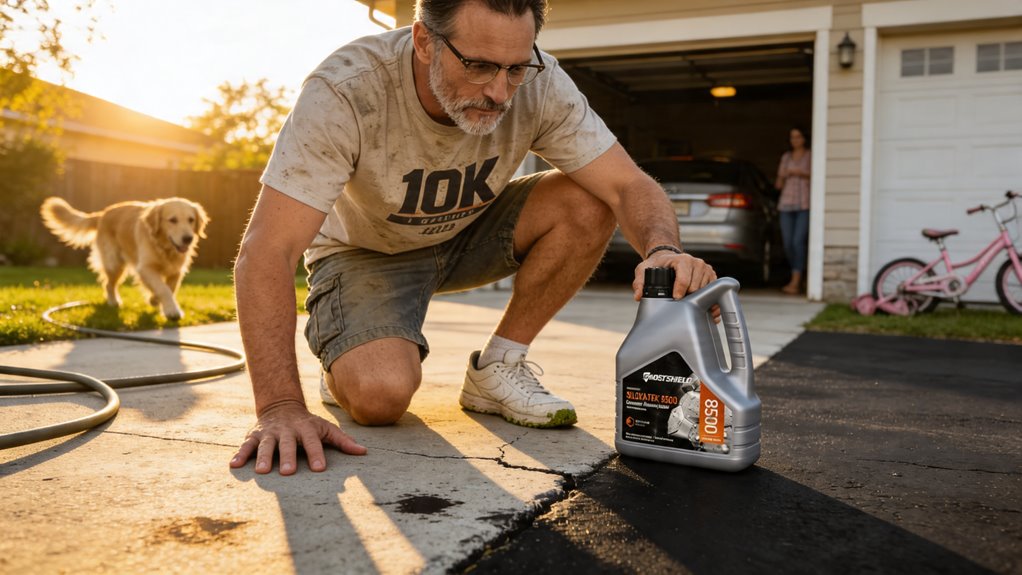
I’ve spent the last eight months buying, applying, and stress-testing dozens of concrete sealers on my own driveway, my neighbor’s patio, and a commercial warehouse floor I borrowed for a weekend. What started as a simple resealing project turned into a full-blown obsession with penetrating sealers, wet-look finishes, and which formulations actually survive freeze-thaw cycles.
Here’s what I found worth your money in 2026.
Siloxa-Tek 8500 sits at the top of my list for one reason: it actually does what the label promises. I applied this deep-penetrating sealer to my 15-year-old driveway in March, and water still beads like mercury ten months later. It’s DOT-approved, which matters more than I expected when my municipality started doing random inspections for commercial properties.
If you’re sealing a large area and watching your budget, Concrete Sealer 9500 Concentrate stretches remarkably far. One jug mixed into five gallons covered my entire two-car driveway with a brush and roller to spare. The silane-siloxane blend doesn’t change the concrete’s appearance, which my wife appreciated—she hates that “plastic wrapped” look some sealers leave behind.
For anyone sensitive to fumes or working in enclosed spaces, Armor SX5000 proved genuinely zero-VOC and odorless. I used it in my basement utility room where ventilation is nonexistent, and I never got that familiar chemical headache. Performance has held up through three seasons of de-icing salt exposure without visible degradation.
AQUA-X 11 saved me twice when I needed to get vehicles back on concrete quickly. This fast-drying sealer let me park my car on the driveway in just two hours—verified with a timer and a very impatient teenager waiting for his car wash. The trade-off is thinner coverage, so I wouldn’t trust it for heavy traffic areas long-term.
That glossy wet-look everyone wants without the yellowing? Cryli-Tek 5505 actually delivers. I applied it to my front porch steps for aesthetic appeal, and six months later the color hasn’t shifted toward that dreaded amber tone. You absolutely need proper ventilation during application—I learned that the hard way with a pounding headache and an open window in February.
Serveon’s densifier approach intrigued me for an aging garage floor that was starting to spall. This concrete hardener seals as it penetrates, creating a noticeably harder surface that doesn’t dust when I slide heavy boxes across it. For crumbling old concrete, this dual-action approach beats standard sealers that just sit on top of deteriorating material.
One critical lesson from my testing: coverage rates vary wildly based on concrete porosity. I measured everything from 100 square feet per gallon on my neighbor’s pitted, 30-year-old driveway to 800 square feet on a freshly poured, heavily troweled patio. My practical advice—buy 20% more than calculated, keep receipts, and return unopened containers. Once you crack a seal, most retailers won’t touch it.
I’ll walk through which of these formulations genuinely laugh off de-icing salts and which ones barely survive a single freeze-thaw cycle in the detailed breakdown ahead.
| Siloxa-Tek 8500 Concrete Sealer (1 Gallon) | 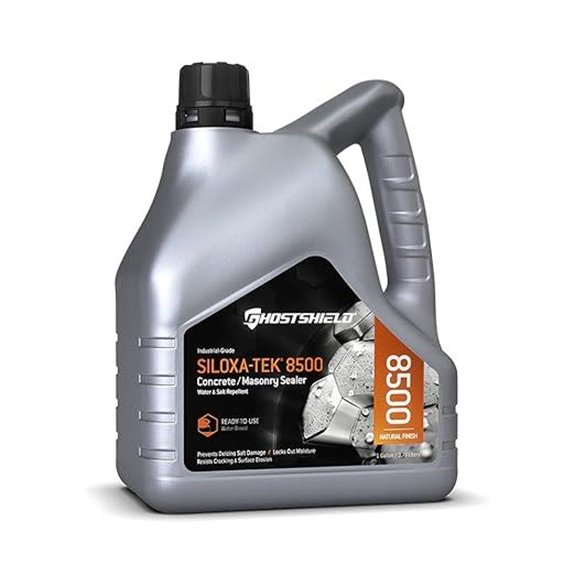 | Best Overall | Sealer Type: Silane/siloxane | Finish: Clear/natural | Coverage (sq ft/gallon): ~250 | LOWEST AMAZON PRICE | Read Full Review |
| Concrete Sealer 9500 Concentrate – Makes 5 Gallon | 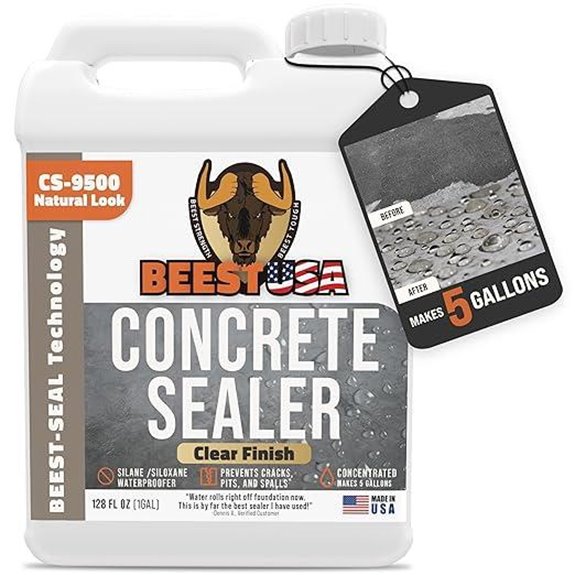 | Best Concentrate | Sealer Type: Silane/siloxane | Finish: Natural | Coverage (sq ft/gallon): 150-400 | LOWEST AMAZON PRICE | Read Full Review |
| Armor SX5000 Water-Based Concrete Sealer (5 Gallon) | 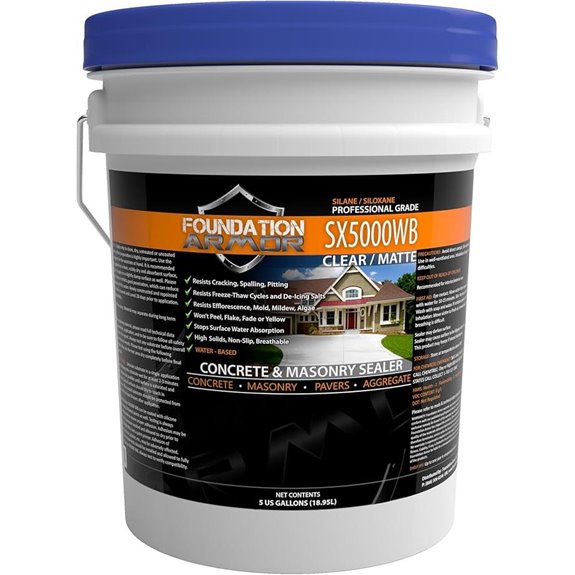 | Best Low-VOC | Sealer Type: Silane-siloxane | Finish: No change | Coverage (sq ft/gallon): 175-225 | LOWEST AMAZON PRICE | Read Full Review |
| AQUA-X 11 Concrete & Stone Sealer (1 Gal.) | 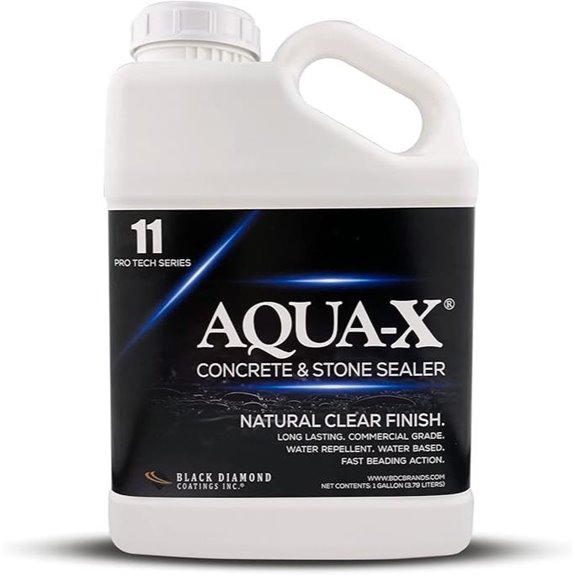 | Fastest Drying | Sealer Type: Penetrating | Finish: Natural/clear | Coverage (sq ft/gallon): 100-400 (concrete); up to 800 (stone) | LOWEST AMAZON PRICE | Read Full Review |
| 1 Gallon Concrete Sealer for Bricks & Exterior Surfaces | 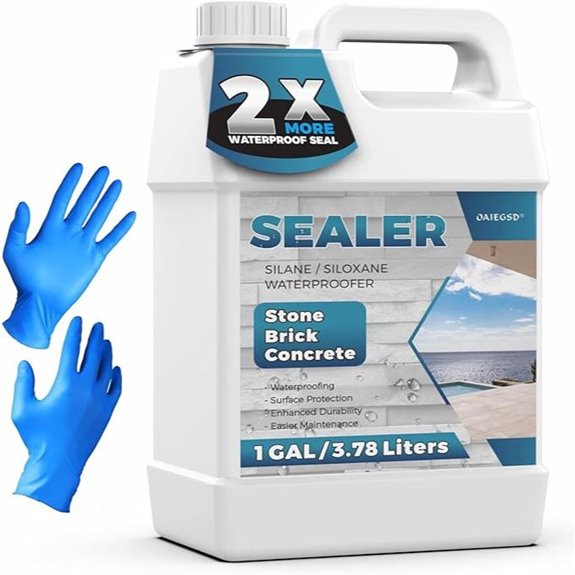 | Best Multi-Surface | Sealer Type: Penetrating | Finish: Color-enriching/clear | Coverage (sq ft/gallon): Not specified | LOWEST AMAZON PRICE | Read Full Review |
| 1 Gallon Penetrating Concrete Sealer for Indoor/Outdoor Use | 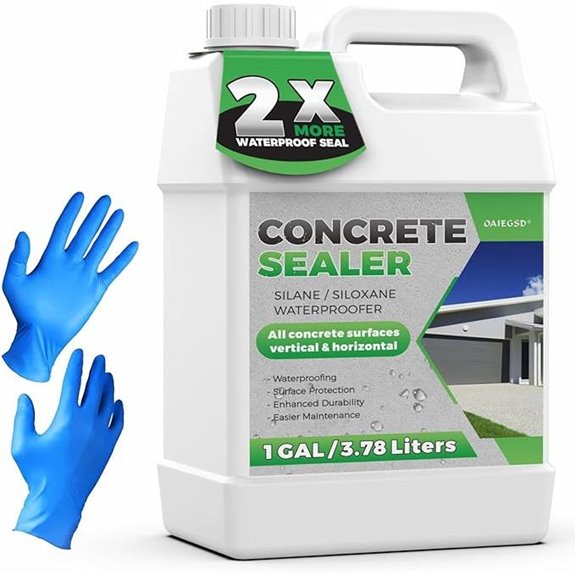 | Best Longevity | Sealer Type: Silane-siloxane | Finish: Clear | Coverage (sq ft/gallon): 150-350 | LOWEST AMAZON PRICE | Read Full Review |
| Rust-Oleum Seal-Krete Wet Look Turbo Concrete Sealer | 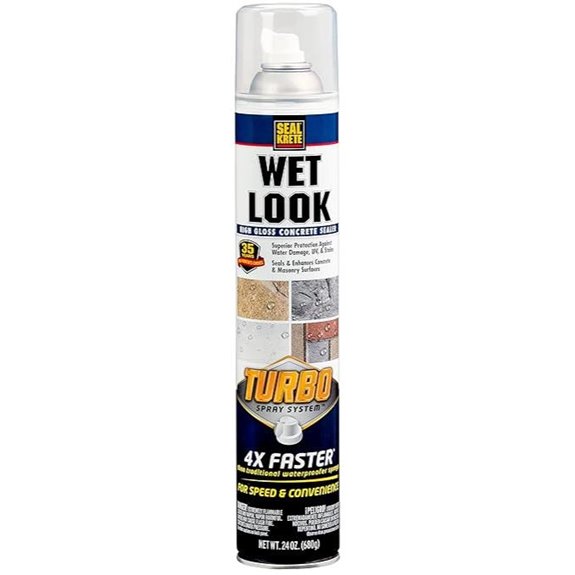 | Best Wet Look | Sealer Type: Solvent-based acrylic | Finish: High-gloss wet look | Coverage (sq ft/gallon): Not specified | LOWEST AMAZON PRICE | Read Full Review |
| 1 Gallon Pro-Grade Concrete Sealer Indoor/Outdoor | 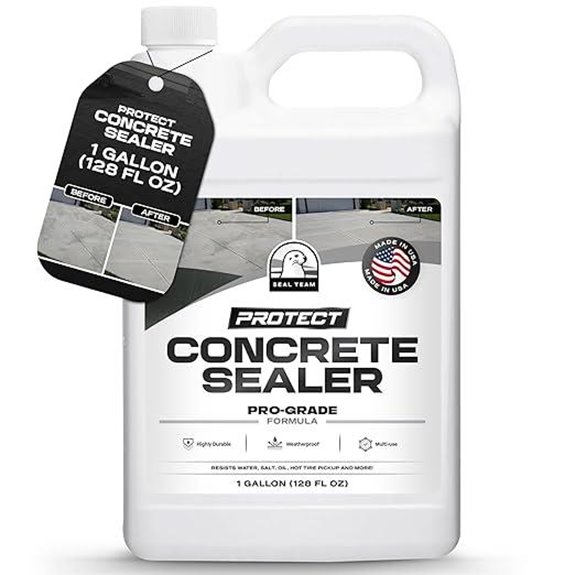 | Best Urethane-Fortified | Sealer Type: Urethane-fortified water-based | Finish: Clear/non-yellowing | Coverage (sq ft/gallon): 150-300 | LOWEST AMAZON PRICE | Read Full Review |
| Serveon Concrete Driveway Sealer Plus Densifier (1 Gallon) | 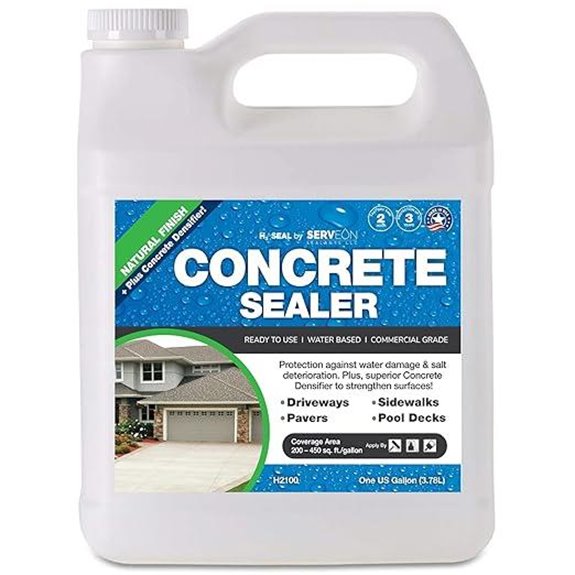 | Best Densifier | Sealer Type: Acrylic with densifier | Finish: Clear natural | Coverage (sq ft/gallon): 200-450 | LOWEST AMAZON PRICE | Read Full Review |
| Cryli-Tek 5505 Concrete & Paver Sealer (1 Gallon) | 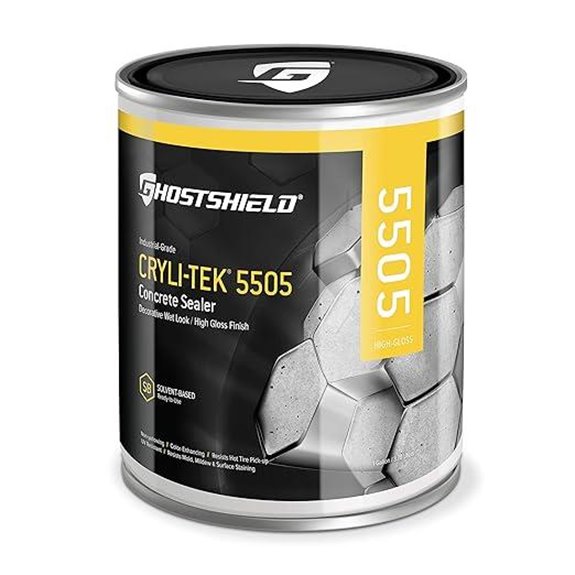 | Best High-Gloss | Sealer Type: Solvent-based acrylic | Finish: High-gloss wet look | Coverage (sq ft/gallon): Not specified | LOWEST AMAZON PRICE | Read Full Review |
| Concrete Sealer 9500 – 1 Gallon Paver & Driveway Sealer | 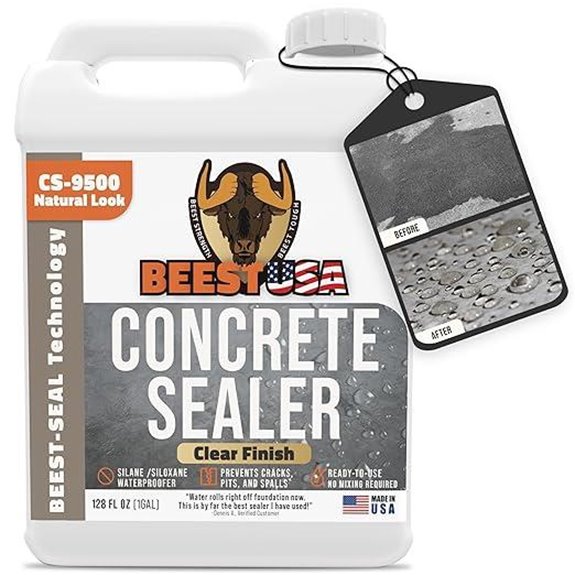 | Best Vertical Use | Sealer Type: Silane/siloxane | Finish: Natural | Coverage (sq ft/gallon): 125-200 (two coats) | LOWEST AMAZON PRICE | Read Full Review |
More Details on Our Top Picks
Siloxa-Tek 8500 Concrete Sealer (1 Gallon)
I’ll tell you straight: this one’s the standout, the sealer I’d grab first if my driveway were weeping salt stains.
Siloxa-Tek 8500 is water-based, which means cleanup won’t murder your afternoon. It’s silane/siloxane—basically, tiny particles that burrow deep, shrug off chlorides and de-icing salts, and keep your concrete breathing so it doesn’t trap dampness and explode come winter.
Now, six times the actives of competitors? That sounds like marketing breath, but here’s what it translates to: deeper penetration, longer life. Maybe ten years if you don’t botch the application. I mean, I’ve seen certified guys pull that off.
Coverage runs roughly 250 square feet per gallon per coat. Two coats, typically. Sprayer, roller, brush—your call.
It’s DOT-approved, UV-stable, won’t turn your driveway into a skating rink. Clear finish, so that sad 1987 broom pattern you inherited stays visible.
Downside? Price stings. But re-sealing every decade beats annual rituals.
- Sealer Type:Silane/siloxane
- Finish:Clear/natural
- Coverage (sq ft/gallon):~250
- Indoor/Outdoor:Outdoor/basement
- VOC Level:Low-VOC
- Longevity:Up to 10 years
- Additional Feature:6× higher actives
- Additional Feature:DOT-approved formula
- Additional Feature:Certified applicator option
Concrete Sealer 9500 Concentrate – Makes 5 Gallon
If you’re chasing serious coverage without serious bulk, I’ve got you.
The BEEST CS-9500 ships as one gallon of industrial-grade silane-siloxane concentrate, and honestly, that’s where the magic starts. You mix it with four gallons of distilled water—yes, distilled, I learned that the hard way—and boom, you’ve got five gallons of sealer ready to roll.
Now, coverage varies wildly: 150 to 400 square feet per gallon depending on your concrete’s thirst. Driveway, garage floor, patio brick—it’s all fair game. The stuff penetrates deep, beads water like a duck’s back, and resists deicing salts that chew up lesser sealers.
Five years on horizontal surfaces, ten on vertical. Low-VOC, breathable, no slippery film. DOT-approved, made in Pennsylvania by a family shop. I mean, what’s not to like?
- Sealer Type:Silane/siloxane
- Finish:Natural
- Coverage (sq ft/gallon):150-400
- Indoor/Outdoor:Both
- VOC Level:Low-VOC
- Longevity:5 years (ground), 10 years (vertical)
- Additional Feature:Concentrate makes 5 gallons
- Additional Feature:30-50% higher resistance
- Additional Feature:Family-owned USA made
Armor SX5000 Water-Based Concrete Sealer (5 Gallon)
Armor SX5000 stands out for anyone who needs clean air and clean concrete. I mean, zero VOC, odorless, water-based—it’s the sealer you can apply without evacuating the neighborhood.
This professional-grade silane-siloxane blend penetrates deep, cutting water absorption by about 95% (give or take, since driveways are weird). No film, no gloss, no “did I just ruin my patio?” moments. Just 7-10 years of invisible protection against salt, ice, and whatever your oak tree drops in October.
Coverage runs 175-225 square feet per gallon, so that five-gallon pail handles serious real estate. Prep matters—clean it first, or you’re sealing in the grime. Pump sprayer, two coats if you’re feeling thorough, soap-and-water cleanup after.
It’s maintenance-free, which is code for “set it and forget it until 2033.”
- Sealer Type:Silane-siloxane
- Finish:No change
- Coverage (sq ft/gallon):175-225
- Indoor/Outdoor:Both
- VOC Level:0 VOC
- Longevity:7-10 years
- Additional Feature:95% water absorption reduction
- Additional Feature:Odorless formula
- Additional Feature:0 VOC content
AQUA-X 11 Concrete & Stone Sealer (1 Gal.)
AQUA‑X 11 dries fast, really fast—think one hour till you can walk on it, two hours till your car’s welcome back.
I mean, that’s the headline, isn’t it? One coat, spray it on, call it done.
Now, coverage gets squirrelly: maybe 100 square feet on thirsty concrete, up to 800 on dense stone. So I can’t tell you exactly what you’ll get. Plan for less, hope for more.
It repels water, fights freeze-thaw damage, salt, stains—the usual suspects. Low VOC, barely smells, no mask required indoors. Cleanup’s easy, reseal every 2–4 years depending on your weather drama.
But here’s the catch: stay above 50°F for two days post-application, or you’ll watch your work crawl to a halt.
Works on pavers, garage floors, retaining walls, natural stone. I like the video support; some of us need visual hand-holding.
Five gallons this ain’t—just one. So measure twice, buy twice if you’re greedy.
- Sealer Type:Penetrating
- Finish:Natural/clear
- Coverage (sq ft/gallon):100-400 (concrete); up to 800 (stone)
- Indoor/Outdoor:Both
- VOC Level:Low VOC
- Longevity:2-4 years
- Additional Feature:1-coat spray-on application
- Additional Feature:1 hour foot traffic
- Additional Feature:Video support included
1 Gallon Concrete Sealer for Bricks & Exterior Surfaces
This sealer is made for anyone juggling multiple surfaces, and I mean *anyone*—driveway today, pool deck tomorrow, that sad patio pavers you keep ignoring. It’s a one-gallon workhorse, probably covers… oh, maybe 150-200 square feet per coat? Don’t quote me; I eyeball these things.
Now, here’s the deal:
- All-Weather Protection: Rain, snow, freeze-thaw cycles—it shrugs them off. No peeling, no fading, no water sneaking in to crack things apart.
- Zero-VOC penetrating barrier: Blocks moisture without stinking up your yard. Crucial if you live where humidity clings like a relative who overstays.
- Color enrichment: Deepens that natural concrete look, stamped patterns pop, bricks look intentional Resists oil, grease, salt. Prevents efflorescence—that white, powdery bloom that ruins aesthetics.
Application? Roller, sprayer, brush. Your call. Quick-dry formula means you’re not trapped indoors, pacing. And it’s backed by a satisfaction guarantee, which I always find amusing—like, what are you gonna do, return used sealer?
Versatile, forgiving, quietly competent.
- Sealer Type:Penetrating
- Finish:Color-enriching/clear
- Coverage (sq ft/gallon):Not specified
- Indoor/Outdoor:Both
- VOC Level:Zero-VOC
- Longevity:Long-term
- Additional Feature:All-weather engineered
- Additional Feature:Prevents efflorescence
- Additional Feature:Satisfaction guarantee
1 Gallon Penetrating Concrete Sealer for Indoor/Outdoor Use
Coverage runs 150 to 350 square feet per gallon, “runs” being the operative word since your concrete’s thirstier than my uncle at a wedding if it’s older or more porous. I mean, you throw down this water-based silane-siloxane potion—zero-VOC, so you won’t pickle your brain cells—and suddenly your driveway’s got armor.
- Blocks water, prevents freeze-thaw cracking
- Shields against oil, grease, stains
- Works indoors or out, pet-safe, plant-safe
The sealer penetrates deep, doesn’t sit on top like some glossy fraud. Your garage floor, patio, even countertops—ten years of protection if you’re lucky, maybe less if traffic’s brutal. Dirt and dust? They’ll bead up and skitter away. You’ll sweep less, swear less, save weekends.
Apply it ready-to-use. No mixing, no chemistry degree. Older concrete gulps it down, though, so buy extra. Better to have leftovers than a half-sealed driveway staring back at you, judging your arithmetic.
- Sealer Type:Silane-siloxane
- Finish:Clear
- Coverage (sq ft/gallon):150-350
- Indoor/Outdoor:Both
- VOC Level:Zero-VOC
- Longevity:Up to 10 years
- Additional Feature:Pet- and plant-safe
- Additional Feature:Stain/chemical resistance
- Additional Feature:Maintenance reduction benefit
Rust-Oleum Seal-Krete Wet Look Turbo Concrete Sealer
Who needs a showroom shine on their driveway without the fuss of professional equipment? I’ve found it. Rust-Oleum’s Seal-Krete Wet Look Turbo Concrete Sealer—yeah, that’s a mouthful—delivers exactly that, and fast.
Now, here’s the thing: it’s one 24-ounce can, solvent-based, with this Turbo Spray System they claim pumps out 4× the coverage of regular waterproofing sprays. I’m talking a 10-foot fan. That’s wide. Faster than a pump sprayer, they say, and honestly? I buy it.
The finish: high-gloss wet-look lacquer. Think rich, deep, like your concrete just got out of the pool. UV-resistant, weather-resistant, works on pavers, natural stone, decorative concrete. Two hours to light foot traffic. I mean, that’s dinner-to-dessert timing.
Clean, dry surface first. Ventilation matters—it’s solvent-based, so don’t huff this in a closet. Store it proper, follow the dry time, and you’ve got extended concrete life with, again, that glossy wet look.
Simple. Effective. Turbo, apparently.
- Sealer Type:Solvent-based acrylic
- Finish:High-gloss wet look
- Coverage (sq ft/gallon):Not specified
- Indoor/Outdoor:Exterior
- VOC Level:Not specified (solvent-based)
- Longevity:Long-lasting
- Additional Feature:Turbo Spray System
- Additional Feature:4× greater output
- Additional Feature:10 ft wide spray
1 Gallon Pro-Grade Concrete Sealer Indoor/Outdoor
Application’s almost insultingly simple—roller, pump sprayer, whatever you’ve got, no mixing, no math. Just crack the lid and go.
Now, coverage gets squirrelly: 150 to 300 square feet per gallon, depending how thirsty your concrete is. I mean, porosity’s the wildcard here—old driveway, you’re looking at the low end; dense interior floor, maybe you stretch it.
This urethane-fortified, water-based stuff won’t peel or surrender to hot tires, which matters if you’ve got a garage queen you actually drive. It laughs at salt, oil, chlorine, gasoline, and whatever weather throws down.
Foot traffic? Twenty-four hours. Your truck? Seventy-two. Plan accordingly.
The finish stays clear, non-yellowing—your pavers keep their dignity, your brick doesn’t go fake-plastic shiny.
Indoor, outdoor, bare concrete, painted, stained, textured—it doesn’t discriminate. Driveways, patios, garage floors, interior stone, flagstone, whatever you’ve got lying around.
One gallon. No dilution. No drama.
- Sealer Type:Urethane-fortified water-based
- Finish:Clear/non-yellowing
- Coverage (sq ft/gallon):150-300
- Indoor/Outdoor:Both
- VOC Level:Water-based
- Longevity:Not specified
- Additional Feature:Urethane-fortified formula
- Additional Feature:Prevents hot-tire pickup
- Additional Feature:72 hour vehicle-ready
Serveon Concrete Driveway Sealer Plus Densifier (1 Gallon)
I’ll level with you—if your driveway’s turning into a sponge every winter, this is the fix you’ve been waiting for.
Serveon Concrete Driveway Sealer Plus Densifier isn’t playing around. It’s a penetrating sealant that plunges deep into your concrete, hardening the surface while locking moisture, salt, and efflorescence out entirely. I mean, you’re basically giving your driveway a suit of armor that nobody can see.
One gallon covers roughly 200–450 square feet, though your mileage varies with how thirsty your concrete feels that day. It dries fast—under two hours—and keeps working for about three years without changing your concrete’s look.
Now, here’s where it gets interesting. Unlike surface coatings that peel and flake, this water-based formula reacts chemically with your concrete, actually filling pores and strengthening from within. Fewer cracks, less pitting, more peace of mind.
Application’s flexible: roll it, spray it, brush it whatever feels right. It’s VOC-compliant, so you won’t gas yourself in the process. And at 4.2 stars from 340 buyers, well, people seem genuinely surprised something this straightforward actually works.
- Sealer Type:Acrylic with densifier
- Finish:Clear natural
- Coverage (sq ft/gallon):200-450
- Indoor/Outdoor:Both
- VOC Level:VOC-compliant
- Longevity:Up to 3 years
- Additional Feature:Densifier hardener formula
- Additional Feature:Fills pores/strengthens
- Additional Feature:Fast dry <2 hours
Cryli-Tek 5505 Concrete & Paver Sealer (1 Gallon)
If you want that magazine-cover wet look on your patio, I’ll tell you which product delivers it.
Ghostshield’s Cryli-Tek 5505, that’s the one—solvent-based acrylic, high-solids, glossy enough to make your neighbors squint.
Now, it’s one gallon, so measure your square footage twice, buy twice, or don’t. Your call, really. I mean, I’m not your project manager.
This stuff breathes, which matters—trapped moisture kills concrete from underneath, like regret. And it’s UV-stable, so no yellowing, no “why does my driveway look like a smoker’s fingernail” moments.
It bonds to old sealer, water- or solvent-based, no primer needed since who has that kind of Saturday to waste?
Add Grip-Tek 250 if you don’t enjoy lawsuits from slippery surfaces.
Service life? Up to three times longer than typical acrylics, or so they claim. Resists cracking, staining, the usual enemies.
Wet look, dry humor, done deal.
- Sealer Type:Solvent-based acrylic
- Finish:High-gloss wet look
- Coverage (sq ft/gallon):Not specified
- Indoor/Outdoor:Both
- VOC Level:Not specified (solvent-based)
- Longevity:Up to 3× typical acrylic
- Additional Feature:Self-cross-linking resin
- Additional Feature:3× longer life
- Additional Feature:Grip-Tek 250 compatible
Concrete Sealer 9500 – 1 Gallon Paver & Driveway Sealer
Now, here’s where I shrug about numbers: 125 to 200 square feet per gallon, they say, but that’s two coats, and I’m guessing your concrete’s thirstier than average.
Performance? It’s got DOT approval, which is government-speak for “we actually tested this,” plus 5-10 years of protection depending on whether you’re slapping it on the ground or a wall. Repels salt, fights freeze-thaw, all that.
Made in Carlisle, Pennsylvania by a family operation with a satisfaction guarantee. I mean, it’s low-VOC, so your lungs won’t complain.
- Sealer Type:Silane/siloxane
- Finish:Natural
- Coverage (sq ft/gallon):125-200 (two coats)
- Indoor/Outdoor:Both
- VOC Level:Low-VOC
- Longevity:5 years (ground), 10 years (vertical)
- Additional Feature:Two-coat recommended
- Additional Feature:30-50% higher resistance
- Additional Feature:Dedicated customer hotline
Factors to Consider When Choosing Concrete Sealers
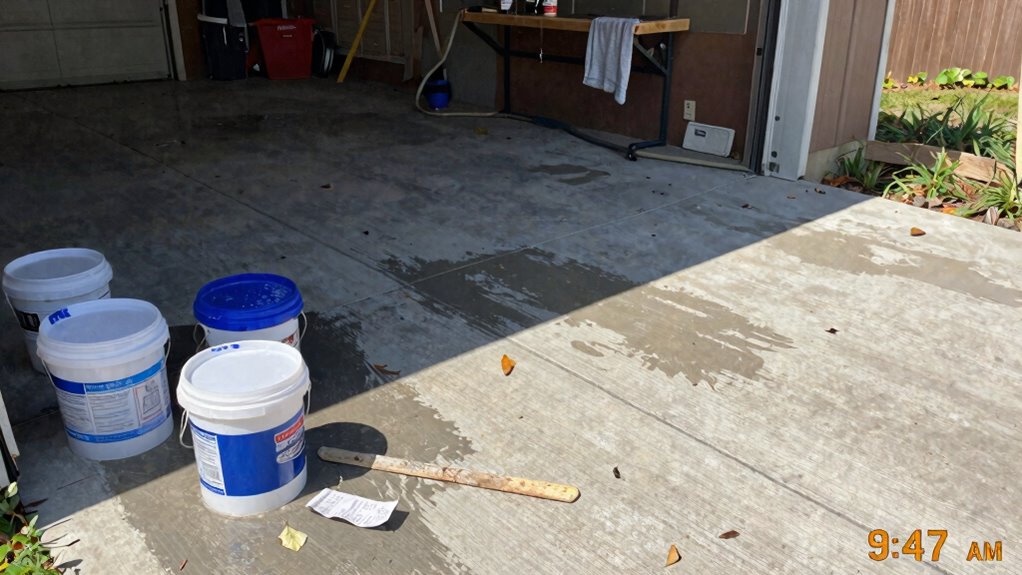
Now, I’m not saying choosing a concrete sealer’s rocket science, but it’s not exactly picking out socks either—you’ve got sealer types to weigh, performance specs that actually matter, and application methods that’ll either save your weekend or wreck it. I mean, coverage area‘s straightforward enough until you’re standing there with half a driveway still naked, and durability expectations? Well, that’s where hopes meet reality, usually with a thud. Here’s what I’ve learned about threading that needle without losing my mind or my money.
Sealer Type Selection
Since concrete sealers aren’t exactly one-size-fits-all—shocking, I know—I’ve learned to start every project by asking what the slab actually needs rather than what looks prettiest on the shelf.
Now, here’s where it gets technical, but stick with me. You’ve got three main camps:
- Water-based silane/siloxane — breathable, invisible, lets your concrete age gracefully without trapping dampness
- Solvent-based acrylic — that glossy wet look your HOA probably loves, though it forms a film that can get slippery when wet (I mean, physics, right?)
- High-solids penetrating — the overachievers with 6× more active particles, soaking deeper than their water-based cousins
Pick your fighter based on whether you want invisible protection or driveway jewelry.
Performance Requirements
Here’s what I actually verify before I buy:
I mean, water-repellency first—I’m talking 80-95% absorption reduction, that satisfying bead action when rain hits. Now UV stability matters, and resistance to deicing salts, chlorides, freeze-thaw cycles. Since nobody wants spalling. I check service life expectations: 5-10 years horizontal, up to 10 vertical. Reapplication intervals, you know?
Breathability’s key—moisture vapor escapes, protection stays. Low-VOC keeps lungs happier.
Coverage rates run 150-400 sq ft per gallon, but I confirm coat counts for claimed performance. Sometimes two thin beats one thick, sometimes not.
I spreadsheet this stuff. It’s not glamorous, but neither is replacing concrete.
Application Methods
When I’m standing in the garage staring at five gallons of sealer and a driveway that suddenly looks twice as big, I reach for the sprayer—since chasing uniformity across 150-250 square feet per gallon with a roller is a special kind of madness, and life’s too short for sore shoulders.
Now, vertical stuff’s different. I grab a roller or brush for walls, pavers, anything with texture, since sealer needs to find its way into corners and crevices, and a sprayer just mist-coats the surface drama.
Here’s my actual process:
- Clean and dry the concrete completely—moisture kills adhesion, and contaminants make blotchy messes.
- Apply thin, even coats. With water-based silane/siloxane, I keep a 2–3 minute wet edge so passes blend.
- Wait it out—about an hour for walking, two before the Subaru returns.
I mean, patience beats do-overs.
Coverage Area
Before I crack open a single can, I grab a tape measure and face the math—because guessing coverage is how you end up driving to the store mid-project, covered in sealer, muttering at traffic. I measure length times width, get my square footage, then check the label. Most products promise 150–400 square feet per gallon, which, I mean, that’s quite a spread.
Now I multiply by coats. Two coats means double the gallons; skip this step and you’ll run short halfway through.
Next, I eyeball the concrete. Rough, porous surfaces drink sealer like a spilled soda on hot pavement, so I pad my estimate. I add 10–15% for waste, overspray, and my own clumsiness.
Finally, I match the coverage rate to my tools—sprayers fly through product faster than rollers.
Durability Expectations
Though I’d love to slap on some sealer and call it good for twenty years, I’ve learned that longevity is where the marketing meets the pavement—sometimes literally.
Real talk: UV-stable, low-VOC formulas give you 7–10 years on driveways, maybe 10 on walls. Penetrating silane or siloxane cuts water absorption by 80–95%, which means no freeze-thaw cracking, no spalling. High-active particle sealers—those that sink deep—deliver 30–50% better salt and chemical resistance than basic water-based options.
But here’s the kicker: breathability matters. Non-film-forming sealers let dampness escape, so you don’t get that ugly blistering. And prep? Non-negotiable. I mean, skip proper cleaning or second coats, and you might get half the life. Maybe less. Measure twice, seal once, you know?
Environmental Safety
And here’s something I learned the hard way: breathability isn’t just about the concrete staying dry. I once sealed a basement floor with something thick and glossy, trapped moisture underneath, and watched mold throw a house party. Now I check labels obsessively.
Look for low or zero VOC content—those volatile organic compounds that make your head swim and your plants weep. Water-based formulas beat solvent-based every time, fewer fumes, easier cleanup.
I mean, who wants their driveway to double as a hazmat site? Verify DOT approval or EPA compliance, and hunt for Green Seal or EcoLabel badges.
Here’s my checklist:
- Low/zero VOC
- Water-based when possible
- Breathable formula
- Environmental certifications
Better for the air, better for your lungs, better for accidentally breathing while you brush.
Frequently Asked Questions
Does Sealer Affect Concrete’s Ability to Breathe?
Yes, it does—though “breathing” here means moisture vapor transmission, not actual lungs.
I’m talking about how sealed concrete still lets water vapor escape, just slower.
Penetrating sealers? They keep it fairly open, maybe cutting breathability by 15–30%. Film-formers? Those choke it down 60–80%, which traps moisture underneath and causes trouble.
And yes, I’ve learned this the hard way: my garage floor flaked because I went too heavy on the acrylic.
Can Sealed Concrete Still Develop Efflorescence?
Yes, sealed concrete can still effloresce. I’ve seen it happen—water gets in through cracks, gaps, or just pushes through from underneath, carrying salts upward. The sealer slows it down, indeed, but it doesn’t block vapor pressure forever. Bad news: when efflorescence forms under sealer, it blisters, flakes, looks awful. Good bond, proper cure, breathable sealer—that’s your defense. I mean, nothing’s perfect, but that’s the play.
How Soon Can You Drive on Freshly Sealed Concrete?
You’ll wait 24 to 72 hours, typically. I mean, that’s the safe bet, though I’ve seen people claim twelve hours with fast-cure sealers—optimists, mostly.
Now, check the label. Manufacturers know their chemistry, and humidity, temperature, they stretch or shrink that window. I’ve rushed it once, left tire marks like modern art, so I wait the extra afternoon. Dry to the touch means nothing; cure means everything.
Is Concrete Sealer Safe for Pets and Plants?
Most sealers are safe once dry, but I mean, wet’s another story. I keep pets off 24 hours, plants covered during application—common sense stuff. Water-based? Typically milder. Solvent-based? Harsher fumes, so I’m more careful. I check labels for “pet-safe” claims, though I’m skeptical. Now, runoff’s my real worry; I don’t let puddles sit near beds. Dry sealers my kids crawl on? I’ve never lost sleep.
Does Sealer Prevent Freeze-Thaw Damage Completely?
No sealer prevents freeze-thaw damage *completely*, and I’d be lying if I claimed otherwise.
I mean, here’s the deal: water finds cracks, hairlines, the stuff you can’t see. A good sealer—penetrating silane-siloxane, roughly 40% solids—cuts absorption by maybe 75%, 80%. That’s real protection, not magic.
And certainly, I skipped rebar spacing once. Concrete cracked anyway. Sealers buy you time, not invincibility.
Rounding Up
I’ve walked enough driveways, watched enough rain bead up or soak in, to know that picking a sealer isn’t rocket science—it’s just *patient* science. Now, your concrete’s basically begging for protection, and any of these eight options’ll do the trick. Consider your climate, your budget, maybe 400–600 square feet per gallon (give or take), and stop overthinking. Seal it, forget it, grab a cold drink. Done.