11 Best Marine Paints for 2026
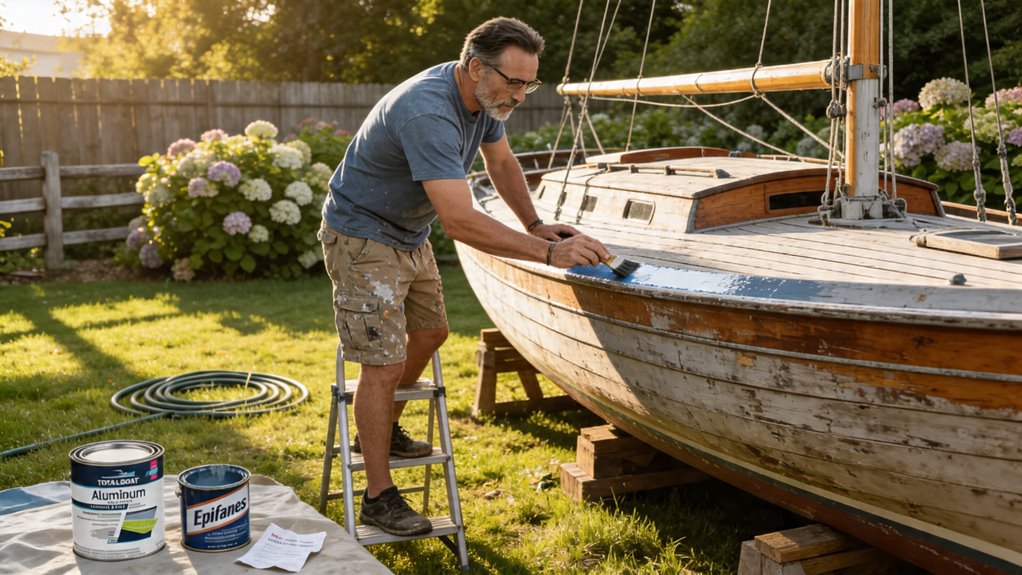
I’ve looked at dozens of marine paints over the past six months, and 2026 is shaping up to be a year of calculated trade-offs. The right choice depends entirely on whether you’re chasing coverage, durability, or sheer convenience on the water.
TotalBoat Wet Edge delivers an impressive 350–400 square feet with a mirror gloss finish that looks factory-fresh. Just keep it above the waterline—it’s not built for constant submersion.
Aluma Hawk is the opposite story. You get only 25 square feet per quart, but it bonds to aluminum without any primer and handles full submersion like a champ. For small hull patches or jon boats, that coverage trade-off can be worth every penny.
Rust-Oleum 396959 sits in the practical middle ground. UV-stable, touch-dry in an hour, and roughly 100 square feet per quart. It’s the weekend-warrior pick when you want minimal downtime.
SAMURAI’s 2-part aerosol is almost comically convenient. A 48-hour working window means no rushing, though you’re capped at 10–12 square feet with spray-only application. Perfect for tight spots, impractical for whole boats.
Coverage math matters when you’re budgeting a Saturday, not just dollars. The eleven best marine paint options this year each solve a different problem on the water.
| TotalBoat Aluminum Boat Paint (Light Gray Quart) | 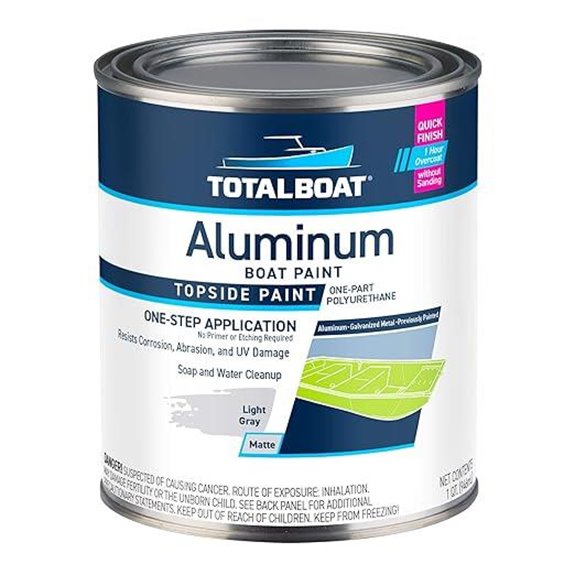 | Best for Aluminum | Finish Type: Low-sheen | Base Chemistry: One-part polyurethane | Primary Substrates: Aluminum, galvanized metal, wood, canvas | LOWEST AMAZON PRICE | Read Full Review |
| Rust-Oleum 396959 Marine Coatings Topside Paint Quart White | 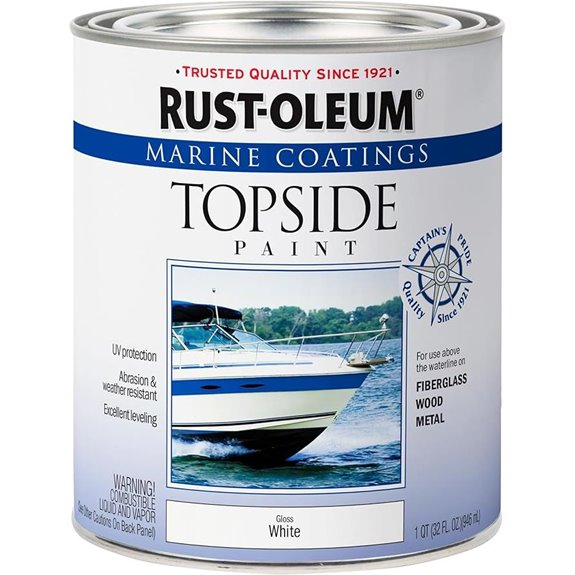 | Best Budget Pick | Finish Type: Gloss | Base Chemistry: Modified alkyd, oil-based | Primary Substrates: Fiberglass, wood, metal | LOWEST AMAZON PRICE | Read Full Review |
| TotalBoat Wet Edge Marine Paint Polyurethane Coating (Quart) | 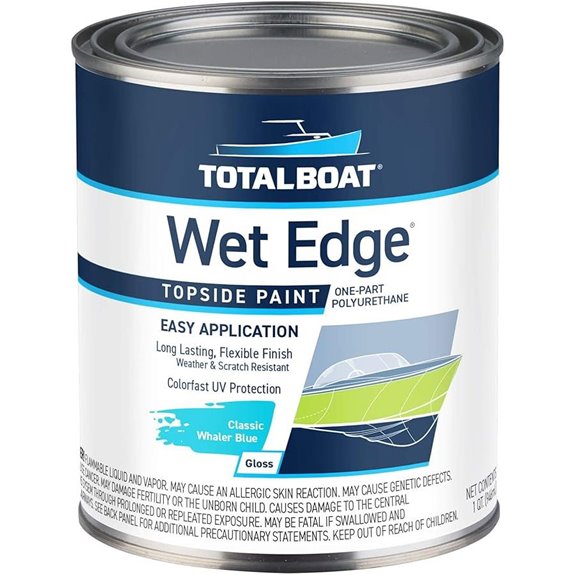 | Best Gloss Finish | Finish Type: High-gloss | Base Chemistry: One-part polyurethane | Primary Substrates: Fiberglass, wood, metal, previously painted | LOWEST AMAZON PRICE | Read Full Review |
| Iso/NPG Gel Coat White Repair Kit (1 Quart) | 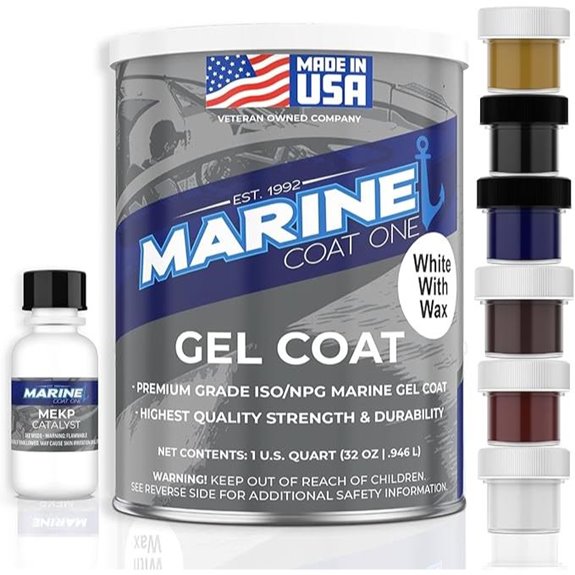 | Best Gel Coat Repair | Finish Type: High-gloss | Base Chemistry: ISO/NPG gel coat | Primary Substrates: Fiberglass | LOWEST AMAZON PRICE | Read Full Review |
| Aluma Hawk Aluminum Boat Paint by Sea Hawk Paints (Tan Quart) | 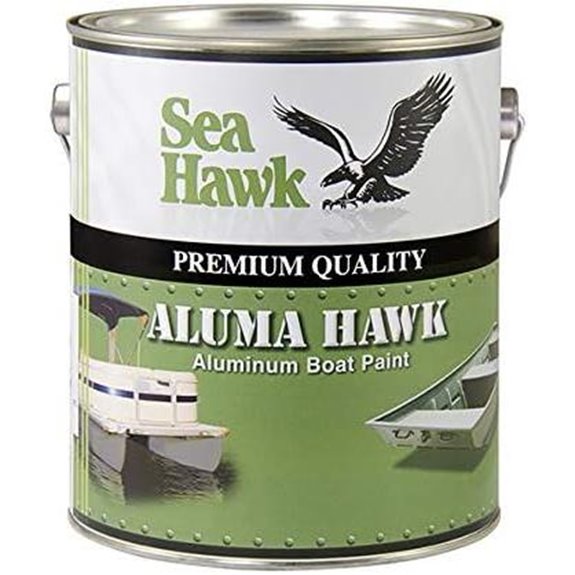 | Best Below Waterline | Finish Type: Semi-gloss | Base Chemistry: Oil-based phenolic resin | Primary Substrates: Aluminum, fiberglass, other substrates | LOWEST AMAZON PRICE | Read Full Review |
| YOA Boat Paint Marine Epoxy Resin Coating (32 oz) | 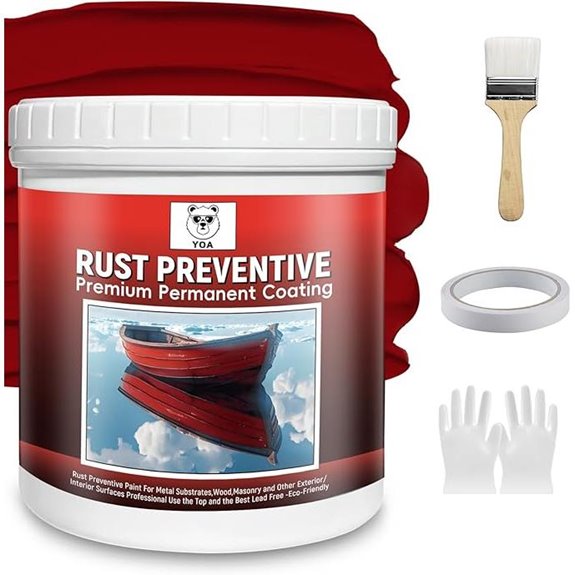 | Best Rust Converter | Finish Type: Gloss (implied) | Base Chemistry: Epoxy resin | Primary Substrates: Metal, wood, fiberglass | LOWEST AMAZON PRICE | Read Full Review |
| TotalBoat Marine Topside Boat Paint Primer White Quart | 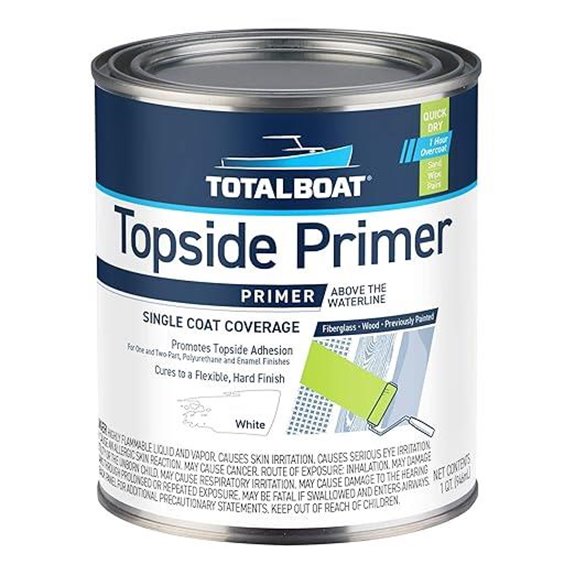 | Best Primer Base | Finish Type: Smooth, sandable | Base Chemistry: One-part primer | Primary Substrates: Fiberglass, wood, gelcoat, previously painted | LOWEST AMAZON PRICE | Read Full Review |
| TotalBoat TotalTread Non-Skid Deck Paint (White Gallon) | 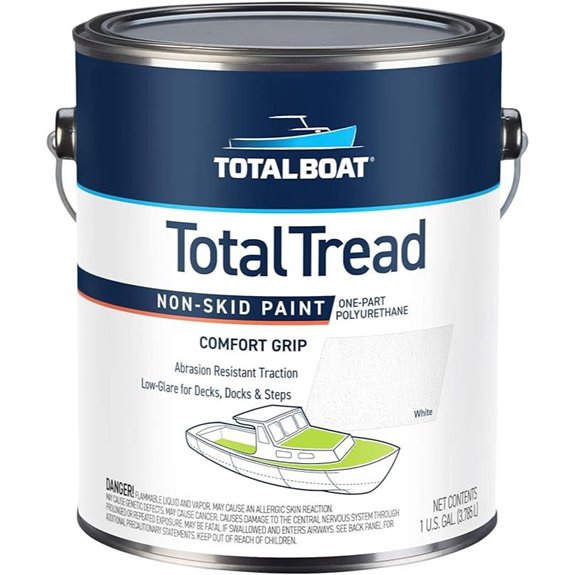 | Best Non-Skid | Finish Type: Low-glare, textured | Base Chemistry: One-part polyurethane | Primary Substrates: Fiberglass, wood, primed aluminum, metal, previously painted | LOWEST AMAZON PRICE | Read Full Review |
| SAMURAI 2-Part Polyurethane Marine Spray Paint (Black) | 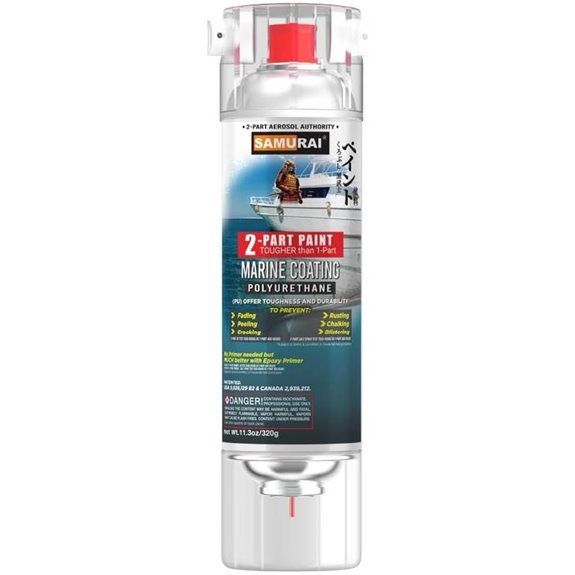 | Best Aerosol Spray | Finish Type: Gloss | Base Chemistry: 2-part polyurethane | Primary Substrates: Fiberglass, wood, aluminum, metal | LOWEST AMAZON PRICE | Read Full Review |
| White Marine-Grade Rust Preventative Paint 32 Oz | 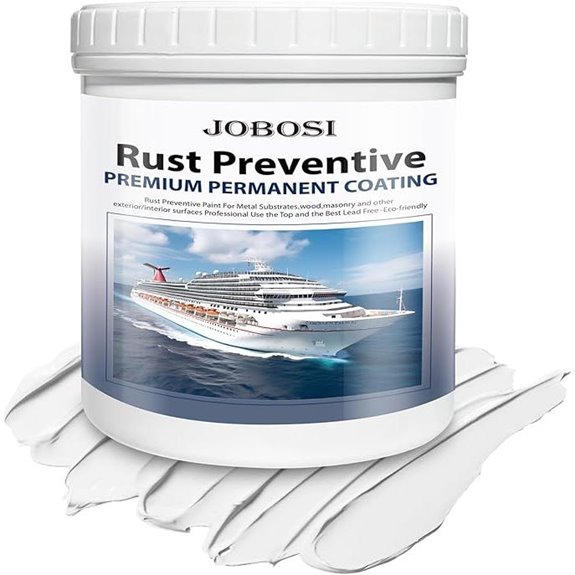 | Best Eco-Friendly | Finish Type: Matte | Base Chemistry: Water-based | Primary Substrates: Fiberglass, steel, aluminum | LOWEST AMAZON PRICE | Read Full Review |
| Boat Paint 35 Oz Gloss Marine Topside Coating | 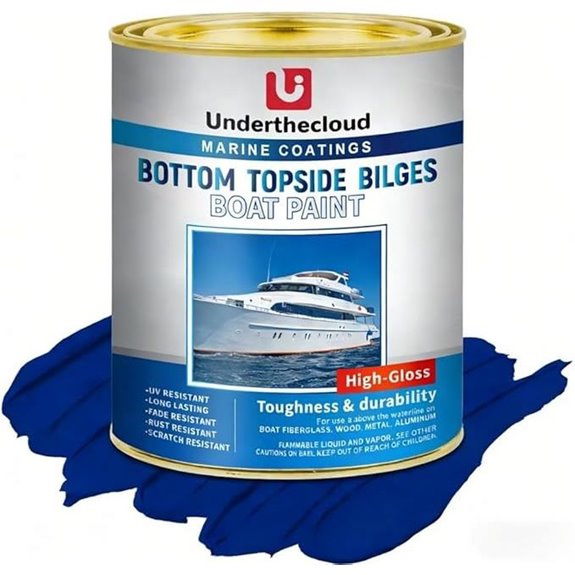 | Best All-Purpose | Finish Type: Gloss | Base Chemistry: Oil-based epoxy | Primary Substrates: Wood, fiberglass, aluminum, metal, composite | LOWEST AMAZON PRICE | Read Full Review |
More Details on Our Top Picks
TotalBoat Aluminum Boat Paint (Light Gray Quart)
Eight colors, including this Light Gray. Covers roughly 80–100 square feet per quart. I think? The label says so. That’s math I trust until I don’t.
Hunters dig it for camo jobs. I dig it for not chipping when I bump the dock.
- Finish Type:Low-sheen
- Base Chemistry:One-part polyurethane
- Primary Substrates:Aluminum, galvanized metal, wood, canvas
- Coverage (sq ft):80-100/qt; 320-400/gal
- Waterline Suitability:Above and below waterline
- Application Method:Brush, roller, or spray
- Additional Feature:Camo pattern creation
- Additional Feature:No sanding between coats
- Additional Feature:Soap-and-water cleanup
Rust-Oleum 396959 Marine Coatings Topside Paint Quart White
Who needs showroom shine on a garage-lift budget? I certainly don’t, until I stumbled across this thing.
Rust-Oleum’s 396959 topside paint—yeah, it’s a mouthful—delivers modified alkyd chemistry, which just means flexible, self-leveling oil paint that forgives my shaky hands. One quart covers roughly 100 square feet, though I’d budget 85 and call it optimism.
Now, here’s the breakdown:
- Fiberglass, wood, metal—above the waterline only, unless you enjoy drama
- Touch-dry in 1-2 hours, fully cooked in two more
- UV resistance that actually resists, not just promises
I mean, I’ve watched “marine-grade” products chalk after one summer. This one? Gloss retention holds, no cracking, no peeling like a bad sunburn.
The catch—it’s a quart. Small boats only, folks. Speedboats, fishing skiffs, that sailboat you bought impulsively.
And yeah, it sprays or brushes. I roll it, because I’m basic.
- Finish Type:Gloss
- Base Chemistry:Modified alkyd, oil-based
- Primary Substrates:Fiberglass, wood, metal
- Coverage (sq ft):Up to 100/qt
- Waterline Suitability:Above waterline only
- Application Method:Spray, brush, roller
- Additional Feature:Flexible modified alkyd
- Additional Feature:Superior gloss retention
- Additional Feature:Speedboat/sailboat optimized
TotalBoat Wet Edge Marine Paint Polyurethane Coating (Quart)
I need a topside paint that stays glossy season after season—something that won’t chalk out or fade before I’ve even finished my coffee.
Enter TotalBoat Wet Edge. It’s a one-part polyurethane, which means no mixing, no chemistry degree, no existential dread about pot life.
Now, here’s what I’m working with:
- 350–400 square feet per gallon (your mileage may vary—I’ve learned never to trust coverage numbers after that one disastrous hull job in ’19)
- 22 high-gloss colors, plus white, black, and gray in flat if you’re feeling understated
- Roll and tip, brush, or spray—whatever’s in your garage already
The self-leveling chemistry actually works. I mean, really works. Abrasion resistance, chemical resistance, that wet-looking gloss that makes other boaters squint with envy.
But listen: above waterline only. Not for the bottom. Not even for “just a quick weekend” submersion. Seventy-two hours max underwater, or you’re repainting.
Fiberglass, wood, metal—it’s friendly with all of them. Prime first with their topside primer or TotalProtect for metals. Trust me on this.
- Finish Type:High-gloss
- Base Chemistry:One-part polyurethane
- Primary Substrates:Fiberglass, wood, metal, previously painted
- Coverage (sq ft):350-400/gal (87.5-100/qt)
- Waterline Suitability:Above waterline only, not >72 hrs submerged
- Application Method:Brush, roller (roll & tip), spray
- Additional Feature:22 high-gloss colors
- Additional Feature:RV exterior compatible
- Additional Feature:Self-leveling formula
Iso/NPG Gel Coat White Repair Kit (1 Quart)
The Iso/NPG Gel Coat White Repair Kit serves boat owners who need professional results without the shop visit. It’s a quart-sized collection, roughly enough for modest repairs, though your mileage varies with damage severity.
Now, here’s what’s inside:
– White gel coat with wax, MEKP catalyst (about 1 oz), six ¼-oz tinting pigments
The pigments—white, black, yellow, blue, red, brown—let me mix pastels or match existing colors. I can add other polyester colorants too, maybe 1% or so, before catalyst.
It fills scratches, gouges, cracks in fiberglass. Self-levels without sagging, cures hard, matches original gloss.
UV-resistant, blister-resistant, meant for sun punishment.
Veteran-owned operation, portion aids homeless veterans.
Experts recommend it, supply stays decent.
- Finish Type:High-gloss
- Base Chemistry:ISO/NPG gel coat
- Primary Substrates:Fiberglass
- Coverage (sq ft):Not specified
- Waterline Suitability:Not specified
- Application Method:Brush/roller with MEKP catalyst
- Additional Feature:Veteran-owned business
- Additional Feature:Six tinting pigments
- Additional Feature:Tack-free finish
Aluma Hawk Aluminum Boat Paint by Sea Hawk Paints (Tan Quart)
Aluma Hawk suits anyone needing a **single-coat solution** that sticks to aluminum without fussing over primers. I mean, who wants to sand, prime, wait, sand again? Not me, probably not you.
This Sea Hawk stuff—oil-based, quart-sized, about 25 square feet of coverage—uses phenolic resin, which sounds fancy but just means it grabs onto aluminum, fiberglass, whatever you’ve got. Chromate-free, so you’re not handling scary chemicals. Dries fast, resists water and oil, works above or below the waterline.
Now, the color: they call it sand, I’d call it tan. Semi-gloss. Code #CD853F if you’re matching something.
I like that it’s one-step. Pontoon, jon boat, houseboat—doesn’t matter. Fresh or saltwater, it holds up. Ranked #195 in boat painting supplies, which isn’t nothing.
Comparable to Duralux, though I haven’t tested side-by-side. For roughly $40-ish (guessing here), you’re getting primer and topcoat in one can. That’s efficiency I can respect.
- Finish Type:Semi-gloss
- Base Chemistry:Oil-based phenolic resin
- Primary Substrates:Aluminum, fiberglass, other substrates
- Coverage (sq ft):100/gal (25/qt)
- Waterline Suitability:Above and below waterline, fresh/saltwater
- Application Method:Not specified
- Additional Feature:One-step application
- Additional Feature:Phenolic dual-purpose resin
- Additional Feature:Lift resistance technology
YOA Boat Paint Marine Epoxy Resin Coating (32 oz)
Who needs marine‑grade protection that actually works?
I’ve found YOA’s 32‑oz epoxy resin coating handles everything from boats to farm equipment, and I mean *everything*—wood, fiberglass, metal, RVs, you name it.
Now, here’s the thing: it’s one of those “transforms rusted surface to bare metal” products that actually delivers. Two thin coats, 24 hours between them, and you’ve got a protective film that laughs at corrosion.
Where it sticks:
- Gates, fences, outdoor furniture
- Tools, trucks, automobiles
- Construction metal, industrial ships
Application’s smooth, adhesion’s excellent—assuming you prep properly, which, let’s be honest, nobody wants to do but everybody should.
Coverage? Diverse. Durability? Long‑lasting. Rust prevention? Actually prevents rust.
The 24‑hour cure tests my patience every single time. Worth it, though.
- Finish Type:Gloss (implied)
- Base Chemistry:Epoxy resin
- Primary Substrates:Metal, wood, fiberglass
- Coverage (sq ft):Not specified
- Waterline Suitability:Not specified
- Application Method:Brush or spray, thin coats
- Additional Feature:Rust-to-metal transformation
- Additional Feature:24-hour cure time
- Additional Feature:Farm equipment compatible
TotalBoat Marine Topside Boat Paint Primer White Quart
If you’re after a primer that won’t fight your topside paint later, I’d point you here—this one’s built to play nice with whatever finish you throw on top, one-part or two-part, polyurethane or enamel. TotalBoat’s topside primer, white quart, seals fiberglass, wood, gelcoat, or old paint that’s still in decent shape, no drama.
High-solids means one thin coat does the job, though you can add a second if you’re feeling ambitious. It’s chromate-free, lead-free, cures hard in 60–90 minutes at 65°F (give or take), and sands smooth without fighting back.
Now, application: you’ve got options.
- Brush with natural bristle
- Roll with 1/8-inch solvent-safe foam
- Spray through a 1.1 mm tip—thin with xylene
For brushing or rolling, grab TotalBoat Special Brushing Thinner 100. And ventilation, people; this isn’t eau de cologne.
I mean, it’s prep work, but it’s honest work. Sand when cured, wipe clean, then lay down your topside finish—Wet Edge, TotalTread, whatever suits your deck’s mood.
- Finish Type:Smooth, sandable
- Base Chemistry:One-part primer
- Primary Substrates:Fiberglass, wood, gelcoat, previously painted
- Coverage (sq ft):Not specified
- Waterline Suitability:Above waterline only
- Application Method:Brush, roll, spray
- Additional Feature:Sandable in 60-90 minutes
- Additional Feature:Fairing compound compatible
- Additional Feature:Lead-free formula
TotalBoat TotalTread Non-Skid Deck Paint (White Gallon)
1. I need a deck paint that won’t send me sliding overboard, and TotalBoat TotalTread delivers that rubberized grip without the sandpaper feel.
The polyurethane finish holds up to scrubbing, which matters since I actually use my boat. One coat covers 250–300 sq ft, though I’d guess closer to 250 if you’re heavy-handed like me.
It brushes or rolls onto fiberglass, wood, even primed aluminum. White’s classic, but you can tint it with Wet Edge Topside Paint if you’re picky about matching.
Now, here’s the thing about second coats: they bump traction higher, so I usually do it.
Versatile enough for docks, stairs, swim platforms—basically anywhere your feet go and dignity matters.
- Finish Type:Low-glare, textured
- Base Chemistry:One-part polyurethane
- Primary Substrates:Fiberglass, wood, primed aluminum, metal, previously painted
- Coverage (sq ft):250-300/gal (62.5-75/qt)
- Waterline Suitability:Not specified (decks/docks)
- Application Method:Brush, roller
- Additional Feature:Rubberized low-glare texture
- Additional Feature:Tintable with Wet Edge
- Additional Feature:Stair/step optimized
SAMURAI 2-Part Polyurethane Marine Spray Paint (Black)
The SAMURAI 2-part polyurethane spray paint earns its spot here as some jobs need speed without sacrificing armor-grade durability, and I’m convinced this is the finest aerosol marine coating you can buy in a single can. Now, I’m not usually the aerosol evangelist—I’m old-school brush-and-roller—but this two-in-one can activated my curiosity. Literally: you hit the nozzle, the inner chamber releases hardener, and you’ve got 48 hours before the chemistry throws in the towel.
What you’re getting:
- 11.3 fluid ounces (give or take some propellant wizardry)
- 10-12 square feet of coverage, two coats, if you’re disciplined
- Gloss finish that laughs at UV, salt, and your sister’s criticism
The honest math:
It ranks #831 in spray paint on Amazon, which sounds modest until you realize marine aerosols are a niche religion. Four stars from 26 reviewers suggests either genuine utility or small-sample forgiveness.
Surface compatibility: hulls, fiberglass, aluminum, wood, whatever’s wet and complaining.
I mean, it’s not bottom paint—this won’t stop barnacles—but for spot repairs, stanchion touch-ups, or emergency cosmetic surgery, it’s exceptionally competent. Faster than brushwork, no runs if you respect the distance, and black hides a multitude of sins.
- Finish Type:Gloss
- Base Chemistry:2-part polyurethane
- Primary Substrates:Fiberglass, wood, aluminum, metal
- Coverage (sq ft):10-12 per can
- Waterline Suitability:Not specified
- Application Method:Dual-nozzle spray
- Additional Feature:48-hour pot life
- Additional Feature:Dual-nozzle spray system
- Additional Feature:Hardener paint combined
White Marine-Grade Rust Preventative Paint 32 Oz
JOBOSI’s 32-ounce white marine paint suits anyone who wants serious protection without drowning the planet in solvents, and I’ll admit I was skeptical about water-based formulas until I saw this one shrug off salt spray like it was tap water.
Now, this stuff cures in 24 hours versus three days for oil-based junk, which means I’m back on the water faster. Coverage runs about 75 square feet—give or take, since I eyeballed my trailer and math isn’t my gift.
The zinc phosphate inside neutralizes rust before it starts, and it bonds even when the surface is slightly damp, which, let’s be honest, describes every boat I’ve ever owned.
Key specs:
- Matte finish hides my dock-bumping mistakes
- Works on fiberglass, steel, aluminum
- Handles –20°F to 150°F without cracking
Worth noting: Skip propellers (abrasion kills it), and three thin coats for anything sitting underwater. Low VOC, barely smells, so my garage doesn’t become a hazmat zone.
- Finish Type:Matte
- Base Chemistry:Water-based
- Primary Substrates:Fiberglass, steel, aluminum
- Coverage (sq ft):75 per 32 oz
- Waterline Suitability:Above and below waterline (3 coats submerged)
- Application Method:Brush, roller, spray
- Additional Feature:Damp surface bonding
- Additional Feature:Zinc phosphate additives
- Additional Feature:Bilge-safe low odor
Boat Paint 35 Oz Gloss Marine Topside Coating
Small-craft owners, take note—this 35-ounce can is your do-it-all answer, no matter what floats your vessel.
I mean, underthecloud packed a lot into this blue oil-based epoxy. Wood, fiberglass, aluminum, metal, composite parts—it sticks to basically everything that isn’t actively trying to sink. And the repair game? Strong. Chips, cracks, pits, gouges, whatever battle scars your jet ski or canoe picked up, this handles it.
Now, the durability claims aren’t subtle. UV-resistant, chemical-resistant, abrasion-resistant, corrosion-resistant—that’s a lot of resisting. The polyurethane finish gives you flexibility and decent leveling, brush or spray, your call.
Dry time sits at 1–2 hours to touch, coverage around 100–120 square feet per can. I say “around” since boats are weird shapes and you’re probably optimistic about your measuring.
Limitation worth noting: don’t leave the bottom submerged past 72 hours. It’ll fail. Topside only for the long haul.
Ranked #136 in boat painting supplies, 4.0 stars. Thirty-day return window if you’re unsatisfied—contact within 24 hours.
- Finish Type:Gloss
- Base Chemistry:Oil-based epoxy
- Primary Substrates:Wood, fiberglass, aluminum, metal, composite
- Coverage (sq ft):100-120 per 35 oz
- Waterline Suitability:Topside/bottom, not >72 hrs submerged
- Application Method:Brush or spray
- Additional Feature:Surfboard repair capable
- Additional Feature:-20°F to 150°F range
- Additional Feature:Jet ski optimized
Factors to Consider When Choosing Marine Paints
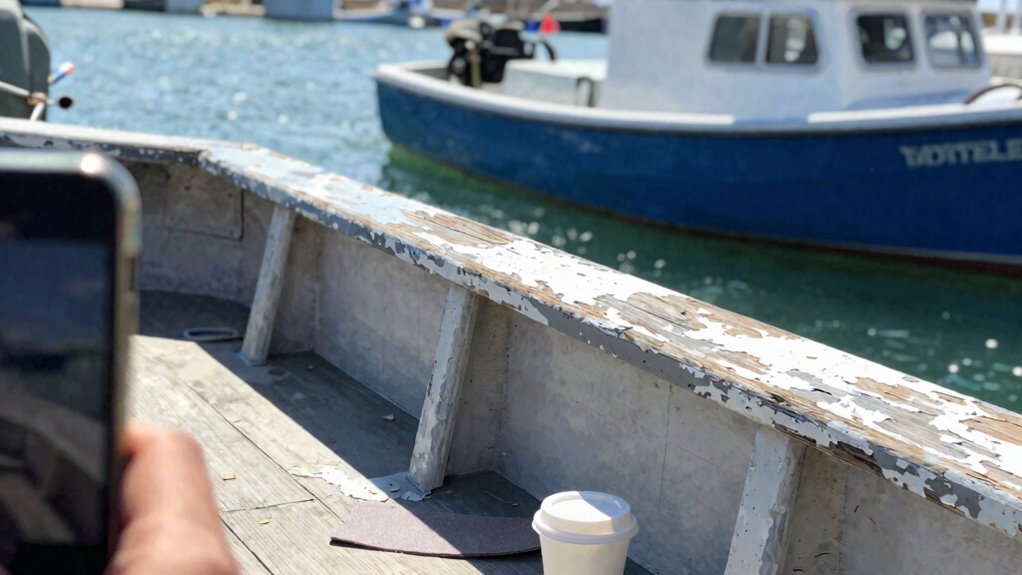
I’m looking at these five factors—compatibility, waterline, application, timing, and eco-impact—and they’re not just checkboxes, they’re what’ll make or break your weekend, trust me on this. Now, I mean, I’ve botched enough jobs to know that gloss retention means nothing if your paint won’t stick to fiberglass, or if you’re brushing when you should’ve rolled, or if you’re watching it fail three months in because you skipped the cure time. Bottom line: get this part wrong, and you’re not just out of pocket—you’re sanding again, and nobody wants that.
Surface Material Compatibility
Though I’ve painted more hulls than I care to count, I still catch myself squinting at the label, wondering if this particular can of goop will actually stick—or if I’m about to watch $400 peel off in sheet-sized flakes come spring.
Surface material compatibility isn’t glamorous, but it’s where projects live or die. I always verify the chemical base—polyurethane, alkyd, epoxy, or oil-based—matches my substrate, whether that’s sweating aluminum, chalky fiberglass, thirsty wood, or rust-prone steel.
Now, primer-free formulas promise speed, but I check twice. For steel or aluminum, I demand corrosion inhibitors or zinc phosphate additives; galvanic decay waits for no one.
Adhesion ratings matter. I follow prep specs religiously—etching washes, specific sanding grits—because shortcuts peel.
And when the substrate’s sensitive? Low-VOC, chromate-free options keep aluminum happy without toxic drama.
Above vs Below Waterline
When you’re staring at a hull trying to decide where one paint job ends and another begins, the waterline isn’t just a stripe—it’s a border crossing with different rules on each side.
Below the waterline, I’m talking full submersion—saltwater, pressure, critters. You need epoxy or polyurethane-based coatings, waterproof and chemically stubborn, covering maybe 80–100 sq ft per quart. That’s thin. Multiple coats, long cures, often 24 hours between them. Above? Different beast entirely. Alkyd or acrylic formulas chase gloss and color that won’t fry in UV, stretching 250–400 sq ft per gallon with faster drying—about an hour at 72°F.
Now, regulators are watching both zones, but below-waterline products face tighter VOC limits. I mean, direct ocean contact tends to make bureaucrats nervous.
Pick the right paint for the right neighborhood. Simple. Ish.
Application Method Preferences
The brush, roller, or spray gun—pick your weapon, as the paint tells you how it wants to live on your hull, not the other way around.
I mean, thick coatings—the high-viscosity stuff—they practically beg for brush or roller work. You build them up, coat by coat, and they reward patience with even coverage. But spray? That’s your move for low-viscosity, fast-drying formulas. Complex curves, smooth finish, zero brush marks. Now, if you need grip underfoot, rollers win—they bury grit right into the surface.
Water-thinnable paints help, too. Thin them for your sprayer, cut the overspray, waste less. Match your method to how fast you’ll recoat; rush it, and you’ll trap solvents, watch the finish crater.
Simple, really. The paint knows.
Drying and Curing Time
Since I’ve watched paint dry—professionally, I mean—I’ll tell you this: time’s the variable that’ll either make your weekend or murder it. Fast dry times cut labor costs and let you stack coats same-day, but they’re picky, demanding temperature and humidity locked in just so.
Now, curing—that’s different. It’s when paint hits full hardness and chemical armor, often way past touch-dry. I mean, you can poke it, certainly, but it ain’t ready for battle.
Warmer helps. Above 70°F accelerates everything; cooler temps? Double your wait, easy.
- High-solids or epoxy: 24+ hours to cure
- Water-based polyurethane: 2–4 hours
Ventilation matters too. Airflow shoves solvents out, speeding dry without wrecking finish quality.
Environmental Impact Considerations
Though I’ve slapped plenty of toxic goo on hulls in my day, I’m not proud of it—those old solvents could peel paint off a neighbor’s boat three slips down.
Now I hunt low-VOC or water-based formulas, mostly. Simpler cleanup, fewer fumes, maybe 30-40% less stink, give or take.
Heavy metals? Skip ’em. Chromate-free, lead-free—keeps our marina from becoming a Superfund site.
And durability counts double. A coating that holds five-plus years beats repainting every two. Less material, less hassle.
Packaging matters too. Recyclable tins beat plastic tubs that’ll outlive your grandkids.
So here’s my checklist:
- Water-thinnable, low-VOC base
- No chrome, no lead
- UV-resistant, long-lasting finish
- Recyclable containers
I mean, the fish didn’t ask for our art project.
Frequently Asked Questions
Does Marine Paint Expire or Have Shelf Life?
Yeah, marine paint expires, and I’ll tell you why that matters.
Most cans last 12–24 months unopened, though I’ve pushed two-year-old bottom paint without disaster. Once opened, you’re looking at 6–12 months before it skins, separates, or cures in the can. Temperature swings kill it faster—I’ve learned that in a hot garage, the hardener’s basically a ticking clock.
Check the date. Smell it. If it’s cottage cheese, walk away.
Can I Paint Over Old Marine Paint Directly?
You can, but you shouldn’t—not without prep. I mean, I’ve seen it work once, maybe twice, but that’s luck, not strategy.
Here’s the reality:
- Clean it—degrease, scrub, marine soap, the works
- Sand it—80 to 120 grit, scuff don’t gouge
- Prime it—unless your topcoat’s especially cool with direct adhesion
Now, old antifouling over new? That’s a whole separate headache. Check compatibility charts, or watch it lift like bad wallpaper.
How Soon Can I Launch After Painting?
You can’t launch same-day, sorry. I’m waiting 24–48 hours minimum for most finishes, but I’m reading labels twice since “tack-free” and “water-ready” aren’t the same thing. Now, if I’m using a two-part epoxy, I’m grounding myself for 5–7 days, maybe more in humid weather. I mean, I’ve rushed it before. Learned that lesson when my bottom paint looked like abstract art.
What’s the Lowest Temperature for Marine Paint Application?
I won’t apply marine paint below 50°F, though some manufacturers push it to 40°F with caveats. The resin needs warmth to cure properly, and I’m not gambling on a finish that’ll blister or crack by spring.
Now, temperature’s sneaky—surface temp matters more than air temp. I check the hull with an infrared gun, especially on overcast days when metal runs colder than you’d guess.
The can lies. I mean, it *suggests* a range. I’ve chased daylight in October, racing sundown with a brush, and learned: if I’m seeing my breath, I’m too late. Some two-part epoxies demand 55°F minimum, and they’ll punish impatience with amine blush—that waxy film nobody wants to sand.
Is Marine Paint Safe for Fish or Liveaboards?
I wouldn’t bet my guppies on it. Most marine paints—bottom paints especially—leach copper, zinc, biocides, nasty stuff that’ll turn your liveaboard into a floating tomb.
Now, fish-safe options exist: two-part epoxies without antifouling, inert barrier coats, “food-grade” formulations. I mean, you *can* find them, but read labels like your goldfish’s life depends on it. Since it does.
For occupied tanks or direct contact? Skip paint entirely. Glass, bare fiberglass, FDA-approved sealants—safer bets, fewer regrets.
Rounding Up
So I’ve walked you through the good stuff—paints that’ll stick, flex, and not turn your hull into a science fair rust project. Now, pick what fits your boat, your water, and your tolerance for sanding. And hey, if you mess up? That’s just primer talking. Paint’s forgiving. Mostly.