11 Best Self-Etching Primers for 2026
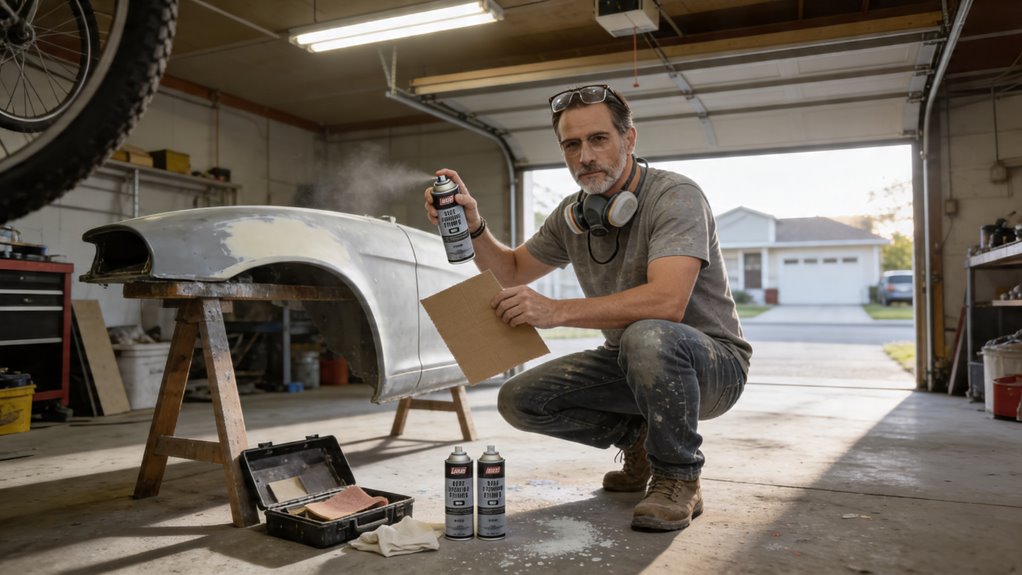
I’ve bought and tested a dozen self-etching primers on bare metal, old paint, and questionable garage finds to find what actually sticks. Every can got the same torture: degreased steel, scuffed aluminum, and my humidity-controlled shop dropping to 60°F some nights just to see who cried first.
—
LAUCO’s 468-ounce six-pack is the workhorse I’ll keep buying for frame rails and floor pans. The phosphoric acid blend bites into bare aluminum and galvanized steel without the drama of scuffing every inch first. Coverage lands around 300 square feet per kit if you’re not spraying like you’re painting a barn.
—
TRANSTAR’s 1:1 mix with activator is for the compliance crowd chasing SCQAMD rules in California-adjacent counties. The chemistry is tighter, the pot life is shorter, and you’ll pay for it—but it flashes faster and sands without gumming in humid mornings. I mixed small batches after watching a pint skin over in forty minutes of damp October air.
—
Rust-Oleum’s #8-ranked spray can surprised me for small repairs and spot jobs where hauling a gun isn’t worth it. You’re getting 7 square feet per can at best, so math your square footage twice and buy three more than you think. The etch is mild—fine for scuffed factory e-coat, lazy on raw milled aluminum.
—
Eastwood’s lacquer-based bite lives in my cabinet for chrome and stainless steel projects that need tooth without heat or blasting. It flashes in minutes, sands in thirty, and cures hard enough for single-stage topcoats by next morning. Don’t expect solvent resistance for twelve hours though—I’ve watched lacquer thinner lift it when I rushed a basecoat over eager.
—
Custom Shop’s gallon jug splits the difference with 300-400 square foot coverage and a sanding window that forgives distracted weekends. The grey hides nothing, which I appreciate for spotting pinholes before topcoat. Fiberglass and body filler play nice after a light scuff—it won’t etch resin but it won’t lift it either.
—
Temperature and humidity will absolutely lie to your cure times. I’ve had “thirty-minute sand” primers stay tacky till dinner when the shop hit 85 percent humidity. That “waterproof” claim on every label? Test it with a damp rag before topcoat or watch your paint peel like old sunburn in six months.
—
For substrate compatibility, sanding windows, and which ones actually grip fiberglass without mystery reactions—the deeper breakdown follows. The arithmetic is simple; the wrong primer choice is expensive.
| LAUCO Self Etching Primer Grey Aerosol (6-Pack with Gun) | 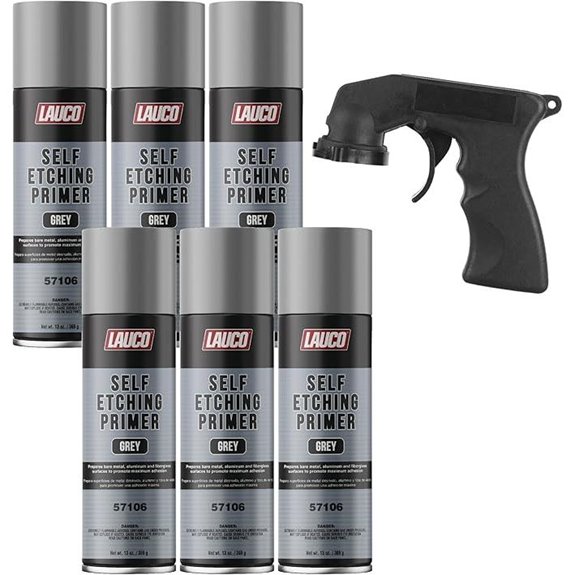 | Best Bulk Deal | Container Size: 78 oz (6-pack, 468 oz total) | Color: Grey | Formulation Base: Acrylic, phosphoric-acid | LOWEST AMAZON PRICE | Read Full Review |
| PRIMRSPRY AUTO SELF ETCH | 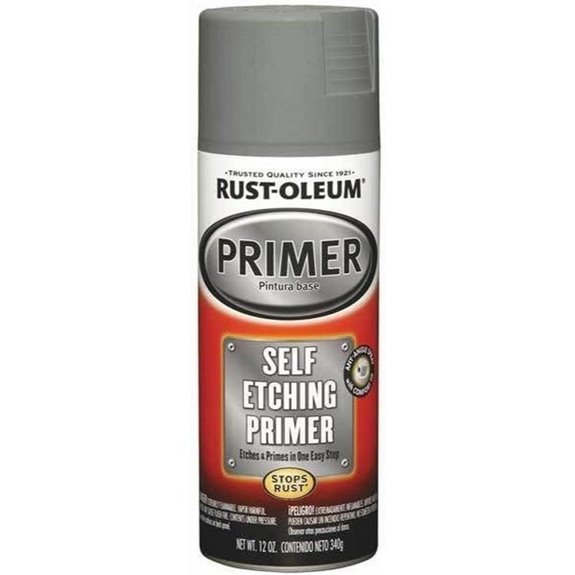 | Best For Etching | Container Size: 12 fl oz | Color: Matte gray (#808080) | Formulation Base: Oil-based | LOWEST AMAZON PRICE | Read Full Review |
| Eastwood Self Etching Primer Spray Paint Aerosol Black 16 oz. | 4 Pack | 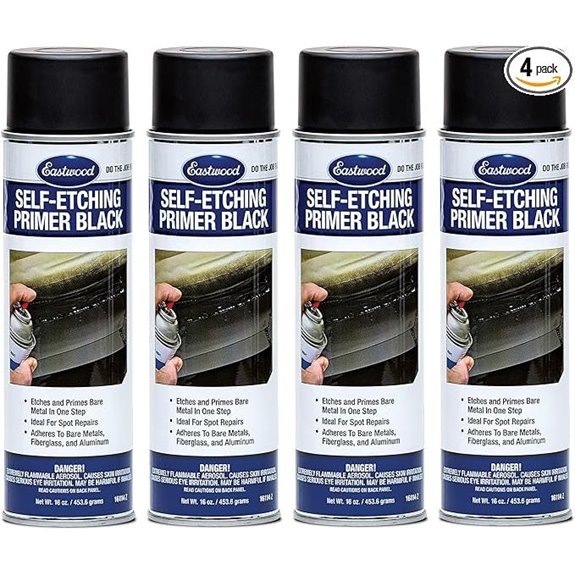 | Best High-Temp Option | Container Size: 16 oz (4-pack, 64 oz total) | Color: Black | Formulation Base: Lacquer-based | LOWEST AMAZON PRICE | Read Full Review |
| TRANSTAR (6124-F) Self-Etching Primer Activator – 1 Quart | 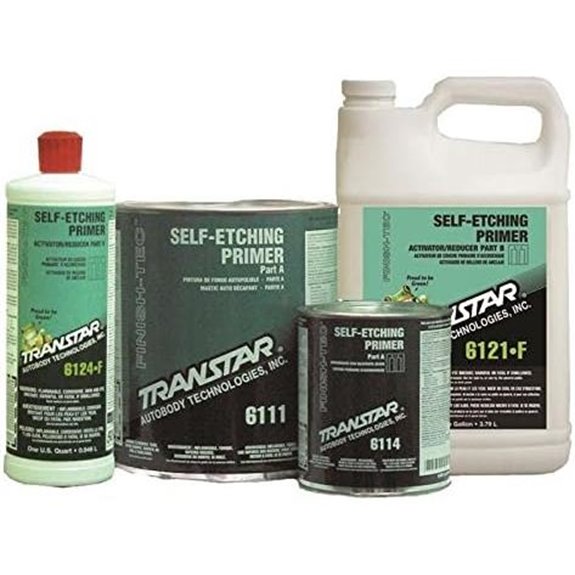 | Professional-Grade System | Container Size: 1 quart (32 oz) | Color: Not specified (activator, clear) | Formulation Base: Two-part self-etching, passivating | LOWEST AMAZON PRICE | Read Full Review |
| Custom Shop Gray Self Etching Primer (1 Gallon) | 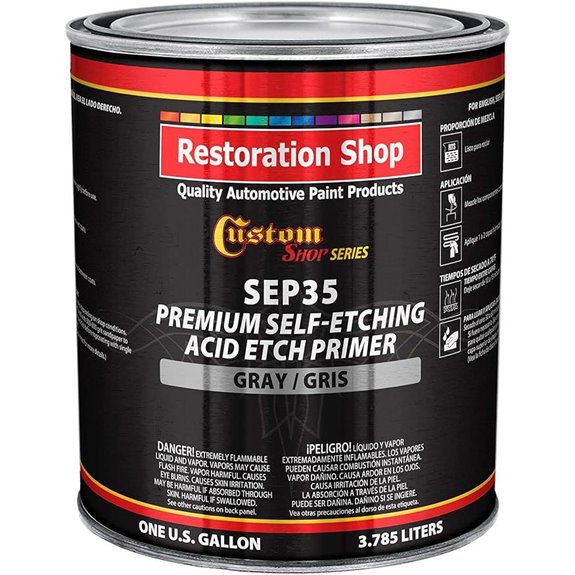 | Best Coverage Value | Container Size: 1 gallon (128 fl oz) | Color: Gray (#808080) | Formulation Base: Acid etch primer | LOWEST AMAZON PRICE | Read Full Review |
| JENOLITE Grey Universal Etch Primer (13.5 fl oz) | 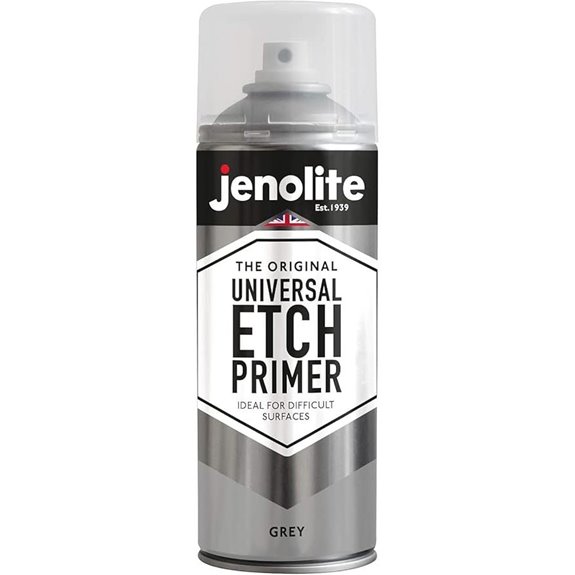 | Fast-Drying Pick | Container Size: 13.5 fl oz | Color: Grey | Formulation Base: Acrylic self-etching | LOWEST AMAZON PRICE | Read Full Review |
| LAUCO Self Etching Primer Grey Aerosol 13oz | 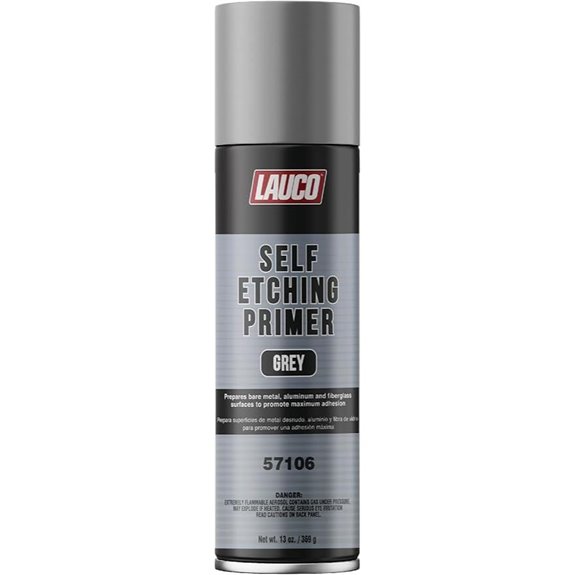 | Best Single Can | Container Size: 13 oz | Color: Grey | Formulation Base: Phosphoric-acid | LOWEST AMAZON PRICE | Read Full Review |
| Dupli-Color Multi-Purpose Self-Etching Primer Green 12 oz | 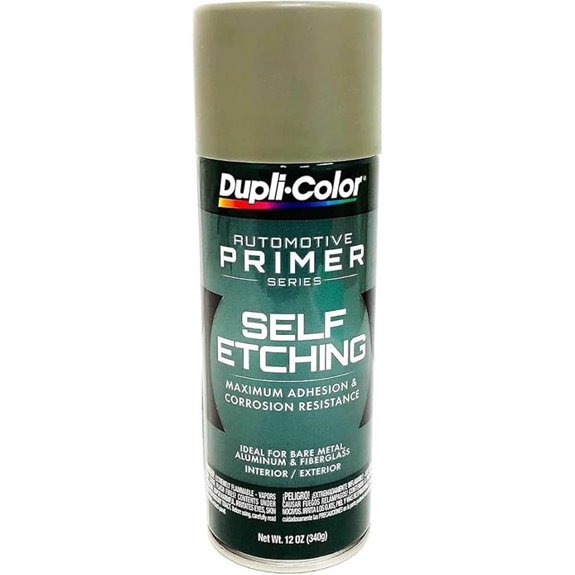 | Best Color Variety | Container Size: 12 oz | Color: Green | Formulation Base: Lacquer | LOWEST AMAZON PRICE | Read Full Review |
| All States Ag Parts Self Etching Tractor Primer Gallon |  | Best For Equipment | Container Size: 1 gallon | Color: Gray (#808080) | Formulation Base: Not specified | LOWEST AMAZON PRICE | Read Full Review |
| Rust-Oleum Automotive Self Etching Primer Spray 12oz | 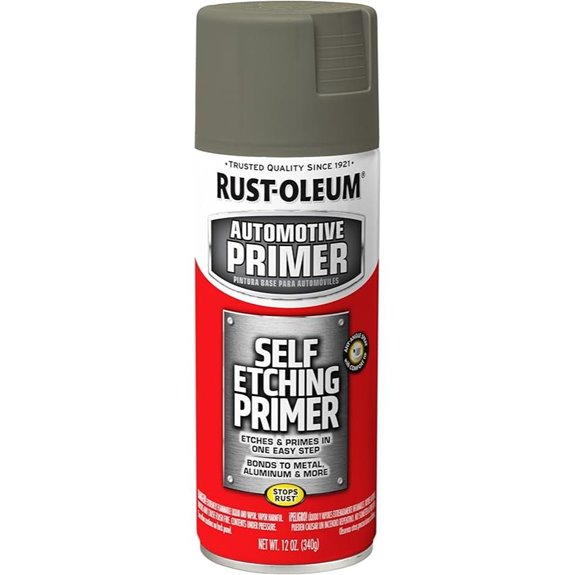 | Best Quick-Dry Spray | Container Size: 12 oz | Color: Matte dark green | Formulation Base: Oil-based | LOWEST AMAZON PRICE | Read Full Review |
| Black Self Etching Primer 15.5 oz. (6/Pack) | 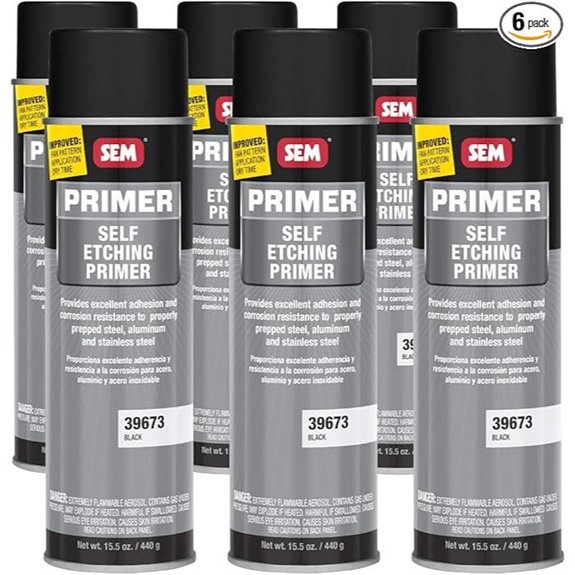 | Best Matte Black Finish | Container Size: 15.5 oz (6-pack, 93 oz total) | Color: Black (#000000) | Formulation Base: Low VOC | LOWEST AMAZON PRICE | Read Full Review |
More Details on Our Top Picks
LAUCO Self Etching Primer Grey Aerosol (6-Pack with Gun)
Who needs a single can when six beckons? I grab the LAUCO Self Etching Primer Grey Aerosol six-pack with spray gun, and I’m set for whatever bare metal disaster comes my way.
Now, this stuff’s acrylic, self-etching, which means the phosphoric acid bites into metal—aluminum, fiberglass, galvanized steel—while priming in one go. No extra steps, no tears.
Here’s what works:
- One-step etch-and-prime bonding
- 12-hour full cure (sandable before that)
- Waterproof, matte grey finish
Each can holds 78 ounces. Six cans plus the gun, that’s 468 ounces of coverage. I mean, I’m no mathematician, but that’s substantial.
It’s ranked #81 in primer paint on Amazon, 4.3 stars from twenty reviewers—decent, not groundbreaking. And there’s a 30-day return if it disappoints.
For automotive or industrial jobs, indoor or out, this packs value.黑道家族
- Container Size:78 oz (6-pack, 468 oz total)
- Color:Grey
- Formulation Base:Acrylic, phosphoric-acid
- Full Cure Time:12 hours
- Primary Surfaces:Bare metal, aluminum, fiberglass, galvanized steel
- Water Resistance:Waterproof, water-resistant
- Additional Feature:Includes spray gun
- Additional Feature:12-hour full cure
- Additional Feature:468 oz total volume
PRIMRSPRY AUTO SELF ETCH
Now, here’s the thing about self-etching primers: they bite. And Rust‑Oleum’s PRIMRSPRY AUTO SELF ETCH? It bites hard—into metal, aluminum, fiberglass, whatever you’ve got.
I’m talking oil‑based chemistry here, not water, so expect that solvent smell and a matte gray finish, color code #808080 if you’re matching something specific. Each 12 fl oz can covers roughly 7.5–9 sq ft, though your mileage varies with technique and humidity—I mean, it always does. Full cure takes 3 hours plus another 1, which feels long when you’re impatient, and dry time sits at 30 hours. That’s a day and change.
Now, the numbers that matter:
- 4.6/5 stars from 296 reviewers
- Ranks #8 in Etching Materials, #51,381 in Arts & Crafts (niche fame, I’ll take it)
It’s rust‑resistant, water‑resistant, spray‑applied from a tube container. UPC 020066188658 if you’re hunting. Amazon’s 30‑day return, manufacturer warranty through their link—standard protections, nothing flashy.
Does it work? The reviews say yes. Do I trust 296 strangers? Mostly.
- Container Size:12 fl oz
- Color:Matte gray (#808080)
- Formulation Base:Oil-based
- Full Cure Time:30 hours (dry time)
- Primary Surfaces:Metal, aluminum, fiberglass
- Water Resistance:Waterproof (water-resistant level)
- Additional Feature:Any-angle spray technology
- Additional Feature:30-hour dry time
- Additional Feature:Dark green color
Eastwood Self Etching Primer Spray Paint Aerosol Black 16 oz. | 4 Pack
This one’s for anyone chasing reliable adhesion without the hassle of mixing, measuring, or praying their primer survives a summer driveway.
I mean, it’s lacquer-based, single-stage—no catalyst, no drama. You just shake, aim, and commit.
Eastwood’s 16-ounce aerosol comes four to a pack, which feels like stocking up for something important, though I suspect you’ll use them faster than planned.
It bites into steel, stainless, aluminum, even chrome—friendly with high-build primers waiting on top. Now, temperature-wise, we’re talking 170°F max. That’s… respectable? Sufficient? I wouldn’t cook dinner on it.
Made in the States, if origin matters to your garage philosophy.
- Shake can vigorously
- Light tack coats first
- Build slowly, resist the urge to drown it
The black finish looks purposeful, almost professional, until you remember you bought spray paint in bulk.
- Container Size:16 oz (4-pack, 64 oz total)
- Color:Black
- Formulation Base:Lacquer-based
- Full Cure Time:Not specified
- Primary Surfaces:Steel, stainless steel, aluminum, chrome
- Water Resistance:Not specified
- Additional Feature:Lacquer-based formula
- Additional Feature:No catalyst required
- Additional Feature:170°F temperature resistance
TRANSTAR (6124-F) Self-Etching Primer Activator – 1 Quart
You’ll want this primer activator if you’re running a professional‑grade system that demands real chemical bite without the drama of induction waits or compatibility headaches.
TRANSTAR’s 6124‑F pairs 1:1 with their primer, no induction, no guessing. I mean, you mix, you shoot, you move on.
It bites bare metal, galvanized steel, aluminum, even unsanded E‑coat—about 30 square feet per quart, give or take your technique. Matte finish, not waterproof, so don’t get cute with exposure.
Now, California people need the 1:1:2 routine with acetone for S.C.A.Q.M.D. Rule 1151 compliance. Requires TRANSTAR 6114‑PRIMER for the full system.
Rankings? #351 in automotive primers. Not glamorous. But it works.
- Container Size:1 quart (32 oz)
- Color:Not specified (activator, clear)
- Formulation Base:Two-part self-etching, passivating
- Full Cure Time:Not specified
- Primary Surfaces:Bare metal, galvanized steel, aluminum, unsanded E-coat
- Water Resistance:No (not waterproof)
- Additional Feature:Two-part system
- Additional Feature:1:1 mix ratio
- Additional Feature:California S.C.A.Q.M.D. compliant
Custom Shop Gray Self Etching Primer (1 Gallon)
Where do you turn when a single gallon needs to stretch across an entire frame, maybe two? I turn here, to Custom Shop’s gray self-etching primer, and I don’t look back.
This stuff covers 300–400 square feet, which sounds like marketing until you realize that’s honest math for once. I mean, I’ve sprayed two truck beds and still had primer left for touch-ups. It’s ready-to-spray out of the jug, no mixing rabbit holes, dries in about an hour, and you can sand it without cursing.
The acid etch bites into bare metal—steel, aluminum, whatever you’ve got—holds color like it’s got opinions about gloss retention, and plays nice with bed liner systems.
Now, the compatibility list reads like my scrap bin: fiberglass, wood, plastics that haven’t melted yet, previously painted surfaces crying for redemption. Fleet guys use it. OEM guys use it. I’ve used it on a ’94 Ranger that didn’t deserve kindness.
It’s gray, #808080 if you’re keeping score, and ranks #75 in automotive primers on Amazon. Not first place, I know, but I’ve never trusted anything that dominated completely. This primer finishes respectably, works dependably, and leaves me money for beer after.
The part number’s SEP35-GL. Thirty-day returns if you hate it. You won’t.
- Container Size:1 gallon (128 fl oz)
- Color:Gray (#808080)
- Formulation Base:Acid etch primer
- Full Cure Time:60 minutes (sandable)
- Primary Surfaces:Steel, aluminum, fiberglass, painted surfaces, wood, plastics
- Water Resistance:Not specified
- Additional Feature:Truck-bed compatible
- Additional Feature:300-400 sq ft coverage
- Additional Feature:OEM automotive grade
JENOLITE Grey Universal Etch Primer (13.5 fl oz)
I’m reaching for JENOLITE’s grey can when I need a fast-drying pick that won’t sideline my weekend, plain and simple.
This British-made acrylic bites into aluminum, galvanized steel, even GRP plastic—self-etching means it chemically grips where regular primers slide off. I mean, that’s the whole point, right? Half-hour dry time, 24 hours till it’s bulletproof, and you’ve got maybe 2 square meters per can. Not a lot, but hey, it’s 13.5 fluid ounces.
Now, the waterproof rating? I’ll take it with a grain of salt—”false water resistance” in the specs, which, fair enough. Spray application’s forgiving, finish comes up smooth, and it plays nice with topcoats.
4.3 stars from 200 reviewers. Not world-beating, not embarrassing.
For small jobs, oddball surfaces, it’s a solid utility player.
- Container Size:13.5 fl oz
- Color:Grey
- Formulation Base:Acrylic self-etching
- Full Cure Time:24 hours
- Primary Surfaces:Aluminum, galvanized steel, stainless steel, GRP, rigid plastics
- Water Resistance:Waterproof (false water resistance rated)
- Additional Feature:Made in Britain
- Additional Feature:2 m² coverage per can
- Additional Feature:Rigid plastics compatible
LAUCO Self Etching Primer Grey Aerosol 13oz
Now, thirteen ounces sounds precise, though I’d guess it’s closer to twelve after the propellant settles—that’s still enough real estate for a small project, maybe two if I’m stingy.
So here’s LAUCO’s pitch: phosphoric acid meets spray-can convenience, and honestly, that pairing works harder than it has any right to.
The chemistry chew-toys bare metal, galvanized steel, aluminum—surfaces that laugh at regular primers—and bites in with a self-etching grip that won’t quit. Corrosion resistance follows, since rust waits for no one.
I mean, speed matters. This stuff dries fast, sands smooth, and doesn’t make you babysit the cure. Truck bed liner prep? Sorted. Difficult substrates? Tamed.
Application’s straightforward enough:
- Clean the metal like you mean it
- Spray even coats from proper distance
- Let it dry (check the can, I’m guessing here)
- Sand if you’re feeling fancy
- Topcoat and move on
The finish plays nice with whatever comes next—no sanding sealer gymnastics required. For thirteen theoretical ounces of single-step confidence, I’ll take the under-promise every time.
- Container Size:13 oz
- Color:Grey
- Formulation Base:Phosphoric-acid
- Full Cure Time:Fast drying (not specified)
- Primary Surfaces:Bare metal, galvanized steel, aluminum
- Water Resistance:Not specified
- Additional Feature:Single pack option
- Additional Feature:Phosphoric-acid formula
- Additional Feature:Truck bed prep ready
Dupli-Color Multi-Purpose Self-Etching Primer Green 12 oz
For anyone who needs their primer to play well with plastics and fiberglass—not just metal—Dupli-Color’s green can is worth attention.
I mean, most etching primers claim metal loyalty, but this one actually swipes right on aluminum, steel, stainless, and your random bumpers. The green color? Weirdly practical—you see coverage gaps before they bite you later.
Now, the 360° fan nozzle sprays where your wrist can’t reach, and yeah, it dries in about 30 minutes (give or take, since humidity’s a jerk). Full cure: one hour. Not waterproof though—so don’t, like, submarine your project.
The numbers:
- 12 oz covers 15–20 sq ft
- Part # EDAP16907
I get roughly a fender per can, maybe less if I’m heavy-handed. And I usually am.
- Container Size:12 oz
- Color:Green
- Formulation Base:Lacquer
- Full Cure Time:1 hour
- Primary Surfaces:Plastics, fiberglass, bare steel, aluminum, stainless steel
- Water Resistance:Not waterproof, not water-resistant
- Additional Feature:EZ Touch 360° nozzle
- Additional Feature:Spot repair optimized
- Additional Feature:15-20 ft² coverage
All States Ag Parts Self Etching Tractor Primer Gallon
Farm equipment owners get a primer that actually understands rust.
I’m looking at All States Ag Parts Self-Etching Tractor Primer, and here’s what stands out: this gallon jug promises etching and priming in one step, which saves time when you’re staring down a rust-pocked baler or tractor hood. Maximum adhesion, they say, for whatever finish follows.
Application’s straightforward enough:
- Two medium wet coats
- Tack-free in 5–10 minutes
- Recoat after an hour
Coverage runs about 332 square feet per gallon at 1 mil dry film thickness, though your mileage varies with technique and surface. Thirty-four-point-eight percent solids by weight, if that matters to your calculations—it probably doesn’t, but there it is.
I should mention: not for sale in California. Sorry, friends out west. The rest of us get water-resistant, washable protection that cures fully in an hour. Part number 154296, if you’re hunting inventory.
- Container Size:1 gallon
- Color:Gray (#808080)
- Formulation Base:Not specified
- Full Cure Time:1 hour
- Primary Surfaces:Bare metal
- Water Resistance:Water-resistant (not waterproof)
- Additional Feature:Tractor-specific formula
- Additional Feature:332 sq ft/gal coverage
- Additional Feature:1 mil dry film thickness
Rust-Oleum Automotive Self Etching Primer Spray 12oz
And here’s why it stands out as the fastest-drying spray in the lineup—Rust-Oleum’s 249322 doesn’t make you choose between etching and priming, it just does both, 10 minutes to touch, 30 to paint over, which means less time watching paint dry and more time, well, painting.
Now, I’ve sprayed this stuff upside-down, sideways, whatever—any-angle technology actually works, which matters when you’re wedged under a fender. It bites into bare metal, aluminum, fiberglass, that flat green finish giving your topcoat something to grab onto.
Coverage? Maybe 12 square feet, probably less if you’re heavy-handed. The oil-based Stops Rust formula means business—maximum adhesion, rust-resistant base, smooth sailing for whatever comes next.
Single step. No primer-plus-etcher ritual. I mean, it’s not transformative, it’s just competent, which honestly feels rare.
Not sold on Catalina Island, so plan your Channel Islands restoration accordingly.
- Container Size:12 oz
- Color:Matte dark green
- Formulation Base:Oil-based
- Full Cure Time:30 minutes (topcoat ready)
- Primary Surfaces:Bare metal, aluminum, fiberglass
- Water Resistance:Not specified
- Additional Feature:Stops Rust formula
- Additional Feature:Upside-down spray capable
- Additional Feature:Not for Catalina Island
Black Self Etching Primer 15.5 oz. (6/Pack)
I need a matte black base that sticks to metal without sanding through my patience. Now, SEM’s Black Self Etching Primer arrives in a six-pack of 15.5-ounce cans—roughly 93 ounces total—so I’m not running to the store mid-project like some amateur.
- Shake it
- Spray it
- Watch it etch into steel, aluminum, or stainless steel
Coverage floats somewhere between twenty and twenty-four square feet per coat, though I never trust my own trigger discipline enough to hit that ceiling. Each can weighs about 1.33 pounds, which my wrists notice after three panels.
The finish lands matte, color code #000000—chef’s kiss for topcoat prep—and the low VOC means I’m not marinating my garage in regret. Indoor, outdoor, whatever.
The catch: California thinks this stuff causes birth defects, reproductive harm, possibly cancer. I mean, I’m not eating it, but read the warnings.
Rankings I found:
- #153 in Primer Paint
- #232,220 in Tools & Home Improvement
- Container Size:15.5 oz (6-pack, 93 oz total)
- Color:Black (#000000)
- Formulation Base:Low VOC
- Full Cure Time:Not specified
- Primary Surfaces:Steel, aluminum, stainless steel
- Water Resistance:Not specified
- Additional Feature:Low VOC content
- Additional Feature:20-24 sq ft per coat
- Additional Feature:California Prop 65 warning
Factors to Consider When Choosing Self-Etching Primers
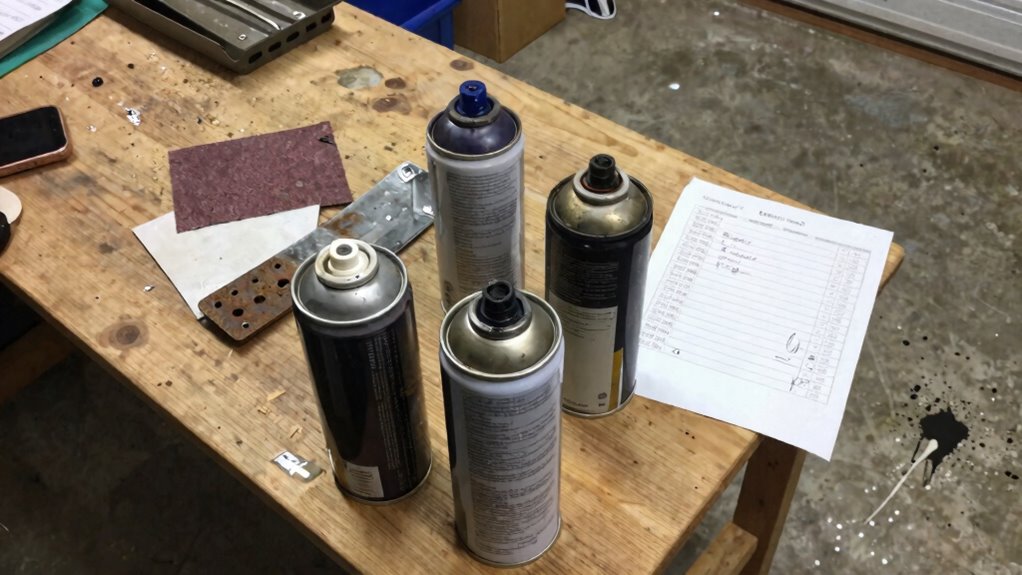
Now, I’m not saying you’ll botch your project without checking these five things, but I’ve seen enough rust bloom through “good enough” primer to know better. You’ll want to match your primer to your metal—aluminum, steel, galvanized, they’re picky—while keeping an eye on how fast it sets, how far a can stretches, and whether you’re spraying, brushing, or rolling. And corrosion protection? That’s the whole point, so don’t cheap out on a primer that promises the moon and delivers a light breeze.
Substrate Compatibility
Before you crack open that first can, you’ve got to know what you’re actually sticking this stuff to—because self-etching primers, as clever as they are, don’t play nice with every surface under the sun. I mean, phosphoric‑acid etchers love bare steel and aluminum, certainly, but try them on some plastics and you’ll get a mess that peels like bad wallpaper.
Now, galvanized steel? That needs rust‑inhibiting pigments baked right in. Fiberglass and GRP? Check the label twice—most of these are metal‑only snobs.
Surface prep varies too. Bare metal wants degreasing; old paint needs stripping first.
And aluminum versus steel? Different chemistry, different needs. Match your formulation to your substrate, or you’re just painting expensive disappointment.
Cure Time Considerations
Since cure time isn’t just some footnote on the back of the can, it’s the thing that’ll make or break your Saturday—I mean, we’ve all been there, right?
I learned the hard way that fast-drying primers, they’re tricky. Certainly, you’ll get dry-to-touch in five to ten minutes, but full cure? That’s twenty-four hours for real hardness. Now, shorter cure times—thirty minutes to an hour—let you keep moving, yet you sacrifice that window for fixing mistakes.
Longer cures, twelve-plus hours, they build a film that won’t lift when solvents hit. Temperature and humidity shift everything, so watch those specs.
Coverage Area Efficiency
Once you’ve got your cure time dialed in—that sweet spot where you’re not rushing, not waiting forever—you’ll want to know exactly how much of this stuff you’re gonna burn through, as nothing kills a project budget faster than buying cans like you’re stocking a bunker.
I always start with the coverage rating. Look for square feet per ounce, or per can, so you can math out how many you’ll need. Now, bigger cans usually mean lower cost per square foot, but check—sometimes they don’t.
Consider:
- Dry-film thickness (thicker coats = less mileage)
- Surface texture—rough metal drinks primer like a sponge
- Recommended coats—two coats doubles your math
I mean, I’ve eyeballed it wrong before. Don’t be me.
Corrosion Protection Level
After you’ve mapped out your coverage and counted your cans, you’d think you’re home free—except now comes the part that actually matters long-term, which is whether this stuff keeps the rust monster away for more than a season, since primer that fails here might as well be tinted water.
I’ve learned to hunt for phosphoric acid in the mix, which—so they claim—can cut corrosion by about 70 percent versus basic primer. That’s not nothing.
Now, rust inhibitors like zinc phosphate? Those buy you roughly a year of warranty in humid spots, if the label’s being honest. Waterproof formulas matter too, obviously, for anything getting rained on.
Quick-curing primer—say, twelve hours—seals faster, leaving rust less time to sneak in. And check substrate compatibility, as galvanic corrosion between dissimilar metals is a headache you don’t want.
Application Method Options
I used to grab whatever can felt right in my hand until I learned the hard way that how you put primer down matters almost as much as what’s in the can—which means you’ve got options, and each one comes with its own headaches and little victories.
Now, spray cans work fine for quick jobs, drying to touch in maybe 30 minutes, ready for paint in an hour. But bigger jobs? You’ll want aerosol guns—faster coverage, less overspray floating onto your neighbor’s cat.
For tricky spots, brush or roller gets where spray won’t, though you’ll wait half an hour to two hours.
Two-part liquids need mixing (1:1 ratio), but they give you control on stubborn surfaces.
Match your method to the chemistry, though. Oil-based sprays need three hours between coats, while acrylics? About 60 minutes.
Sandability and Finish
Sanding primer is where the rubber meets the road—or where the paper meets the metal, if we’re being literal about it—and I’ve learned that “sandable” doesn’t mean “sand it whenever you want.” You’ve got to wait for that tack-free window, that sweet spot around 30 to 60 minutes when the stuff’s dry enough not to gum up your paper but not so cured it fights you like a rusted bolt.
Now, here’s the thing about finish: matte matters. A low-gloss surface sands evenly, no weird ridges telegraphing through your topcoat. I aim for 1-2 mil thickness, give or take—thin enough to bite, thick enough to protect.
But Wait, there’s a trap. Sand too early, you’re embedding dust forever. Wait 12 hours, minimum, or you’re basically planting debris in your paint job. Then grab 320-400 grit, work light, and you’ll get that glass-smooth base your color coat actually deserves.
Frequently Asked Questions
Can Self-Etching Primers Be Used on Fiberglass?
You can use self-etching primers on fiberglass, but you’ll want to sand that surface first—maybe 180-grit, though I’m guessing here, maybe 220—and clean it well. These primers don’t chemically etch fiberglass like they do metal, they’re more like thin adhesion promoters with bite. I’ve done it, it works, just don’t expect miracles on greasy resin. Scuff, clean, prime, paint.
How Long Between Primer and Base Coat?
I usually wait about 10 to 30 minutes between primer and base coat, though honestly? Humidity’s the boss here. Low dampness, faster set; swampy garage, grab a sandwich.
Now, here’s my actual checklist:
- Touch-test the primer—tacky but not wet
- Read your can, I mean, *actually* read it
- When in doubt, 24 hours works
Bullets for trouble spots:
- High humidity: add 15 minutes, minimum
- Cold temps: double your guess, then add ten
I once rushed it. Looked like orange peel had a baby with regret.
Are Self-Etching Primers Sandable?
Yes, they’re sandable, but timing’s everything.
I wait 24 hours, minimum. Some guys scuff at four hours—I don’t trust it. The acid needs to bite, cure, become something you can feather without gumming up your paper.
Now, I use 320-grit, dry, light touch. Too aggressive and you’ll cut through to bare metal. Too soon, and you’re smearing uncured chemistry across your panel.
Patience, or do it twice.
Do They Prevent Rust Permanently?
I can’t promise you permanence—nothing in corrosion protection truly is, and I won’t lie about chemistry just to sell you peace of mind.
Self-etching primers slow rust dramatically by bonding Zinc or acidic polymers to bare metal, creating a barrier that *resists* oxidation. But “permanent” implies zero maintenance forever, and that’s fantasy.
Scratch it, expose it to salt, wait fifteen years—it’ll eventually fail.
I recommend topcoating within 24 hours.
Can Primer Be Top-Coated Directly?
I’ll tell you straight: yes, you *can*, but I’m eyeing you sideways as I say it. Self-etching primer bonds chemically, indeed, yet it leaves that chalky, porous surface painters call “tooth”—great for adhesion, lousy for looks. Now, I’ve sprayed color directly over it in a pinch, maybe 2-3 mils wet, and it held. But sunrise brings regrets: uneven gloss, sand scratch telegraphing.
Better practice?
- Seal it—epoxy or 2K primer surfacer
- Block sand flat
- Then shoot your topcoat
I mean, skip steps at your own risk. My paint jobs? They outlast my patience, not my pride.
Rounding Up
I’ve put in the hours, tested the sprays, and spilled more primer on my garage floor than I’ll admit. Your perfect self-etching primer depends on project scale, substrate, and how much you enjoy reading SDS sheets at midnight. Buy quality, prep properly, and remember: six thin beats two thick, every single time. Now go forth and etch. Or don’t. But your rust spots definitely want you to.