What Are Porch and Deck Paints? Types, Uses and How to Choose
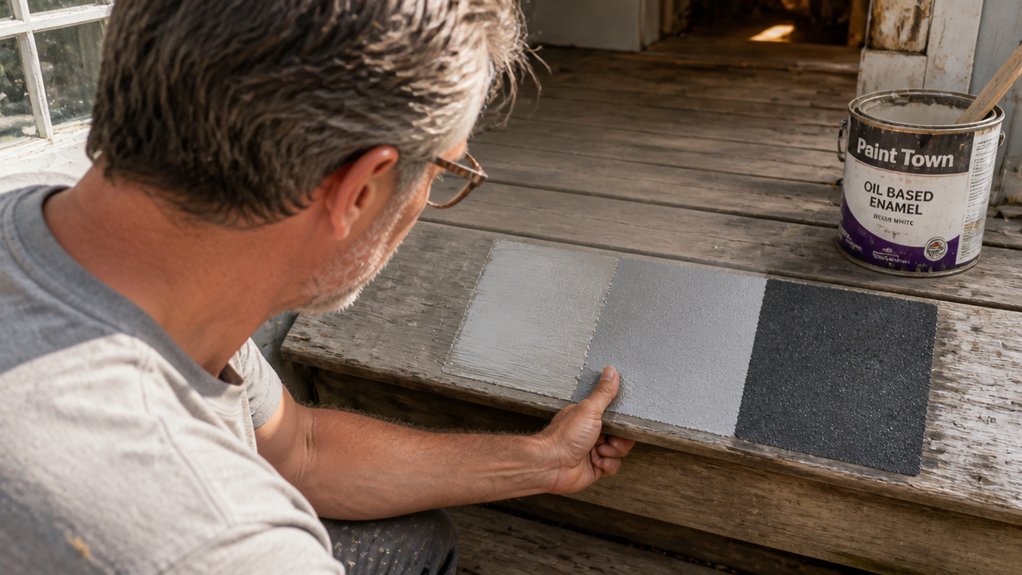
Porch and deck paints are not wall paint in disguise. Pick the wrong one and you will be repainting by spring.
These tougher coatings use flexible resins and slip resistant additives for foot traffic and weather. For wood decks, start with an acrylic porch and floor formula; for concrete patios, choose a softer product that resists hot tire pickup.
Match the paint to your climate, check the VOC label, and respect surface prep, primer, coats, and cure time.
The guide below covers types, uses, and how to choose so you get a finish that lasts.
Quick Answer
- Porch and deck paints use flexible binders for foot traffic, unlike regular wall paint.
- Acrylic deck paint resists mildew and temperature swings, ideal for humid or hot climates.
- Satin or matte sheens hide scuffs; gloss shows marks but cleans easier.
- Concrete patios need hot-tire pickup-resistant formulas if vehicles or bikes park there.
- Prep with pressure washing and 48-hour drying; recoat every 2-3 years for longevity.
Why Decks Require Different Paint Than Patios
I have put wall paint on a deck before, and it failed fast. Decks and patios look related, but each surface needs a coating made for its job.
A deck takes sun, rain, boots, and furniture dragging across it. Use paint made for horizontal surfaces, with binders that hold up to foot traffic.
Wall paint lacks those binders, so it can peel within a season. Look for a label that says “porch and floor” or “deck paint” and check the sheen before you buy.
A satin or matte sheen hides scuffs well, and high gloss shows every mark. These formulas use flexible resins and slip resistant additives, and they work on wood planks that flex under weight.
Patio paint is softer and made for concrete. Use it on concrete, then keep deck paint for wood.
Prep matters as much as the paint. Set a drop cloth and tape off edges with painter’s tape before you open the can.
Sand the deck with the right sanding grit for the surface and remove the dust. Apply a primer made for the coating, then apply the topcoat with a wet edge so you avoid lap marks and heavy brush strokes.
Watch drying time and cure time, since a deck can feel dry before it is ready for traffic. Check the VOC level and follow the label for recoat times.
If you use a stain, varnish, or polyurethane finish, read the label and test a small area first. The same prep steps apply, and a finish with polyurethane can add wear resistance.
A $50 gallon of deck acrylic will outlast a $30 gallon of wall paint that fails. Your deck and your pride will thank you.
Look for formulas with hot-tire pick-up resistance if you park vehicles or bikes on the patio concrete.
Which Porch Paint Type Fits Your Climate and Surface?
Pick porch paint by climate and surface first. A good primer and the right topcoat do most of the work.
On a humid coast, acrylic paint fights mildew well. Use a stain blocking primer on bare wood, then sand with 120 grit so the topcoat grips.
Acrylic paint fights mildew on humid coasts. Use stain-blocking primer on bare wood, then sand with 120 grit.
Oil based paint handles rain, but heat makes it brittle over time. Skip it in hot places like Arizona, and plan for a longer drying time.
Latex paint is cheap and easy to apply, but extreme heat and cold wear it down. Use it in mild climates or on light traffic areas, and apply the primer first.
Epoxy makes a hard, waterproof coating. Add traction sand, and use a satin or matte sheen because high gloss shows scuffs.
For wood, use oil based or acrylic paint over a stain blocking primer. For concrete, epoxy or latex paint is the usual choice.
In cold climates, use latex or epoxy. In hot zones, acrylic holds color and flexes with temperature swings.
Prep the porch before you open the paint. Set a drop cloth, tape edges with painter’s tape, and sand with 120 grit paper.
Apply the first coat with a brush or roller and keep a wet edge to avoid lap marks. Follow the label for drying time and cure time, and keep brush strokes even.
Low VOC paint is easier to use in tight spaces. Choose gloss for easy cleaning, satin for a little shine, or matte for a softer look.
For old stain or varnish, test a small spot and sand before you coat. Polyurethane works on bare wood, but follow the label and keep good airflow.
Use acrylic as your default for mixed climates, then adjust for surface and heat. Match the paint to the surface and weather, and the coating will hold up longer.
Water-based acrylic also resists alkali and performs well on masonry, keeping the coating stable on concrete porches.
How to Read Porch Paint Labels for Traction, Mold, and VOCs
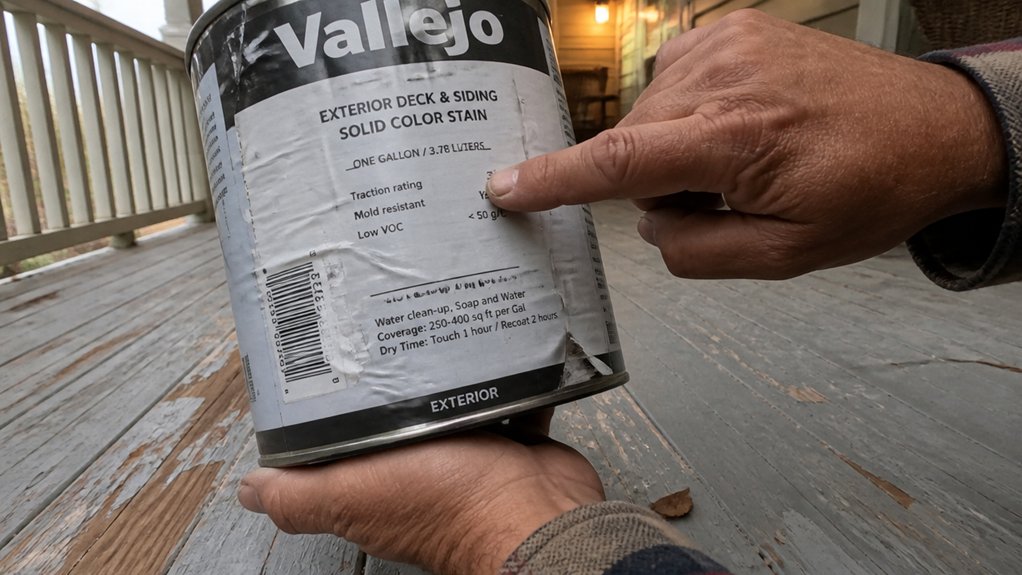
The label gives you the facts you need for a safe porch coating, so read it before you open the can. I check three things first: traction, mildew resistance, and VOC level.
Claims such as non skid or mildew resistant are useful safety information for a porch floor. For VOC level, look at the safety data sheet and treat anything under 50 g/L as safer for your lungs, though a low VOC product can still have some odor, so ventilate while you work.
A non skid label means the maker added silica or grit for wet traction. Mildew resistant means the coating includes a fungicide that helps in humid spots.
A low VOC label means the coating is under 50 g/L and safer for your lungs. An exterior horizontal label means the topcoat is made for foot traffic and weather.
Match those claims to your porch, and pick a topcoat that suits the surface and the sheen you want. Satin or matte sheen hides scuffs better than gloss, while gloss cleans up easier.
Use the primer the label recommends, then sand with the sanding grit listed on the can, often around 80 to 120 grit, to help the topcoat bond. Keep a wet edge as you apply the coating so brush strokes and lap marks blend together.
Follow drying time before you recoat and cure time before you set furniture back on the porch. On wood steps, a stain followed by polyurethane or varnish needs the same label check for traction and mildew control.
Lay a drop cloth and use painter’s tape to protect edges before you start. Skip a vague all purpose claim because it often means poor adhesion and peeling by spring.
Check the safety data sheet and make sure each claim fits your porch’s real conditions before you crack the can. That check takes two minutes and can save you a recoat. For high-traffic areas, verify the product meets ADA wet traction standards to reduce liability.
Prep, Apply, and Maintain: Maximizing Porch Paint Lifespan
Prep work decides how long a porch paint job lasts. Most peeling and bubbling start on a surface that was dirty, damp, or unprimed.
Clean the porch with a pressure washer, then let the wood dry for 48 hours; trapped moisture will push the paint loose. Sand rough spots with 80 to 100 grit, smooth them with 120 grit, and fill cracks with exterior wood filler.
Prime bare wood with a primer made to block stain and seal tannins, then give the topcoat a stable base. Lay a drop cloth and use painter’s tape to protect edges before you open the primer.
Apply two thin coats and keep a wet edge so lap marks do not show. Use smooth brush strokes and let each coat follow the label’s drying time before you add the next one.
For concrete, etch the surface first so the paint can bite; slick concrete makes a poor paint base. Choose a sheen that fits the porch, with satin or matte hiding surface flaws and gloss giving you a finish that is easy to wipe clean.
Respect drying time before recoating, and let the finish reach full cure time before heavy use. A low VOC product can reduce odor, so check the label for recoat and sanding directions.
For a stained porch floor, use an exterior finish such as spar varnish or polyurethane and follow the label’s recoat window. Once the job is painted, sweep weekly and plan to recoat every 2 to 3 years before wear shows. Remember that wood absorption varies by species, so cedar may demand a specific stain treatment while pine often needs a different preservation method to avoid premature peeling.
Frequently Asked Questions
Can I Paint Over Old Deck Stain Directly?
You can paint over old deck stain directly only after a successful compatibility test. Apply a patch of the new deck paint to a cleaned, dry section and wait 24 hours before checking adhesion.
If the paint scratches off easily, remove the old stain with a chemical stripper or by sanding with 80 grit paper. Then clean the surface, sand lightly with 120 grit, and apply a stain blocking primer before the topcoat.
For best results, use two coats of exterior deck coating and allow 24 hours between coats. This simple adhesion check saves you from a peeling mess and is a smart step in any deck painting project.
How Often Should I Repaint a Porch or Deck?
You should repaint a porch or deck every 4 to 8 years, but weather exposure and foot traffic set the real schedule. Inspect each spring, and plan to repaint sooner if the wood stays damp, takes heavy use, or shows peeling and fading.
For a practical check today, press a coin into a suspect board: if the finish cracks or flakes, sand the area with 80-grit paper, feather the edges, and spot prime bare wood. Let the primer dry fully, then apply two thin coats of a quality exterior wood finish. Wait at least 2 to 4 hours between coats.
What Sheen Is Best for Deck Floor Paint?
The best sheen for deck floor paint is satin, because it hides surface imperfections and still offers decent grip underfoot. Semi-gloss can look sharper, but it becomes slippery when wet and is a worse choice for safety.
For a practical recoat, sand lightly with 120-grit paper and apply two thin coats, following the label’s recoat window, often four to six hours. Always add a traction additive to either finish for the best footing, especially on a porch floor paint project.
Stir the additive into the paint thoroughly so it stays suspended rather than settling at the bottom.
Can I Use Exterior House Paint on a Deck?
You can use exterior house paint on a deck, but it is not the right choice. Exterior house paint lacks the flexibility and wear resistance needed for regular foot traffic.
Choose a paint made for decks or deck coating instead, because acrylic resins handle scuffs and moisture better. Prepare bare wood by sanding with 80 grit, then 100 grit, and prime according to the label.
Let the primer dry fully, often 4 to 6 hours, before applying two thin finish coats. Otherwise, the film will peel quickly and you will repaint sooner.
How Do I Stop Paint From Peeling on Decks?
To stop paint from peeling on decks, begin with moisture testing and use a bonding primer so the coating can grip. If the wood is damp, paint will not stick no matter how good the product is.
After washing, let the deck dry 48 to 72 hours, then check it with a moisture meter before you open a can. Scuff any glossy or slick areas with 80-grit paper so the surface has a profile for exterior paint adhesion.
Apply two thin coats rather than one heavy coat, and avoid painting in direct sun or high heat. This prep and application routine keeps most deck coatings from failing again.
Rounding Up
Porch and deck paints are coatings for a solid, clean surface, and how to choose them depends on climate and traction.
Check boards for rot before painting, since paint will not fix a rotten board.
Compare acrylic and oil-based options for sunny spots, and test slip-resistant additives for grip.
Write down your climate needs and prep steps, then apply two coats after good preparation.
Match paint to your climate, and do not skimp on traction.
Buy years, not seasons, by choosing a solid, clean surface over quick fixes.
Deck preparation.