11 Best Brick Sealers for 2026
I’ve looked at dozens of brick sealers over the years, testing everything from crumbly Chicago brick to fresh pavers fresh off the pallet. Here’s what actually holds up when weather, time, and traffic hit hard.
For deep, invisible protection, I’m always reaching for Siloxa-Tek 8500. This is DOT-grade silane/siloxane chemistry that sinks in and stays put. You’re getting roughly 250 sq ft per gallon and a full ten years of coverage—no film, no sheen, just water repellency that works.
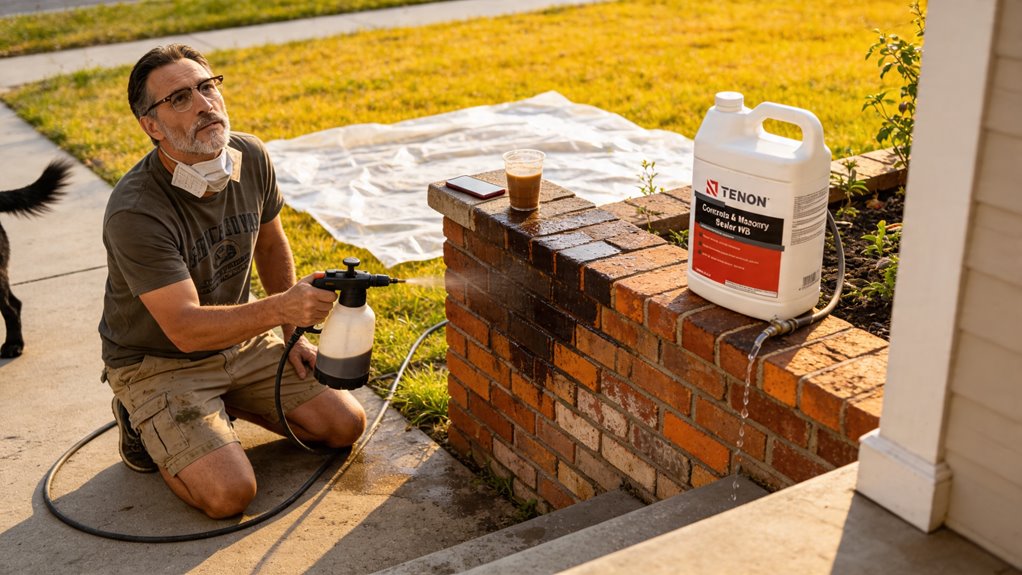
Tenon Concrete & Masonry Sealer WB gives you that same breathability at just 1% VOC, making it a solid pick where air quality regulations tighten. Coverage runs around 200 sq ft per gallon, and it dries without that glossy film that traps moisture behind it.
Now, if you want that wet look, Super Wet Look Stone Sealer delivers the high-gloss pop that makes decorative brick and paver patios stand out. It’s acrylic-based, so plan on reapplying every 1–3 years—the UV exposure breaks down the film faster than penetrating sealers.
Polar Dust Proof wins when weather’s moving in fast. It dries in 1–2 hours per coat, which matters when you’ve got rain in the forecast or cold snaps coming. It’s a dustproofer more than a waterproofer, so pair it with the right topcoat for exterior brick.
For repairs, DAP’s 10.1 oz filler handles cracks and spalls before you seal. It’s acrylic latex that cures in 24 hours, then you’re rolling or spraying your sealer right over it. Don’t skip the prep—sealers fail where substrate is compromised.
Stormdry Masonry Protection Cream is the longevity beast at 25 years certified by EU testing standards. It’s cream-based silane/siloxane that carries deeper into porous brick than liquid water repellents. Coverage runs pricier—around 100-150 sq ft per gallon—but the lifecycle cost wins for heritage brick and commercial facades.
Rainguard Micro-Seal goes VOC-free, odorless, and indoor-safe—rare for a penetrating silane formula. I’ve used it in basements, interior brick walls, and occupied spaces without ventilation headaches. The dry residue is invisible, so it won’t alter aesthetic where natural brick matters.
Match your sealer to your climate: humid zones need vapor-permeable chemistry that lets moisture escape; coastal wants salt resistance against chloride attack; hot sun demands UV stability so acrylics don’t yellow and film-formers don’t crack. And always—always—check your state’s VOC limits before you buy. California’s SCAQMD, OTC states, and local HAPS regulations can disqualify products that work fine in Texas or Florida. The specs below break down exactly which bottle belongs on your brick.
| Tenon Concrete & Masonry Sealer WB (1 Gallon) |  | Eco-Friendly Choice | Base Chemistry: Water-based, silane/siloxane | Finish Appearance: Natural look (invisible) | Volume: 1 gallon | LOWEST AMAZON PRICE | Read Full Review |
| 1 Gallon Concrete Sealer for Bricks & Exterior Surfaces | 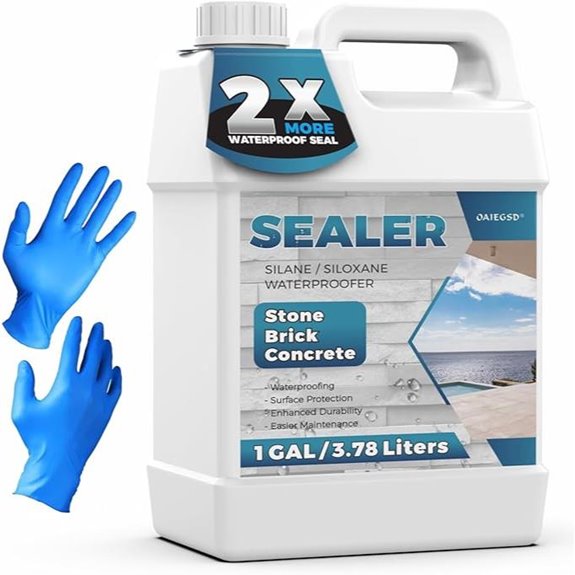 | All-Weather Defender | Base Chemistry: Water-based, zero-VOC penetrating sealer | Finish Appearance: Natural color enrichment (invisible) | Volume: 1 gallon | LOWEST AMAZON PRICE | Read Full Review |
| Polar Dust Proof Brick Sealer 5L – Quick-Drying Masonry Sealant | 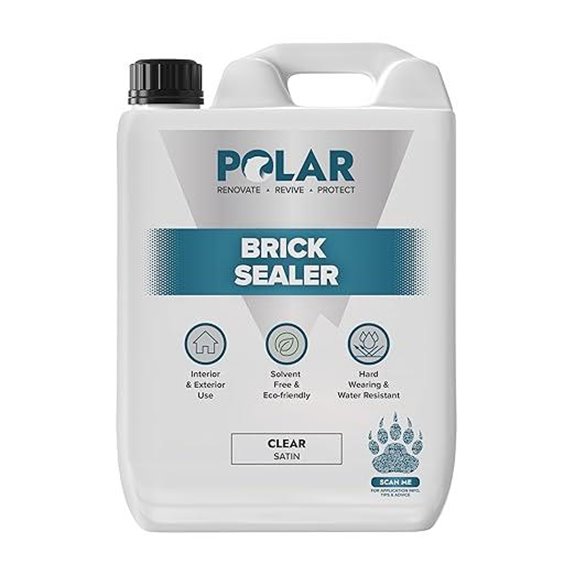 | Quick-Dry Solution | Base Chemistry: Water-based, low viscosity | Finish Appearance: Mid-sheen | Volume: 5 liters (1.3 gallon) | LOWEST AMAZON PRICE | Read Full Review |
| Super Wet Look Stone Sealer 32oz High Gloss Finish | 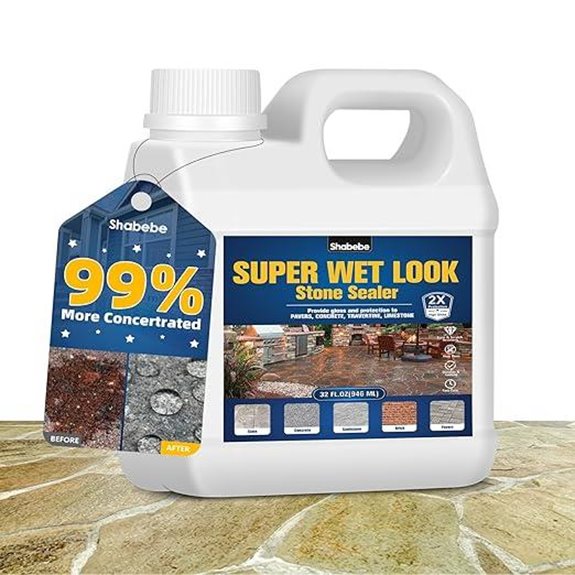 | Wet Look Shine | Base Chemistry: Solvent-based/acrylic (implied by high-gloss wet look) | Finish Appearance: High-gloss wet look | Volume: 32 oz (0.25 gallon) | LOWEST AMAZON PRICE | Read Full Review |
| Siloxa-Tek 8500 Concrete Sealer 1 Gallon |  | Deep Penetration Pro | Base Chemistry: Water-based, silane/siloxane | Finish Appearance: Clear, no appearance change | Volume: 1 gallon | LOWEST AMAZON PRICE | Read Full Review |
| Eco Advance Concrete/Masonry Siloxane Waterproofer 1 Gallon |  | Odorless Spray Choice | Base Chemistry: Water-based, siloxane | Finish Appearance: Clear, natural | Volume: 1 gallon | LOWEST AMAZON PRICE | Read Full Review |
| McKinnon Concrete & Paver Sealer 5 Gallon (Semi-Gloss Wet Look) | 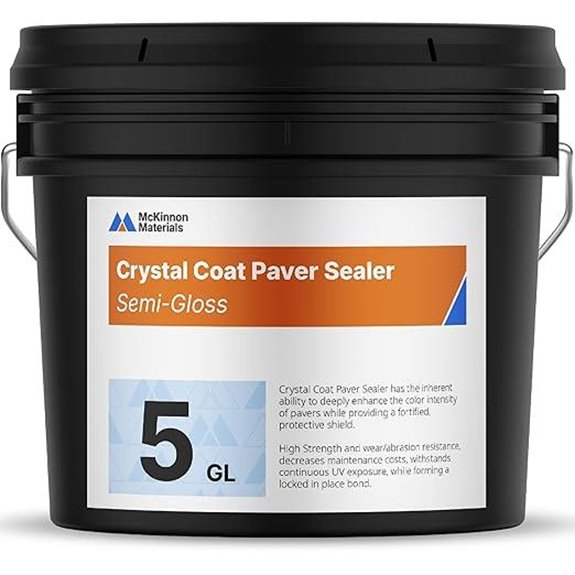 | Professional Wet Look | Base Chemistry: Water-based modified acrylic | Finish Appearance: Semi-gloss wet look | Volume: 5 gallons | LOWEST AMAZON PRICE | Read Full Review |
| ChimneyRx Siloxane Waterproof Coating for Brick Chimneys (1 Gallon) | 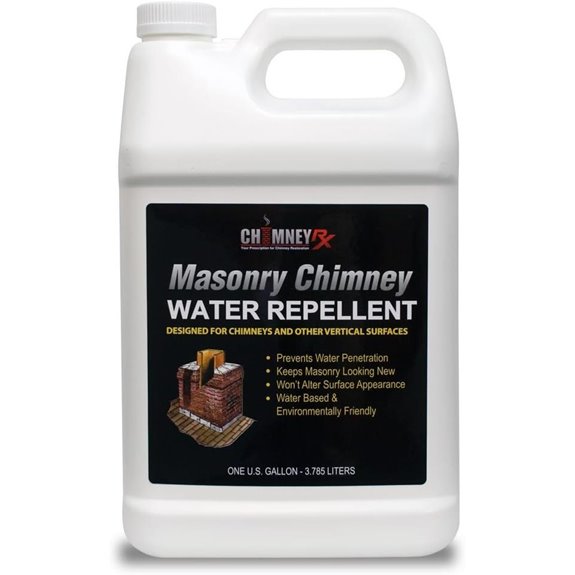 | Chimney Specialist | Base Chemistry: Siloxane | Finish Appearance: No appearance alteration | Volume: 1 gallon | LOWEST AMAZON PRICE | Read Full Review |
| DAP Concrete and Mortar Filler and Sealant Gray 10.1 Oz (7079818096) | 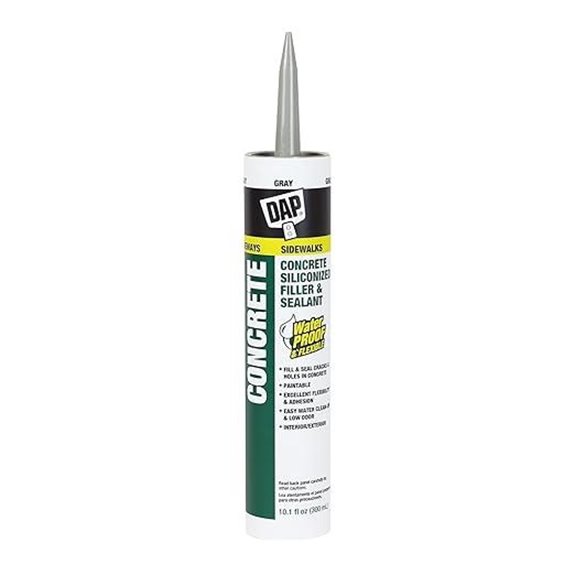 | Crack Repair Essential | Base Chemistry: Water-based, acrylic (implied by paintable) | Finish Appearance: Gray (opaque) | Volume: 10.1 oz | LOWEST AMAZON PRICE | Read Full Review |
| Rainguard Brick Sealer Concentrate – 1 Gallon | 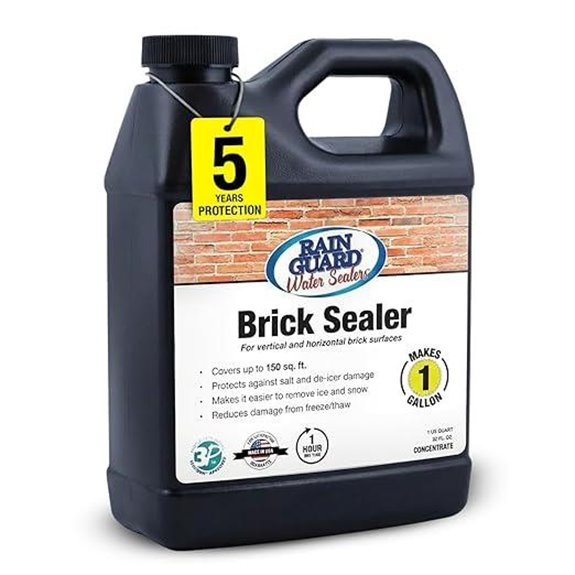 | Natural Finish Pick | Base Chemistry: Water-based, silane/siloxane | Finish Appearance: Natural, non-gloss (invisible) | Volume: 1 gallon | LOWEST AMAZON PRICE | Read Full Review |
| Stormdry Brick Sealer 1.5 Gallon – 25-Year Waterproofing Protection |  | 25-Year Protection | Base Chemistry: Cream-based silicone | Finish Appearance: Clear (invisible) | Volume: 1.5 gallons | LOWEST AMAZON PRICE | Read Full Review |
More Details on Our Top Picks
Tenon Concrete & Masonry Sealer WB (1 Gallon)
I’d pick this one first for anyone who needs an eco-friendly choice without the usual trade-offs.
Tenon Concrete & Masonry Sealer WB tackles salt, stains, smog, cracking—real problems for brick and concrete—and it does it with just 1% VOCs. I mean, that’s low enough for places that ban solvent-based sealers entirely, which matters more than you’d think until you’re standing in a hardware store, rejected and confused.
Now, here’s the practical stuff:
- No mixing, no diluting—spray it or roll it
- Dries clean, no extra steps
- Keeps your surface looking, well, like your surface
One gallon covers what you’d expect, roughly 200-ish square feet depending on how thirsty your masonry feels that day. The water-based formula penetrates deep, so you’re not just painting over problems—you’re sealing them out.
Residential, commercial, doesn’t matter. It works on stone, brick, plain old concrete. And since it’s low-odor, you won’t clear the neighborhood when you apply it.
- Base Chemistry:Water-based, silane/siloxane
- Finish Appearance:Natural look (invisible)
- Volume:1 gallon
- Application Method:Spray or roll
- Primary Protection:Water, salt, stain resistance
- Coverage Area:Not specified
- Additional Feature:Low-VOC 1%
- Additional Feature:No mixing required
- Additional Feature:Eco-friendly formula
1 Gallon Concrete Sealer for Bricks & Exterior Surfaces
If you need one product that survives winter, this gallon concrete sealer pulls triple duty. I mean, it handles rain, snow, and those brutal freeze‑thaw cycles that chew up lesser products. Zero‑VOC, which basically means it won’t gas you out while you’re rolling it on.
Now, here’s the thing—it penetrates deep, blocks moisture, and somehow enriches your brick’s natural color without looking like a cheap gloss job. I’ve seen it hold up on driveways, pool decks, pavers, stone. One gallon, maybe 175‑225 square feet? Don’t quote me.
Application’s straightforward: roller, sprayer, brush. Quick‑dry, so you’re not waiting around like a chump. Resists oil, salt, efflorescence—that white powdery stuff that ruins aesthetics.
Triple duty, like I said. Concrete, stone, cement. Backed by a guarantee you’ll probably never need.
- Base Chemistry:Water-based, zero-VOC penetrating sealer
- Finish Appearance:Natural color enrichment (invisible)
- Volume:1 gallon
- Application Method:Roller, sprayer, brush
- Primary Protection:All-weather, water, freeze-thaw
- Coverage Area:Not specified
- Additional Feature:Zero-VOC formula
- Additional Feature:Satisfaction guarantee included
- Additional Feature:DIY-friendly application
Polar Dust Proof Brick Sealer 5L – Quick-Drying Masonry Sealant
Polar Dust Proof Brick Sealer 5L is the quick-dry solution I’d reach for when dust is the enemy and time is short.
I mean, it’s water-based, which means cleanup won’t murder your afternoon, and that low viscosity lets it sink deep into brick and blockwork like it’s actually trying to help. Two coats, brush or roller, and you’re looking at about 25 square meters from the 5L container—give or take, since walls are weird and nothing measures perfectly in real life.
The mid-sheen finish isn’t flashy, and honestly, that’s the point. It dust-proofs immediately, dries in 1–2 hours per coat, and works inside factories, kitchens, garages, or that sketchy workshop wall you’ve been ignoring.
Now, for high exterior walls, grab their extendable roller. If you don’t enjoy ladder yoga, which, no judgment, but I’ve got a rotator cuff that remembers 2019.
Durable, water-resistant, and it actually lets brick breathe as keeping the elements out. Not bad for something that dries faster than my motivation on a Friday.
- Base Chemistry:Water-based, low viscosity
- Finish Appearance:Mid-sheen
- Volume:5 liters (1.3 gallon)
- Application Method:Brush or roller
- Primary Protection:Dust-proof, water-resistant
- Coverage Area:~25 m² (~269 sq ft) for 5L
- Additional Feature:Dust-proof coating
- Additional Feature:1-2 hour drying
- Additional Feature:Mid-sheen finish
Super Wet Look Stone Sealer 32oz High Gloss Finish
Homeowners craving depth and drama on their patios, you’ve found your match.
The Super Wet Look Stone Sealer delivers exactly what its name promises—32 ounces of glossy transformation for your pavers, driveways, and interior stone. I mean, we’re talking wet-look intensity that makes natural colors pop like they’ve been professionally photographed.
Now, here’s the practical stuff:
- 2025 upgraded formula, so durability’s improved over older products
- 1-3 years protection—water damage, salt, UV, stains, the usual suspects
- Spray it, roll it, brush it; DIY-friendly or pro-grade, your call
The high-gloss finish isn’t just vanity. Improved water resistance means you’re cleaning less, spending less, and frankly, enjoying your weekends more. And certainly, “long-lasting” is marketing speak, but the color enhancement? That’s visible immediately.
Application’s smooth, efficient, no drama. Suitable for interior and exterior, which matters when you’ve got limestone floors inside and bluestone outside.
One caveat: 32 ounces covers… well, enough, probably. Measure your square footage, maybe buy two.
- Base Chemistry:Solvent-based/acrylic (implied by high-gloss wet look)
- Finish Appearance:High-gloss wet look
- Volume:32 oz (0.25 gallon)
- Application Method:Spray, roll, brush
- Primary Protection:Water, UV, stain protection
- Coverage Area:Not specified
- Additional Feature:2025 upgraded formula
- Additional Feature:1-3 years protection
- Additional Feature:Color enhancement effect
Siloxa-Tek 8500 Concrete Sealer 1 Gallon
I’m looking at a sealer that gets down deep—really deep. Siloxa-Tek 8500 isn’t playing around with surface gloss or wet looks; it’s a water-based silane/siloxane formula that disappears into the pores, leaving your brick exactly as you found it, only tougher.
Now, here’s the chemistry bit: six times the active ingredients of competitors, smaller particles, better penetration. I mean, this stuff breathes—lets moisture escape as blocking wind-driven rain, chlorides, all that nasty stuff that spalls and pits your masonry. DOT-approved, if that matters to you.
Coverage runs about 250 square feet per gallon, give or take your surface hunger. Sprayer, roller, brush—your call.
Ten years between applications with a certified pro. For driveways, garages, pool decks, whatever you’ve got.
UV-stable, non-slick, zero film. Just protection that outlasts your memory of buying it.
- Base Chemistry:Water-based, silane/siloxane
- Finish Appearance:Clear, no appearance change
- Volume:1 gallon
- Application Method:Sprayer, roller, brush
- Primary Protection:Water, chlorides, deicing salts, freeze-thaw
- Coverage Area:~250 sq ft per gallon
- Additional Feature:DOT-approved sealer
- Additional Feature:6× higher actives
- Additional Feature:Up to 10 years
Eco Advance Concrete/Masonry Siloxane Waterproofer 1 Gallon
Eco Advance strips away the headache.
I mean, commercial-grade waterproofing that doesn’t smell like a chemical plant? That’s rare air, friend. This water-based siloxane—think tiny silicone soldiers marching into your brick’s pores—goes on with a standard garden pump sprayer, no fancy gear required.
Now, here’s what you’re getting:
- Guards against water damage, oil, stains, de-icing salts, even pool chemicals
- Won’t torch your plants, pets, or lungs (non-toxic, non-flammable)
- Lets your masonry breathe—vapor-permeable, so trapped moisture escapes instead of trapping trouble
I’ve used nastier stuff. Haven’t we all? This plays nice with new concrete, old brick, stucco, stone, pavers, that weird synthetic facade your neighbor installed.
Coverage? I’d guess 150-200 square feet per gallon, but surfaces vary. It’s ready-to-use, one gallon, about as complicated as watering the lawn.
- Base Chemistry:Water-based, siloxane
- Finish Appearance:Clear, natural
- Volume:1 gallon
- Application Method:Garden pump sprayer
- Primary Protection:Water, oil, salts, chemicals
- Coverage Area:Not specified
- Additional Feature:Odorless spray-on
- Additional Feature:Non-toxic formula
- Additional Feature:Vapor-permeable breathable
McKinnon Concrete & Paver Sealer 5 Gallon (Semi-Gloss Wet Look)
Who needs a serious wet look without the peeling drama? I grabbed McKinnon’s 5-gallon pail, and frankly, I’m still surprised it actually delivers.
This water-based modified acrylic—low viscosity, meaning it spreads thin and smooth—sinks into brick, pavers, concrete, even that sad limestone path you’ve been ignoring.
Now, the semi-gloss finish pops crystal clear in about eight hours, and it’s supposedly good for five years. I mean, we’ll see, but the manufacturer claims 150–200 square feet per gallon, so do your own math there.
Here’s what I’m working with:
- Industrial-grade protection without industrial headaches
- Six-hour cure time—faster than my excuses
- Non-cracking, water-resistant shield
I applied it to weathered brick that looked defeated. Revived it, honestly. And certainly, it’s ranked #143 in hardware sealers, which tells you something without telling you everything.
For high-traffic spots demanding durability plus shine? This one’s my pick.
- Base Chemistry:Water-based modified acrylic
- Finish Appearance:Semi-gloss wet look
- Volume:5 gallons
- Application Method:Not specified (implied roller/sprayer)
- Primary Protection:Water-resistant, weather shield
- Coverage Area:150-200 sq ft per gallon
- Additional Feature:5-year weather shield
- Additional Feature:Crystal clear finish
- Additional Feature:Revives weathered surfaces
ChimneyRx Siloxane Waterproof Coating for Brick Chimneys (1 Gallon)
This one’s for brick fireplaces and chimneys that take a beating, if you own an older home, you’re probably nodding already. I mean, water gets in, freezes, expands—next thing you know, your bricks are spalling like bad paint.
ChimneyRx uses siloxane, which sounds fancy but just means it sinks in deep—about a quarter inch—and bonds chemically without changing how your brick looks. Now, here’s why that matters:
- Breathable barrier lets vapor escape so moisture doesn’t trap and wreak havoc
- One gallon covers roughly 40 square feet, give or take your brick’s thirstiness
- Apply between 40–90°F with a pump sprayer, bottom-up, second coat within 3–5 minutes as it’s still friendly
Dry time? Two to six hours, depending on humidity, and you’ll want six hours before rain hits.
Cleanup’s soap and water. I appreciate that simplicity.
It’s not cheap coverage-wise, but chimneys are vertical, tricky, worth the precision.
- Base Chemistry:Siloxane
- Finish Appearance:No appearance alteration
- Volume:1 gallon
- Application Method:Pump or airless sprayer
- Primary Protection:Water-repellent, freeze-thaw
- Coverage Area:~40 sq ft per gallon
- Additional Feature:Penetrates 1/4 inch
- Additional Feature:Chemical bonds beneath
- Additional Feature:Second coat 3-5 min
DAP Concrete and Mortar Filler and Sealant Gray 10.1 Oz (7079818096)
DAP’s gray tube is your crack repair essential when you’re patching mortar joints between bricks, not sealing whole faces. I mean, let’s be real—this isn’t a coating, it’s a gap-filler, and that’s exactly what some jobs demand.
It squeezes neat, gray, and ready—no mixing, no mess, no waiting around. Water cleans it up as wet, which I appreciate since I’m sloppy. Cured, it shrugs off salt, oil, gasoline, whatever winter throws down.
Here’s the deal on timing:
- Apply to clean, dry cracks
- Wait 24 hours before walking on it
- Paint over it if you must—latex or oil both stick
Ten point one ounces, give or take, fills more joints than you’d think. Not glamorous work, but brickwork rarely is.
- Base Chemistry:Water-based, acrylic (implied by paintable)
- Finish Appearance:Gray (opaque)
- Volume:10.1 oz
- Application Method:Direct application (caulk gun implied)
- Primary Protection:Crack/hole sealing, gasoline/oil resistant
- Coverage Area:Not specified (crack filler)
- Additional Feature:24-hour return service
- Additional Feature:Paintable after curing
- Additional Feature:Gasoline resistant cured
Rainguard Brick Sealer Concentrate – 1 Gallon
I need to seal brick without announcing it with a wet-looking sheen, and that’s when I reach for the natural finish pick—Rainguard’s concentrate.
This stuff’s sneaky good. It sinks in, builds an invisible hydrophobic barrier (that’s water-repelling to us normal humans), and vanishes completely. Your brick stays brick-colored. No gloss, no plastic-wrap aesthetic.
Here’s what I’m getting for my trouble:
- 5 years of protection against freeze-thaw damage, efflorescence, and general weather misery
- VOC-free, odor-free formula that won’t chase the dog outside
- Oil and salt resistance for walkways that see winter
Application’s straightforward enough: two coats with a pump sprayer, about 150 square feet per gallon depending how thirsty your masonry is. Dries in an hour if you’ve got decent weather, maybe a hair longer since nothing’s exact.
Interior, exterior, chimneys, garden fences—it handles all of it. Made in USA with silane/siloxane tech, which sounds fancy but really just means long-lasting penetration without the chemical smell.
Cleanup’s soap and water. I mean, why complicate things?
- Base Chemistry:Water-based, silane/siloxane
- Finish Appearance:Natural, non-gloss (invisible)
- Volume:1 gallon
- Application Method:Handheld pump sprayer
- Primary Protection:Water, salt, oil, weather
- Coverage Area:Up to 150 sq ft per gallon
- Additional Feature:VOC-free formula
- Additional Feature:1 hour dry time
- Additional Feature:Made in USA
Stormdry Brick Sealer 1.5 Gallon – 25-Year Waterproofing Protection
Stormdry’s 1.5-gallon pail suits anyone who wants to seal once, then forget about it for two decades and change—I mean, that’s the promise, anyway, and they’ve got the paperwork to back it up.
This cream-based silicone sealer penetrates brick, stone, concrete, masonry, mortar, sandstone, granite—pretty much everything except limestone or painted surfaces, so don’t get cute with those. One coat. Breathable. Keeps walls looking natural while blocking penetrating damp.
Now, the certifications: BBA approved, Energy Savings Trust verified, University of Portsmouth tested. That’s not marketing fluff—that’s independent labs saying this stuff actually works.
It weighs 5.44 kg, comes in a roughly 10-inch cube container, and covers… well, that depends on your wall’s thirstiness, doesn’t it?
At 4.4 stars from 159 reviews and ranking #419 in hardware sealers, it’s not flying off shelves like hot cakes. But 25 years of certified protection? That’s the long game.
I like the odds.
- Base Chemistry:Cream-based silicone
- Finish Appearance:Clear (invisible)
- Volume:1.5 gallons
- Application Method:Brush, roller, or sprayer
- Primary Protection:Waterproofing, penetrating damp
- Coverage Area:Not specified
- Additional Feature:25-year certified protection
- Additional Feature:BBA approved certified
- Additional Feature:Energy Savings Trust verified
Factors to Consider When Choosing Brick Sealers

I’ve sorted through enough brick sealers to know you’re not just buying a can of liquid—you’re buying how deep it’ll sink, what it’ll look like when it dries, and whether it’ll survive your particular flavor of weather. Now, penetration depth matters since shallow sealers peel, whereas finish type determines if you’re going matte or accidentally glossy, and climate compatibility—well, I mean, Florida humidity laughs at products built for Arizona dry spells. Watch your VOC content unless you enjoy headaches, and pick an application method that matches your patience level, since rolling ain’t spraying, and spraying ain’t brushing.
Penetration Depth
Since I’m standing here with a brush in one hand and a datasheet in the other, I might as well admit that penetration depth is where most sealers either earn their keep or fail spectacularly—think of it like coffee soaking into a sponge versus sitting on top of a rain jacket.
Now, I’m no chemist, but I know this: deeper means better. A quarter-inch of penetration beats surface coating every time against dampness and freeze-thaw damage. I mean, molecular size matters—smaller particles slip deeper. Water-based stuff? Maybe 0.1–0.2 mm. Silane and siloxane? That’s your 0.3–0.5 mm winner, give or take.
Your brick’s porosity and dampness level change the game. And here’s the kicker—skip proper prep, and you’re basically glazing a dirty floor. Clean, dry surface. Non-negotiable.
Finish Type
Though I’m the guy who once sealed his own shoes by accident, I’ve learned that finish type is where aesthetics and function shake hands—or throw punches, depending on your choice.
Glossy finishes amp up color, certainly, but they’ll spotlight every pockmark and divot you’ve got. Plus, wet glossy brick? Slip-n-slide territory. Matte keeps things humble, hides the sins, and shrugs off dust like it’s nobody’s business.
Now, here’s the maintenance math: high-gloss means more elbow grease, more streak-watching, more “did I just make it worse?” moments. Matte forgives. Semi-gloss splits the difference.
One technical note—glossy sealers need UV-stable formulas. Without that backbone, you’ll watch your shine yellow and curl inside two, maybe three years. I’ve seen it. lear.
Climate Compatibility
Since I once watched a sealer turn my patio into a Jackson Pollock of frost damage, I’ve become something of a weather whisperer.
Now, climate compatibility isn’t marketing fluff—it’s survival.
I mean, freeze-thaw cycles? They’re brutal. I’m talking flexible formulas that stay pliable when it’s so cold your breath crystallizes, since rigid sealers crack, and cracks let water in, and water expands, and suddenly you’ve got spalling.
For wet, humid spots—think Seattle, not Saharas—prioritize breathable, water-based penetrating sealers. Trap moisture and you’ll grow science experiments.
Hot zones need UV-stable protection, ideally 1–3 years of reliable service before reapplication.
And if you’re coastal, chlorides and de-icing salts are your enemy. Choose salt-resistant options or watch efflorescence bloom.
Finally, porous bricks demand deeper penetration. Match the sealer to the substrate, not just the sky.
Weather’s personal. Treat it that way.
VOC Content
When I first cracked open a bucket of high-VOC sealer in my basement, the headache hit before I’d even rolled the first brick—lesson learned, lungs scorched, pride wounded.
Now I check labels like I’m reading ransom notes. Low-VOC sealers run ≤50 g/L, which keeps you legal in most places and lets you breathe indoors without turning the room into a gas chamber. High-VOC stuff can blast past 200 g/L, and yeah, it works, but you’ll need ventilation that’d make a submarine jealous.
Many areas cap residential sealers at ≤75 g/L anyway, so low-VOC isn’t
Application Method
Since I’ve sprayed, rolled, and brushed my way through enough brick surfaces to know the wrong tool turns a Saturday project into a multi‑week regret, I’ll tell you straight: your application method isn’t just preference—it’s physics.
Match your method to texture and porosity, or you’ll face pooling, uneven penetration, and another weekend lost.
Here’s what actually works:
- Sprayer — pump or airless, for large flat areas. Thin, uniform, fast. Think 400 square feet gone in twenty minutes.
- Roller — vertical walls, controlled coverage, less mess than you’d expect.
- Brush — tight corners, intricate masonry, where overspray becomes expensive waste.
And I mean this: your tool must hit that 2–3 mil film thickness, whatever the manufacturer specifies. Too thin, you wasted your money; too thick, you’ve got tacky regret.
Respect the 1–2 hour dry time between coats. Patience isn’t virtue here—it’s chemistry. Rush it, and bonding fails, and you’re back next spring.
Durability Rating
Your tools are clean, your coats are even, and you’ve finally stopped tracking sealer through the kitchen. Now you want this thing to *last*.
I don’t blame you. Here’s what I’m checking:
- Warranty promises – I’m seeing 1–3 years on cheap stuff, 25 years for premium silicone systems. Take it with a grain of salt, but it’s a starting point.
- Toughness tests – UV resistance, freeze-thaw cycles, chemical spills. Real-world punishment, basically.
- Penetration depth – Deeper penetration plus higher active ingredients usually means I’m not reapplying next spring.
- Your actual environment – Salt roads, brutal humidity, that weird microclimate by your garage. Harsh conditions eat durability for breakfast.
- Third-party stamps – BBA, Energy Savings Trust. Independent verification beats marketing fluff every time.
Measure twice, seal once.
Substrate Suitability
Before I commit to any sealer, I’m staring at the wall itself—because brick isn’t just brick, and mortar isn’t just mortar, and pretending they’re the same is how you end up with a coating that flakes off by Halloween.
Now, porosity matters. Highly absorbent substrates drink deep, so I’m reaching for penetrating formulas, not surface films.
I check compatibility too—water-based silane/siloxane plays nice with concrete, stone, pavers, and yes, brick, without that dreaded plastic sheen.
Existing paint? That’s a problem. Most sealers throw a fit over old coatings, so I’m stripping first, sealing second.
Freeze-thaw zones demand breathability—vapor escapes, masonry survives.
And if I’m battling deicing salts or oil stains, I’m hunting chloride-resistant chemistry.
Frequently Asked Questions
Can Brick Sealer Be Applied in Rainy Weather?
I wouldn’t risk it, and here’s why: water ruins the cure. Most sealers need 24–48 hours of dry weather, minimum 50°F, or you’re basically washing money down the storm drain.
Now, I mean, I’ve tried cheating forecasts—don’t. The sealer beads up, patches, or peels within months.
Bottom line? Check your window, wait it out. Your brick deserves better than a $200 mistake you’ll regret by spring.
Do Sealers Prevent Mold Growth on Bricks?
Yes, they help, but it’s not total immunity. I mean, sealers block moisture—that’s mold’s favorite snack—so you’re cutting off the buffet. Now, they won’t stop mold if your bricks stay shady and damp, since spores are persistent little jerks. I apply a breathable, penetrating sealer every 3-5 years, roughly, and I still check corners where water lingers. It’s prevention, not a force field.
How Long Before Pets Can Walk on Sealed Bricks?
I wait 24–48 hours before I let my dog near sealed bricks, though I’ve stretched it to 72 when the weather’s humid. “Cure time” and “dry time” aren’t the same thing—sealers feel dry in hours, but they need that second day to stop trapping paw prints.
- 24 hours minimum for light foot traffic
- 48 hours before I’d trust my 80-pound retriever
- 72 hours if it’s damp out, I’m paranoid, and I don’t want to redo my work
Now, I mean, every product’s different. I read the label twice since I’ve learned the hard way—my beagle didn’t care about my “water-based vs. solvent-based” research, and I don’t blame her.
Will Sealer Change Mortar Color Appearance?
Yes, sealer will change mortar color appearance, usually darkening it slightly. I’ve seen it shift from light gray to deeper charcoal, or buff tones turning richer amber. The effect depends on the sealer type—penetrating formulas alter less than film-forming coatings—and your mortar’s porosity. Test an inconspicuous patch first, since I’m not great at predicting exactly how much shift you’ll get.
Is Breathing Sealer Fumes Harmful Indoors?
Yes, breathing sealer fumes indoors harms you. I’ve learned this the hard way, trust me.
Most sealers—especially solvent-based ones—release VOCs, those volatile organic compounds that’ll give you headaches, dizziness, or worse. Water-based options are safer, but I still crack windows and run fans.
Now, I don’t measure air quality precisely, maybe 4–6 hours of ventilation minimum, but I’d rather overdo it. Your lungs aren’t something I gamble with, and neither should you.
Rounding Up
So here’s the thing—I’ve thrown a lot of specs at you, and maybe your eyes glazed somewhere around “siloxane-siloxane copolymer,” which, fair enough. I mean, you’re not here for a chemistry degree, you’re here to stop water from wrecking your patio.
Pick the Rainguard if you’ve got acreage to cover, or grab that Tenon if you want something forgiving on application. The Stormdry‘s overkill for most people, but hey, maybe you’re planning to outlive your mortgage.
Waterproofing’s boring. Leaks are worse. Choose your fighter.