What Are Methylated Spirits? Types, Uses and How to Choose
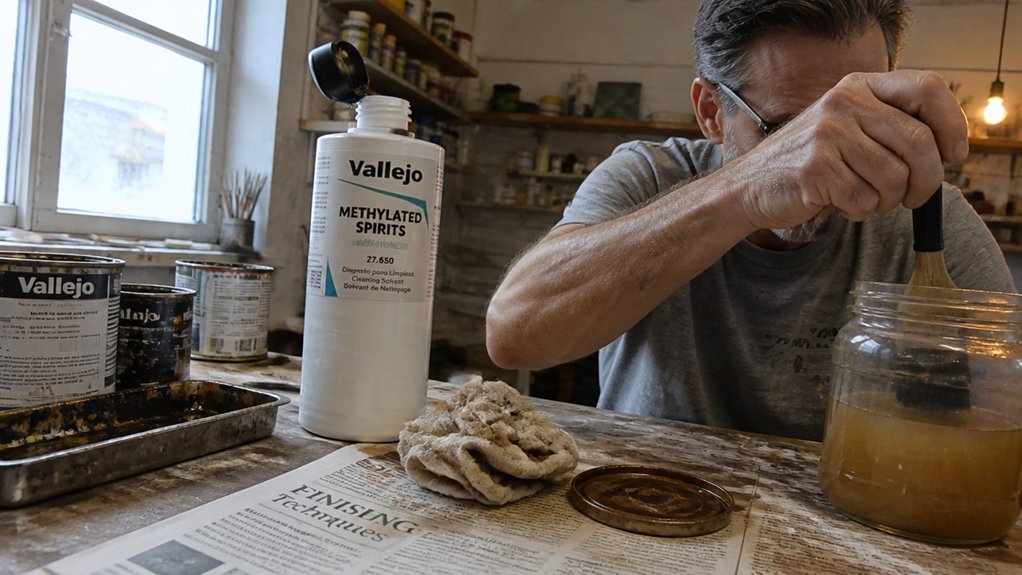
Lifting finish or a tacky brush usually means solvent trouble, so what are methylated spirits? They are ethanol made undrinkable with methanol and bittering agents, useful for cleaning tools and softening old finishes before surface prep.
This guide covers CDA for shop grime, SDA for refined jobs, and hydrous metho for camping stoves.
You will also see how grade affects drying time, topcoats, and safe ventilation.
Test on scrap wood first, check the label, and let the next sections break down which grade fits your project.
Quick Answer
- Methylated spirits are denatured ethanol, made undrinkable with methanol and bitter agents.
- Types include CDA for general cleaning, SDA for cosmetics, and hydrous grade for fuel.
- Choose by checking label for ethanol content, additives, and intended use (solvent vs. burner).
- High flammability requires sealed metal storage, ventilation, and keeping away from heat and sparks.
- Test on scrap wood first, as methanol can soften finishes, dull sheen, or ruin topcoats.
What Exactly Is Methylated Spirits?
Methylated spirits is ethanol that makers render undrinkable by adding methanol sources and a bitter agent called denatonium. I treat it as a shop solvent for metal and glass, the kind of thing I keep away from a fresh stain coat or a gloss topcoat.
> Methylated spirits is ethanol, made undrinkable with methanol and bitter denatonium. I use it as a shop solvent, far from fresh coats.
Ethanol detection tests cannot tell the difference without additive trace analysis, so poison control relies on solvent safety data. The poisonings during Prohibition show how dangerous those added methanol sources can be, which is why I never leave a jar near a drink or a food prep area. Methanol is toxic and highly flammable, so keep it secured and clearly distinguished from any drinkable liquids.
I have watched methylated spirits strip grease off engine parts in minutes, and it costs about $8 a liter. That power also means it can dull a satin or matte sheen, soften some varnish or polyurethane, and ruin a wet edge if you wipe a finish with it.
Before you use it near woodwork, lay a drop cloth and mask edges with painter’s tape. After sanding at 220 grit, remove dust with a tack cloth, then use methylated spirits only for spot cleaning tools or metal hardware.
Keep it off fresh stain, primer, and topcoat until you know the product’s drying time and cure time. A solvent wipe can leave lap marks or brush strokes in a gloss finish, so test a hidden spot first and keep the shop vented for VOC safety.
Use methylated spirits for cleaning and fuel, and never drink it. Store it clearly labeled away from kids and pets to keep your finish work clean and your shop safe.
The Main Types of Metho and Their Differences
CDA is the type most people see in a shop, and it covers many general cleaning and solvent jobs. The type matters because the additives change the smell, toxicity, and best use.
CDA usually contains methanol, pyridine, and dye, so keep it off your skin and away from a spray gun. Use it for cleaning brushes or solvent work where the label allows, and lay a drop cloth before you start. For heavy-duty cleaning of oil-based paints and stains, a mineral-spirits solvent like Klean-Strip provides a versatile alternative that also handles neglected equipment.
SDA uses ethyl acetate or other specific blends, and it costs more because it is more refined. It suits cosmetics and lab work, and you should not treat it as a finish thinner without checking the label.
Hydrous metho is cheaper and wetter, and it works for fuel burners such as camping stoves. Keep metho sold for fuel away from primer, stain, varnish, and polyurethane projects.
For most DIY jobs, CDA is the workhorse, but check the label before you use it near a topcoat. A quick test on a hidden spot tells you whether it lifts a gloss, satin, or matte sheen.
Metho is a high VOC solvent, so ventilate the shop and wear gloves that suit the product. Do not use it to thin a topcoat unless the product label says to.
Alcohol flashes off fast, so it can help with cleanup, but it can also pull color from a stain or soften some finishes. Let the surface dry fully, and remember that drying time is shorter than full cure time.
When you work near a finish, choose the right sanding grit and remove dust before you wipe. Keep metho off a fresh wet edge, because it can cause lap marks or disturb brush strokes in varnish or polyurethane.
Do not sip metho, and keep it away from open flames and sparks. Store it closed, label your shop containers, and keep painter’s tape handy for masking edges.
Where to Buy Methylated Spirits and What to Check First
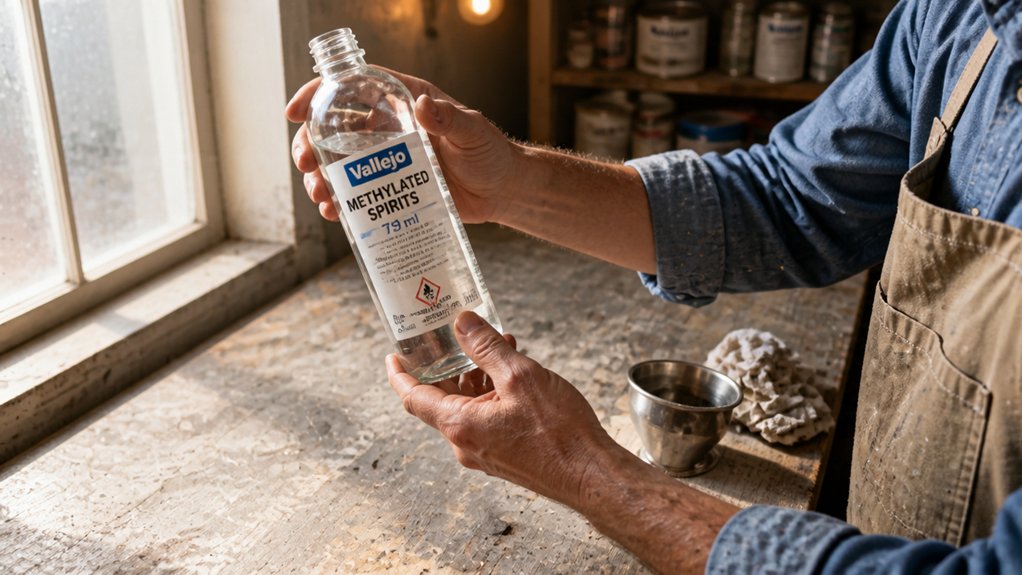
When I buy methylated spirits for cleaning brushes or thinning shellac, I check the label before I pay. Look for ethanol above 90%, and treat blue or violet dye as a sign the product is denatured.
Check the cap and seal for leaks because a leak is a fire hazard. Ask whether the can is intended for fuel use or solvent use, since the wrong product can burn badly in a stove or heater.
I once grabbed the wrong can, and my stove ran badly. Now I keep the can away from my drop cloth and painter’s tape so I do not mix up supplies.
Read the fine print for VOC content and storage instructions, especially if you plan to use it near a topcoat. Buy one small can from a reputable seller and test it on scrap wood before you use it on stain, varnish, or polyurethane.
Use the right sanding grit before you wipe down a surface, and control shop dust so the solvent does not pull grit into the finish. A clean wipe helps your primer and topcoat lay down evenly, with fewer brush strokes and lap marks whatever sheen you choose, from gloss to satin or matte. For similar solvent tasks, a highly refined mineral spirit is a low-odor alternative that leaves minimal residue after drying.
Drying time and cure time change with the product, so test on scrap and keep a wet edge while you work. Keep notes on the can so your next finish goes on with fewer problems.
Everyday Uses for Methylated Spirits Around the Home
Methylated spirits is a useful solvent to keep in my cleaning caddy for sticky cabinet doors, grimy shower screens, and tired paintbrushes. For ink, marker, or adhesive residue, dampen a cloth and dab the stain until it lifts.
Before you apply a fresh topcoat, wipe cabinet doors and trim so dust or oil does not spoil the bond. A little methylated spirits on a cloth will remove light adhesive and leave the surface ready for primer.
In the shop, I use it to soften dried shellac on varnish brushes and to clean the metal ferrule before the next finish job. Brush cleaning capabilities extend tool life when you match the solvent to the finish. Use the matching solvent for cured oil based varnish or polyurethane, and respect the drying time and cure time on the can.
Mix a splash with water, apply it with a clean cloth, and buff the glass dry without streaks. Methylated spirits is a VOC, so open a window and keep the room ventilated while you work.
It also cleans light switch plates and lifts scuff marks from tile, and it dries fast enough to leave no oily film. Test it first on gloss, satin, or matte finishes so you do not dull the sheen.
Lay a drop cloth and use painter’s tape to mask edges before you clean near finished woodwork. A litre costs little, lasts a long time, and belongs with your brushes and finishes.
After sanding with 220 grit, wipe away dust before you lay down the first coat. Clean tools and a surface free of dust help prevent lap marks and rough brush strokes at the wet edge.
Why Workshops and Labs Rely on It
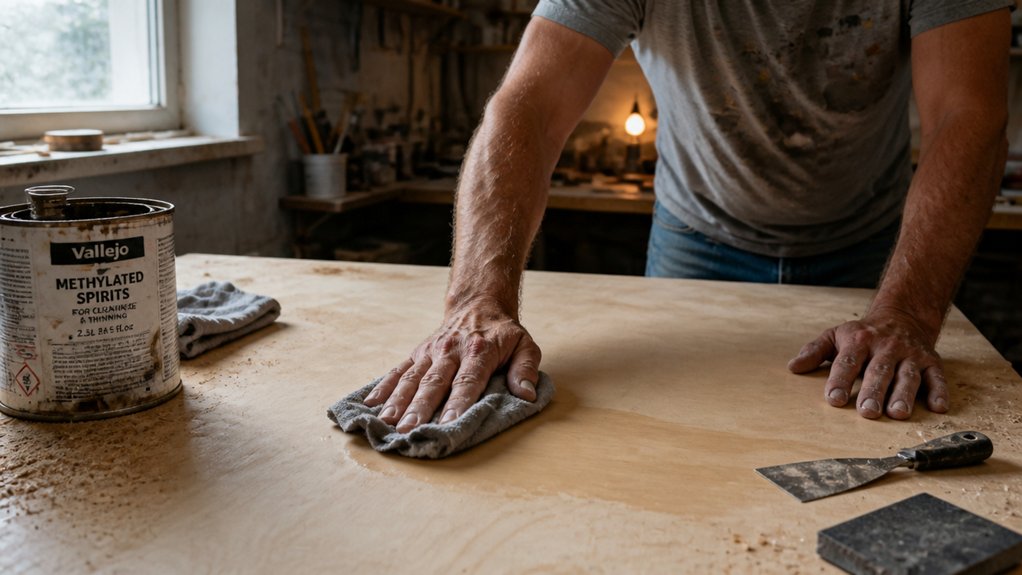
Methylated spirits earns its place in my shop and in the lab because it handles cleanup and surface prep without a lot of fuss. I keep a capped bottle on the bench for paint brushes, tools, and small parts that need to be clean before the next coat.
Before primer or topcoat, I wipe down the surface so the finish bonds well. After sanding with 120 grit or 220 grit, a rag dampened with methylated spirits lifts dust without leaving a film.
It also helps me avoid lap marks and brush strokes when I apply varnish or polyurethane, and it keeps the wet edge workable on a warm day. A clean surface helps a gloss, satin, or matte sheen lay down evenly, and it gives painter’s tape a better chance to seal.
It can lift a stain if you leave it too wet, so test a hidden spot first and keep a drop cloth under the work. It flashes off fast, which helps drying time, but it does not shorten the cure time of polyurethane or varnish. Unlike boiled linseed oil, which requires warm application and patient thin coats, methylated spirits acts as a pure solvent that evaporates cleanly without leaving any conditioning film behind.
In the workshop, keep the cap on and keep sparks and flames away. It is flammable, and I learned that the hard way once.
In the lab, I use it to clean glassware and wipe down benches, but I turn on ventilation and keep my face out of the vapor. Methanol vapor can make you sick, so do not treat the smell as harmless.
Check the VOC label and the safety data sheet before you use it in a closed room. Keep the room ventilated and keep the bottle sealed when you finish.
For shop jobs, it degreases parts, cleans glassware, disinfects benches, fuels burners, and prepares surfaces for adhesive. In each case it evaporates fast and leaves little behind.
Keep it ventilated, keep it sealed, and store it away from heat. Check the cap before you leave the bench.
Why Metho Is Toxic and How to Store It Safely
Metho is serious poison, and the methanol in it can cause blindness or death if you swallow it. Treat it like the flammable liquid it is, and keep it away from sparks, flames, and hot surfaces.
It can ignite at room temperature when the vapor finds an ignition source. Metho is a VOC, so fumes build fast in a closed shop; keep the lid on and store it where air moves.
Use a tightly sealed, clearly labeled container in a cool, dry place with good airflow. Put it in a locked cabinet if kids or pets are around, and keep it away from food and drinks.
Metho can clean shellac from brushes and wipe down bare wood before stain, but it can lift a fresh topcoat and change the sheen on gloss, satin, or matte finishes. Keep it away from your drop cloth, painter’s tape, primer, varnish, polyurethane, and sanding dust so a spill does not start a fire or ruin a finish. A secure facepiece seal is essential when using any respirator to prevent fumes from bypassing the filter.
Pick the right sanding grit before you stain, and keep metho rags out of the sanding area. Never use metho to smooth lap marks, brush strokes, or a wet edge on a drying finish; follow the can’s drying time and cure time instead.
Toxicity of Methanol
Methanol is the troublemaker in a shop full of solvents, so treat that bottle like a cranky badger. Keep it away from your mouth, your nose, and your skin.
Early signs of methanol poisoning include headache, dizziness, and nausea. Later signs can include blindness or organ failure, so get medical help right away if you suspect exposure.
Your body breaks methanol down into formic acid, which attacks the optic nerve. A hospital can give ethanol or fomepizole to block that breakdown, and fast treatment matters.
Store methanol in its original labeled container inside a locked cabinet, away from kids and confused adults. If you spill it, wipe it up fast, open a window, and use a fan to clear the air.
In the shop, keep methanol away from primer, topcoat, stain, varnish, and polyurethane while they dry. Use a drop cloth and painter’s tape to protect nearby wood, and check the label for VOC and ventilation needs.
Methanol can soften a finish, change sheen from gloss to satin or matte, and leave lap marks or brush strokes. It can also break a wet edge, so keep it off the piece while you work.
Respect both drying time and cure time before you move to the next sanding grit or wipe the surface. Treat methanol as a shop chemical that needs clear labels, good airflow, and a safe storage spot.
Use methanol only for the job it is meant to do, and skip it when another product will work. If you choose to use it, follow the label and keep your work area clear. Because it is highly flammable, store it away from heat and flames in a cool, ventilated spot, just as you would with isopropyl alcohol.
Flammability and Handling
Methylated spirits are a fire hazard, so treat every can with respect. The vapor can ignite at roughly 3% to 19% in air, and even a small splash can catch fire.
Keep pilot lights, static sparks, and other ignition sources away from your work area. For fire safety, keep metho away from open flames and have a Class B extinguisher nearby.
If you spill metho, ventilate the area right away, soak up the liquid with absorbent cloths, and let the cloths dry outdoors. Vapor buildup can turn a room into a firebox, so keep air moving.
Store metho in approved metal or glass containers that are tightly sealed and clearly labeled, away from heat. Treat metho like a grumpy volatile pet: respect it or it will bite. Overheat protection and flame-retardant housing are common safety features on tools used near such solvents.
When you use metho to clean a brush or wipe a surface before stain, varnish, or polyurethane, move the drop cloth and painter’s tape away from ignition sources. Keep metho away from primer and topcoat work, and check the VOC label before you open the can.
Use the right sanding grit, watch for lap marks and brush strokes, and keep a wet edge while you work. Plan drying time and cure time around solvent use, and choose the sheen you want, whether gloss, satin, or matte.
Safe Storage Practices
Store metho in a cool, dry place away from radiators and sunlight, and keep the cap sealed tight. Methylated spirits is a flammable poison, so treat the can with the same care you give primer, topcoat, varnish, and polyurethane.
Ventilation matters when you pour it for cleaning brushes or thinning a stain, so open a window and keep your head out of the fumes. Those fumes contain VOC and can make you sick, even if the smell seems normal in a workshop.
Use a childproof cap and keep the can out of reach, since friends and grandkids poke around your shop. A locked metal cabinet is the best home, with a DANGER label that no one can miss.
For spills, grab a clean rag, soak up the liquid, and let the area air out. Do not wipe the spill into cracks; a drop cloth or painter’s tape can mark off the area while it dries.
When you clean a brush between coats, watch the wet edge and lap marks on the project, and give the finish the full drying time and cure time listed on the can. Pick your sanding grit with care, check the sheen you want from gloss to satin to matte, and keep brush strokes smooth so the finish looks even. Look for triple-lock airtight seals that hold a pressure differential of at least 0.5 psi to stop air exchange when transferring metho into smaller containers for workshop use.
Methylated Spirits vs. Pure Ethanol: What’s the Difference?
Methylated spirits and pure ethanol share the same base alcohol, but the added ingredients change how each solvent works in a paint or finishing shop. Pure ethanol is the cleaner solvent for precise work where a clean alcohol matters, such as extraction or synthesis.
Methylated spirits carry methanol and bittering agents, so you cannot drink them. They also evaporate more slowly, feel stickier, and can leave a faint film on a surface.
Pure ethanol flashes off fast and leaves little residue. That clean evaporation helps when you clean optics or electronics, or when you wipe a surface before applying stain, primer, or topcoat.
Methylated spirits work well for rough cleanup, such as degreasing metal tools or thinning shellac for a wood finish. In the shop, keep a drop cloth down, tape off edges with painter’s tape, and ventilate the area because the VOC load can add up.
A slow solvent can affect drying time and cure time on a finish. It may soften an old varnish or polyurethane, leave lap marks, hold brush strokes, or disturb a wet edge on a gloss or satin topcoat. Pure gum spirits distilled from pine resin are a distinct alternative for thinning oil paint and varnish without the sticky residue methylated spirits can leave.
Wipe off any solvent film before you move to a finer sanding grit, because residue can clog paper and show under a matte or gloss sheen. A clean surface also helps a topcoat bond evenly.
Pure ethanol costs more and leaves less residue. Methylated spirits cost less and handle rough work.
Match the solvent to the residue limit and the finish you need to protect. Test it on a hidden spot before you commit to a full panel.
How to Pick the Right Grade for the Job
Pick the grade of methylated spirits by the job in front of you. The brand and the dye color tell you little about how it will work.
For a fuel stove, buy the cheap solvent grade. It burns fine and costs less.
For lab disinfecting, use reagent grade so you avoid residue. In a paint shop, keep separate containers for cleaning and for finish work.
Modern grades are cleaner than the old cheap choices because excise rules changed. Debt cycles and commodity status once pushed buyers toward the cheapest drum, and temperance history shaped that habit.
Today the choice is practical. Use HMS, the hydrous grade, to cut grease before primer and topcoat.
Use SDA for cosmetics and other products where additives matter. Use CDA for general shop work, such as wiping tools or cleaning a drop cloth area.
Check the label for methanol content and VOC level. A higher methanol content does not make a better product for your finish.
Wipe sanding dust after your final sanding grit before stain, varnish, or polyurethane. Let the surface dry, and follow the drying time and cure time on the finish can.
Keep painter’s tape off a fresh topcoat until it cures. A strong solvent can lift the film, leave lap marks, or spoil the wet edge and brush strokes.
Choose a gloss, satin, or matte sheen for the finish, then use the solvent that suits the task. Match the grade to the work and skip the hype.
Frequently Asked Questions
Can Methylated Spirits Be Used on Skin?
Methylated spirits should not be used on skin. Skin contact causes irritation, and methanol absorption creates a real toxicity risk.
It is a harsh solvent for thinning shellac or cleaning tools, not a skincare product. For paint or varnish residue, apply a waterless hand cleaner to dry hands, work it in for 30 seconds, then rinse with warm water and moisturize.
Denatured alcohol carries the same hazards, so keep it off your hands. Stick with proper antiseptics for cuts and wear nitrile gloves when handling solvents.
If skin is exposed, wash promptly with soap and water and check the safety data sheet for first aid guidance.
Does Methylated Spirits Expire or Lose Potency?
Methylated spirits does not expire or lose potency when stored properly, though evaporation can weaken it over time. Keep the lid tight and the container cool and out of direct sun to preserve its strength.
For a practical check today, pour a small amount into a clean glass jar and mark the date, then reseal the original bottle immediately. If you transfer some to a smaller HDPE bottle, you reduce headspace and evaporation, which helps it stay effective for years of thinning shellac or cleaning brushes.
Check the seal by inverting the closed bottle for a minute; if you see seepage, replace the cap or liner. Search for denatured alcohol storage tips if you want a close synonym.
Can Methylated Spirits Be Poured Down Drains?
Methylated spirits should not be poured down drains. Check your local disposal regulations before doing anything, because drain safety is not guaranteed and the liquid is a fire hazard.
Take it to a hazardous waste facility instead. For a practical step today, keep spent solvent and rags in a labeled, sealed metal container, then book a household hazardous waste drop-off.
Methylated spirits, also called denatured alcohol, can be flammable and toxic, so never dump it in a sink, toilet, or storm drain. If you are cleaning brushes after shellac work, collect the waste in a closed container, not a bucket left open in the workshop.
Is Methylated Spirits Safe for Cleaning Food Surfaces?
Methylated spirits is unsafe for cleaning food surfaces because it can leave a toxic residue behind. As a painter and finisher, I use it for tools and paint cleanup, not for anything that touches food.
If you need a food-safe wipe-down, use a proper sanitizer mixed to the label rate and let it air-dry fully before use. A practical example is a 60-second contact time with a food-safe sanitizer on a cutting board, then a clean rinse.
Don’t gamble on denatured alcohol for kitchen hygiene. Check the product label and keep food prep surfaces separate from solvent cleanup.
Can Methylated Spirits Be Used to Remove Nail Polish?
Methylated spirits can remove nail polish in a pinch, but it is not the safest choice. I treat it as a harsh solvent for cleanup, not for skin-contact removal, because it is toxic and flammable.
If you test it anyway, put a little on a cotton pad, wipe one nail, and wash your hands with soap and water within 60 seconds. Work near ventilation and keep flames away, since the fumes are a real concern.
A safer route is an acetone-free nail polish remover or a proper remover made for the job. Your skin and lungs will thank you for skipping this shortcut.
Rounding Up
Methylated spirits come in types for different uses, and choosing the right one means reading the label. Check the label for 95% ethanol for general cleaning, shellac thinning, or stovetop grime.
Compare the standard blue stuff with boutique options; it beats them for household grime and workshop degreaser duty. Ask for “digestive” grade only for camping stoves, and do not drink it.
Check for a bitterant or dye if you care about residue. Buy from hardware stores, keep it sealed and locked away, and act smarter than a solvent headache.
Shellac thinning.