
How to Apply Teak Oils: Step-by-Step Guide
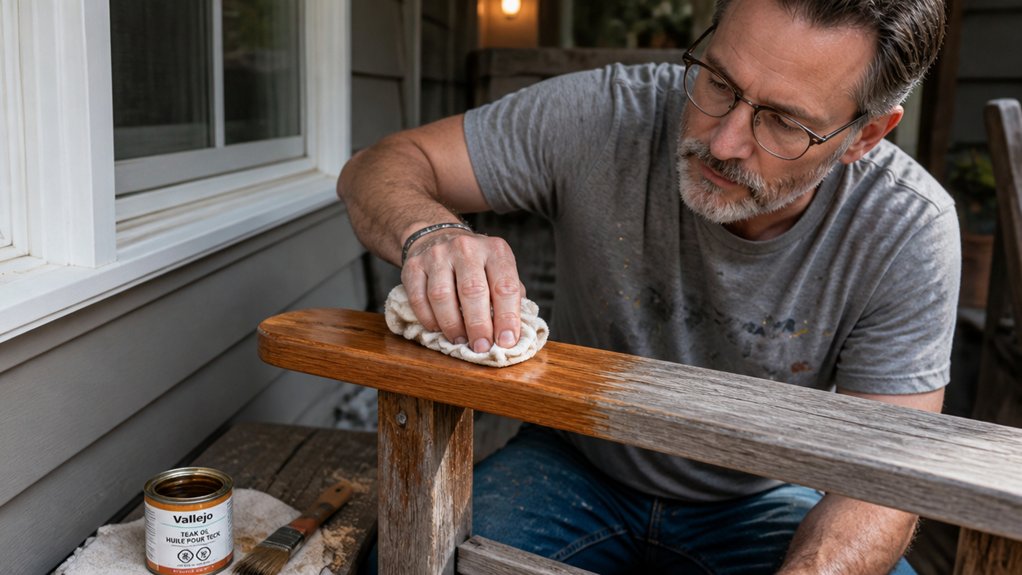
Applying teak oil seems straightforward, but a blotchy finish usually means you missed the prep work. The secret to a rich, even coat is cleaning, sanding, and wiping away dust before you ever open the can.
You want a thin layer rubbed into the grain, not a thick glaze left to pool on the surface. Give it 20 to 30 minutes to soak in, wipe off the excess, then scuff lightly and add a second coat.
Let it cure fully for 24 to 48 hours before setting anything on it.
This guide breaks down the exact tools, timing, and yearly touch-up routine to keep your outdoor furniture looking sharp.
Quick Answer
- Sand with 220-grit along the grain after cleaning to open pores for oil absorption.
- Apply first thin oil coat with a rag, hitting joints and end grain first.
- Wipe off excess oil after 20–30 minutes, then scuff lightly with 220-grit.
- Recoat thinly after 8–12 hours, wipe excess, and let cure 24–48 hours.
- Store oil rags in a water-filled metal can to prevent spontaneous combustion.
Clean and Sand the Teak to Open the Wood Pores
Start with a dedicated teak cleaner to remove the gray layer. Oiling over weathered wood is like putting sunscreen on a sunburn, since the damage is already done.
Once the teak is dry, sand with 220-grit paper and work along the grain direction. That grain runs parallel to the boards, and sanding against it scratches the surface and blocks oil from soaking in.
Dust removal is the step most people skip, and you cannot rush it. Vacuum the surface first, then wipe it down with a tack cloth, which is a sticky rag that grabs the leftover dust.
Dust removal is the step most people skip, and you cannot rush it. Vacuum, then hit it with a tack cloth.
For the final pass, wipe with a lint-free cotton rag dampened with denatured alcohol. This gives you a clean surface ready for the finish. Proper wood preparation with dry conditions and thin coats prevents disappointment.
If you skip this prep, the oil sits on top of the wood instead of soaking in. A finish that sits on the surface chips faster than a cheap paint job.
Clean, sand, and remove the dust before you apply anything. Teak that has been prepped this way will drink the oil like a thirsty sailor.
Apply the First Coat of Teak Oil in a Thin, Even Layer
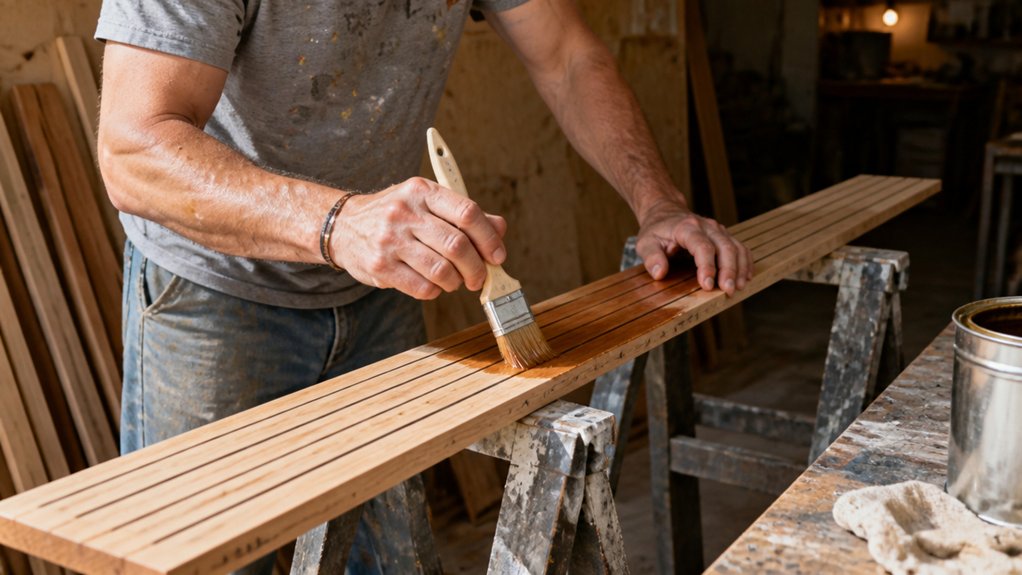
Stir the can slowly, scraping the bottom with a stir stick. Shaking whips in air bubbles that leave a frothy mess on your wood.
You are aiming for a thin, even coat, so don’t drown the grain. Use a clean rag dipped into the oil, not a brush, for better control.
Work in a figure of eight pattern, then finish along the grain. Hit joints and end grain first because they soak up oil fast.
Watch for dry spots, which will look dull and thirsty. Let the oil penetrate for 20 to 30 minutes before wiping off the excess.
I have botched this step more than once by slathering on too much. The tacky mess taught me patience, so use a light touch here.
Keep the coat thin and even, and the wood will drink what it needs. This step saves you from sanding and re-coating later.
Use a low-VOC teak oil if you want less fumes, and always lay down a drop cloth. Keep a wet edge as you move so you avoid lap marks and brush strokes.
A satin or matte topcoat can seal the oil once it cures, but wait the full drying time before applying any varnish or polyurethane.
For best results, sand with 220 grit before oiling to open the grain. This helps the oil penetrate evenly and prevents blotchy patches.
Remember that drying time is not the same as cure time. Give the oil a full day before you handle the piece or add a second coat. For dense hardwoods like teak, deep penetration ensures the oil reaches the inner fibers for lasting waterproof protection.
Sand Lightly and Recoat for a Uniform Satin Sheen

After the first coat sits for 20 to 30 minutes, wipe off the excess. You are past the messy part, but the job is not done yet.
Now grab 220-grit sandpaper and scuff the surface lightly, following the grain. This smooths raised fibers and gives the next coat something to grip.
I skipped this step once, and the finish looked patchy. I will not make that mistake twice.
Timing matters for the recoat. Wait 8 to 12 hours, or overnight in humid weather, so the oil can set.
If you recoat too soon, you will smear the finish like soft butter.
| Step | What You’re Doing |
|---|---|
| Sand | Light strokes, no pressure; remove dust with a tack cloth |
| Recoat | Thin, even layer; wipe excess after 20 to 30 minutes |
Apply the second coat in a thin, even layer. This gives you a uniform satin sheen across the whole surface.
Remember that during the initial application, moisture protection builds only if the oil penetrates to a 0.5mm minimum depth, which this two-coat process supports.
Two coats on bare wood work well, and one coat handles routine maintenance. Keep the process simple, and the finish stays honest.
Let Teak Oil Cure for 24–48 Hours, Then Maintain With a Spring Coat
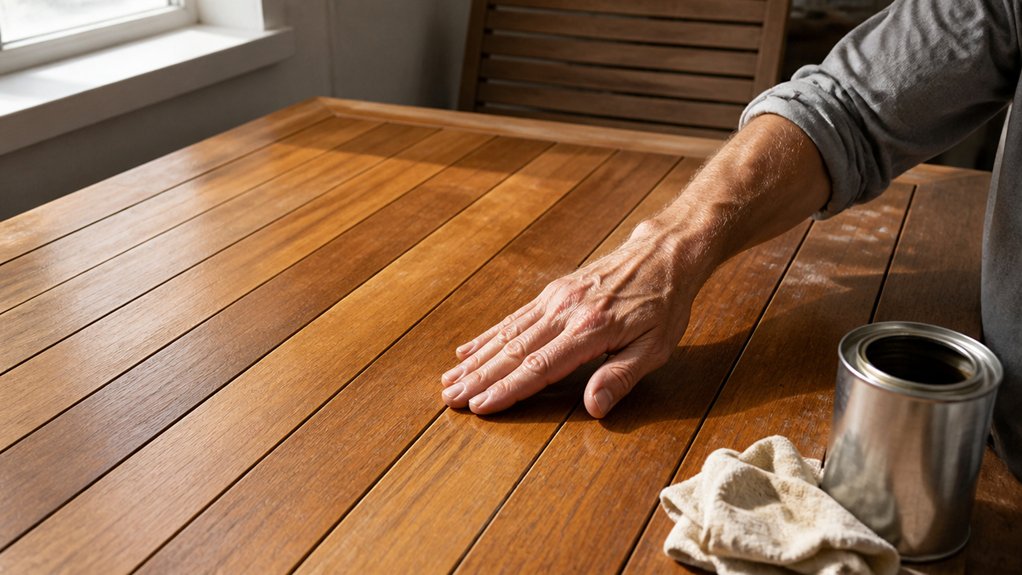
Let the surface breathe after those two coats, but don’t assume it is done. Full curing takes 24 to 48 hours, even though the wood may feel dry to the touch within a few hours.
Skipping this step ruins the oil curing process and leaves a tacky surface that collects dust. I learned that the hard way, and my deck still reminds me.
During the wait, keep things simple. Park furniture under cover, away from rain or dew.
Avoid placing anything on the surface for at least two days. Test a hidden spot with a fingernail, and if it dents, wait longer.
Store oil rags in a water filled metal can. This prevents them from heating up and catching fire.
After curing, grab a fresh rag and apply a thin spring coat once a year. A thin coat refreshes the sheen and protects the wood without leaving lap marks.
Keep the coat thin like a satin finish, not thick like a gloss polyurethane topcoat. Do this yearly, and your teak will outlast my excuses.
To get the best results from that yearly refresh, ensure the oil you use is 100% pure and additive-free so it polymerizes correctly without leaving a sticky residue.
Frequently Asked Questions
Will Teak Oil Darken the Wood’s Natural Color Over Time?
Yes, teak oil does darken wood’s natural color, especially in the first few coats, but that’s a teak oil color shift, not the wood aging. Unlike natural weathering, which turns teak gray and chalky, oiled teak stays richer and warmer for months.
Still, even oiled wood will mellow over time, so don’t expect that fresh, honeyed glow to last forever. For a practical tip, apply a thin first coat, wait 15 minutes, then wipe off any excess with a lint-free cloth to avoid a sticky, uneven blotch.
This rich tone typically deepens with a second coat, but you can control the final look by sanding with 220 grit before the last application. If you want a lighter finish, try a teak sealer instead, which protects without the same ambering effect.
Can I Apply Teak Oil in Direct Sunlight Safely?
No, you should not apply teak oil in direct sunlight safely, because the heat accelerates drying unevenly. That rapid curing traps solvents and causes blotching and bubbling, which ruins the finish.
Move your piece into full shade before you start, even if it means waiting for a cooler part of the day. The oil needs time to penetrate the wood fibers, so a slow, even soak is what delivers that rich tone you want.
For best results, work in temperatures below 75°F and apply thin coats with a lint-free cloth, wiping off any excess after 10 minutes. Thin coats are key, as heavy layers stay tacky and attract dust.
If you must work outdoors, use an umbrella or tarp to create shade, and test a small spot first. A related term to search is “flood coat,” but avoid that method here, as it only works in controlled indoor conditions. Allow 24 hours between coats, and sand lightly with 320-grit before the final application.
How Long Should I Wait Before Placing Furniture on It?
You should wait 48 hours before placing furniture on a freshly finished surface, though this is the full curing time for most water based polyurethanes. If your shop is humid or cool, stretch that to 72 hours, since drying factors like moisture in the air slow the chemical reaction significantly.
Oil based finishes absorb into the wood differently, and their hardening continues for weeks, so resist the urge to test with a thumbnail. A practical tip: after the initial wait, press a knuckle into a hidden corner. If it dents, give it another day.
Consider the temperature swing, as cold drafts can extend tackiness well beyond the label. For a quick check, place a scrap of kraft paper on the surface; if it sticks, wait another 12 hours. Patience here saves you from repolishing scratches, so let the film settle fully before you sit.
What Happens if I Apply Teak Oil Over Old Varnish?
Applying teak oil over old varnish will cause adhesion failure, as the oil cannot bond to the sealed surface. This leaves you with a blotchy, peeling film that traps moisture and looks worse than before.
You will then need to strip the entire finish, because the oil seeps into any micro-cracks and prevents new varnish from gripping. Use a coarse 80 grit sandpaper to break through the old varnish, then wipe with mineral spirits to remove dust.
If you skip this step, the new oil will just sit on top, and you will face a full refinishing job within months. For a durable result, apply three thin coats of teak oil, letting each cure for 24 hours. This process, sometimes called oil finishing, only works on bare wood, so always sand down to raw timber first.
Can I Use Teak Oil on Other Hardwoods Besides Teak?
Yes, you can use teak oil on other hardwoods besides teak, and it works beautifully on most dense, open-pored species. The secret is less about the wood type and more about surface preparation and how you apply the oil.
For best results, sand your oak or mahogany to 220 grit before the first coat, then wipe with a tack cloth to remove all dust. Apply a generous first coat, wait 15 minutes, then wipe off the excess; this prevents a sticky, uneven finish. A second thin coat after four hours will deepen the color and add a warm, satin sheen, just like Danish oil but with more water resistance.
Always test on a hidden spot first, because some woods, like cherry, can darken more dramatically than teak. With proper technique, you will get a durable, hand-rubbed finish that highlights the grain beautifully.
Rounding Up
To apply teak oils, stick to a spring coat ritual: get a lint-free cloth and apply thin coats.
Then let it cure. An ounce of prevention is worth a pound of sanding, so check your schedule and write down your spring date today.
Compare the twenty minutes and twenty bucks of oil against a weekend of elbow grease. Next, read about deck sanding.


