What Are Rust-Preventing Paints? Types, Uses and How to Choose

If your metal project keeps rusting, the problem often starts with the paint, not the metal. What are rust-preventing paints? They are not regular paint: they use inhibitors like zinc phosphate to block moisture at the metal surface.
This guide covers the main types, best uses, and how to choose between them for corrosivity levels C1 to C5. You will also see why surface prep, primer, coats, and cure time matter so much.
Match the coating to the job and skip the $30 to $50 per gallon mistake. Read on for a practical way to pick the right rust-preventing paint.
Quick Answer
- Anti-corrosion paints block moisture/oxygen via rust-inhibiting pigments like zinc phosphate.
- Five main types: zinc-rich, epoxy, polyurethane, alkyd, and acrylic, each suited to specific environments.
- Choosing systems depends on corrosivity categories (C1–C5), balancing coating thickness with actual salt exposure.
- Proper surface preparation—sanding to bare metal or SA 2½ blasting—is critical for paint adhesion.
- Apply thin coats (100–150 µm each), measure wet-film thickness, and respect cure times to prevent peeling.
What Makes Anti-Corrosion Paint Different From Regular Paint?
Regular paint gives a surface color and a film that looks good. Anticorrosion paint adds pigments such as zinc phosphate that slow rust at the metal surface.
Those pigments work with the primer to block moisture and oxygen. Use a primer made for the metal and let it dry for the full drying time before you apply the topcoat.
For a rusty railing, remove loose rust and dirt first, then use the right sanding grit, such as 80 grit on sound metal. Wipe the surface clean and lay a drop cloth so drips do not reach the floor.
Mask nearby areas with painter’s tape before you open the can. Stir the primer well and load the brush so you keep a wet edge and avoid lap marks.
Brushing gives you control on railings, and steady brush strokes help the coating level out. Check the label for the sheen you want, whether gloss, satin, or matte.
A gloss topcoat cleans up easily, and satin or matte can hide small surface flaws. Choose a low VOC product if fumes are a concern in your work area.
Respect drying time and cure time, since a coating that feels dry can still be soft. On wood projects, stain, varnish, or polyurethane can handle the finish, and metal needs an anticorrosion system.
Expect to pay about $30 to $50 per gallon for a rust inhibiting primer and a matching topcoat. That cost saves you scraping later and gives the metal a longer service life.
For heavily corroded surfaces, some water-based formulas chemically convert rust into a stable black layer without sanding.
5 Types of Anti-Corrosion Paint and Their Best Uses
There is no single paint that fixes every corrosion problem, but the five main types below each fit a specific use. Match the coating to the surface, the weather, and the chemicals it will face.
Zinc rich primers use powdered zinc as a primer over steel, and the zinc sacrifices itself first at scratches and cut edges on bridges and structural beams. They look rough, but they hold up.
Epoxy coatings are my first choice for factories and wastewater plants because they bond hard and block moisture. They handle chemical exposure well, though sunlight will chalk the finish, so add a topcoat with UV resistance when the surface faces the sky.
Polyurethane works well outdoors and keeps color and gloss longer, and you can choose satin or matte sheen if you want less shine. For metal railings, apply it over the right primer and watch the wet edge so lap marks and brush strokes blend.
Alkyd paint is a budget friendly option for indoor dry areas, and it hardens to a smooth finish. It can crack under constant wetness, so keep it away from damp rooms and wet metal.
Acrylic paint uses water as the carrier, has low odor and low VOC in many products, and suits mild sheltered metalwork. It is easy to clean up, but check the drying time before recoating and let the full cure time pass before hard use.
Good prep matters as much as the paint type: wipe the metal clean, scuff it with 80 to 120 grit sanding paper, and lay a drop cloth before you open a can. Use painter’s tape at edges, keep stain and varnish off the metal, and apply the primer and topcoat in thin, even coats.
For severe exposure, consider sacrificial zinc coatings or lanolin-based formulas that actively displace moisture and resist wash-off in harsh weather.
Matching Paint to Corrosivity (C1–C5)
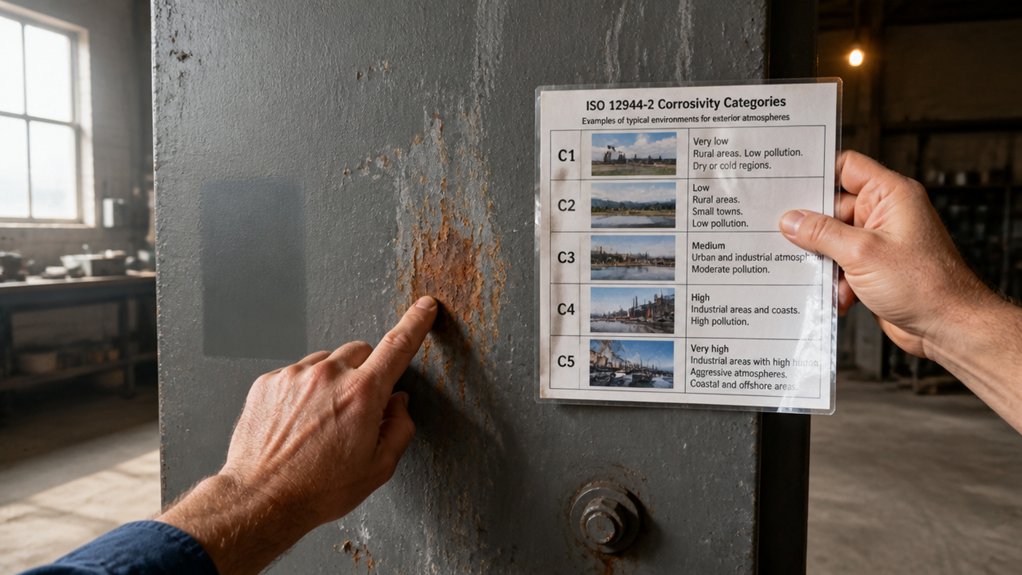
Corrosivity is the rating for how fast rust attacks metal. A C1 dry warehouse barely bothers steel.
For C5 offshore work, use a full three coat system at 320 to 400 microns. Thickness matters, so check each coat and keep a wet edge to avoid lap marks and brush strokes.
An epoxy zinc rich primer gives sacrificial protection because the zinc sacrifices itself to protect the steel. The trade off is higher cost, trickier application, and little forgiveness for prep errors.
Prep errors show up fast, so sand to the specified grit and wipe the surface clean before primer. Rust can stain nearby concrete, so use a drop cloth and painter’s tape, and check the VOC level if you work indoors. For lower-risk C2 environments, water-based rust converters offer under 1% VOC content and still halt corrosion effectively.
For C3 urban grime, a simple epoxy primer plus a polyurethane topcoat at 200 microns works fine. You can skip the expensive zinc and pick a gloss, satin, or matte sheen for the topcoat.
Respect the drying time and cure time between coats. Match the system to the real salt load, because too much coating wastes cash and too little invites rust.
Anti-Corrosion Paint Fails Without These Prep Steps
Paint made to resist corrosion will fail if you skip the prep. I learned that the hard way, and my driveway still shows the rust that came through.
You need to grind, clean, and degrease the gate before you open the can. Rust will creep under paint that sits on loose scale.
Sand to bare metal, or use the SA 2½ blast profile your coating maker requires. Match the sanding grit to the profile the product data calls for.
Wipe off all dust and oil after sanding. Use a clean drop cloth and painter’s tape to protect the gate and the ground.
Check the temperature limits before you open the can. If it is below 50°F or above 90°F, the coating will not bond right.
Use a compatible primer and topcoat, and check the VOC limit and drying time versus cure time on the product sheet. Respect the full cure time, because rushing it leads to peeling later.
Keep a wet edge while you apply the topcoat, and watch your brush strokes so you do not leave lap marks. A gloss, satin, or matte sheen will not hide skipped prep.
If you skip these steps, the paint only decorates rust. Do the prep first so the topcoat can protect the gate. For maximum protection, choose a formulation with rust-inhibitive properties that remains chip-tough and weather-resistant after full cure.
Application Methods and Dry Film Thickness Requirements

One thick coat of paint that prevents rust can look quick, but it often fails when moisture gets under it or the metal gets bumped. Dry film thickness is the thickness of the cured coat, and it matters as much as the application method.
Bare metal needs a suitable primer, then two or three thin topcoats applied with care. A spray gun gives more even coverage than a brush, and a 400 µm wet film should dry to roughly 200 µm.
Use a wet film gauge between passes so you know the thickness before the paint sets. Comb gauges are a simple, reusable way to check wet-film thickness quickly without specialized training. Keep each coat around 100 to 150 µm, go thinner on vertical surfaces, and go a little thicker on horizontal surfaces.
Use a wet film gauge between passes, keeping each coat 100–150 µm—thinner on verticals, thicker on horizontals.
Check drying time and cure time on the label, and keep a wet edge when you brush so you do not leave lap marks or heavy brush strokes. Sand with the sanding grit the label recommends, use a drop cloth, and tape off edges with painter’s tape before you start.
Do not push the total film past 300 µm, because thick layers can crack and lose adhesion. Choose a finish with lower VOC if you work indoors, and keep the area ventilated.
The same thin coat habit helps with wood finishes like stain, varnish, and polyurethane, whether you want gloss, satin, or matte sheen. Measure between coats and write down the numbers so your next batch is easier to control.
Frequently Asked Questions
How Often Should Anti-Corrosion Paint Be Reapplied?
Anti-corrosion paint should typically be reapplied every 3 to 5 years, depending on exposure. Coastal or industrial sites often need a shorter recoat interval, so inspect annually and touch up chalking, rust bloom, or scratched edges before they spread.
For a reliable job, scuff sand glossy areas with 120-grit paper, clean off dust, and apply two thin coats rather than one heavy coat. Keep a simple maintenance repaint log with dates, coat counts, and product batches; it makes future scheduling and warranty claims easier.
Before a full repaint, test a small patch: clean it, sand it, let it dry fully, then check adhesion.
Can Anti-Corrosion Paint Be Applied Over Existing Rust?
Yes, anti-corrosion paint can be applied over existing rust, but only after proper preparation. Surprisingly, 95% of premature coating failures trace back to poor surface prep.
Remove loose rust with a wire brush or 80 grit sandpaper, then treat stubborn spots with a rust converter. Let the converter cure for the manufacturer’s stated time, often 24 hours, before topcoating.
For extra protection, apply two coats of anti-corrosion paint at the recommended recoat interval. This rust treatment step prevents hidden corrosion from undermining your new paint before it dries, so take the time to prep thoroughly.
Is Anti-Corrosion Paint Safe for Food-Contact Metal Surfaces?
Anti-corrosion paint is not safe for food-contact metal surfaces unless it carries a specific food-contact certification. Standard anti-corrosion paints lack food safety approvals, so do not assume the label means direct contact is allowed.
You need a certified coating tailored for food contact, such as a food-grade epoxy listed for direct surface contact. Before applying, verify the coating certification on the product data sheet or label.
A practical check today: confirm the coating lists FDA 21 CFR 175.300 or NSF/ANSI 51 for the intended food-contact metal surface. If the data sheet only mentions corrosion protection or a food-safe coating without direct-contact approval, stop and choose another product.
What Is the Typical Drying Time Between Coats?
The typical drying time between coats is usually 2 to 4 hours for most interior latex paints, though always confirm the label. In practice, that recoat window shifts with humidity, ambient temperature, surface prep, and film thickness.
For a practical example, wait 4 hours before recoating water-based satin trim paint in 70°F and 50% humidity, then sand lightly with 220-grit if needed. A touch test on a hidden spot beats guesswork, and the can’s instructions remain your final authority.
Oil-based enamels often need 8 to 24 hours between coats, so plan a full day for a second pass. If you are searching for drying conditions, remember that cool, damp weather can double the recoat time.
Can Anti-Corrosion Paint Be Tinted to Any Color?
Yes, anti-corrosion paint can be tinted to virtually any color through custom color matching, especially in epoxy and polyurethane systems. As a painter, I have seen excellent color matching on industrial coatings, but always confirm the tint does not weaken the corrosion protection.
Ask your supplier for a tintable primer or topcoat system and request a small test panel first. Scuff cured epoxy with 220 grit before applying the tinted topcoat, and follow the maker’s recoat window closely. If you are searching for a corrosion-resistant coating, bring your color sample to a specialist supplier.
Rounding Up
Rust-preventing paints are matched to your metal’s environment, so C2 fits a shed and C5 fits a coastal shack. Do not skip prep: sand, clean, and prime before you paint, because that is where most people fail.
I have been there, slapping paint on grime like a fool. Today, measure dry film thickness with a cheap gauge.
A cheap gauge beats guessing. Spend the extra money on a zinc-rich primer, because it is cheaper than replacing your truck’s frame.
Trust me, your future self will nod, not groan. Surface preparation.